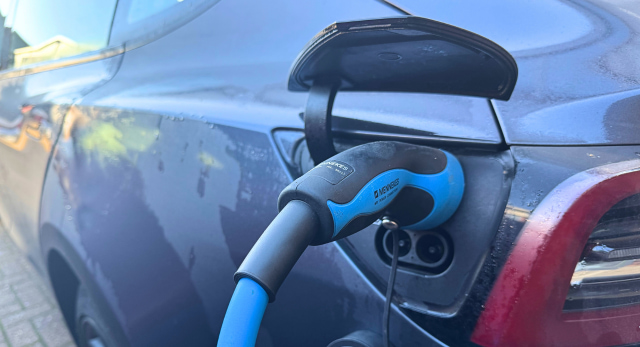

Home EV charging points are now one of the easiest ways for UK drivers to run an electric car, offering faster, safer and cheaper charging at home than a standard three‑pin socket. This article answers common questions about home EV charging in the UK, covering how chargers work, typical installation costs, leading home charger brands, planning and landlord rules, and how electricians can upskill with Logic4training’s EV charging installation courses to make the most of this fast‑growing market.

What is a Home EV Charging Point?
A home EV charging point is a dedicated wall‑mounted charger, usually rated at 7kW, installed on a driveway, garage wall or external wall with access to your parking space. It connects directly to your consumer unit on its own circuit, with built‑in safety devices and smart controls to charge your EV more quickly and efficiently than a standard 13A plug.
Most home chargers are “mode 3” AC units, using either a tethered cable that is permanently attached, or a socket‑only unit where you use your own lead. They are typically controlled via an app, allowing you to start, stop and schedule charging remotely, and to integrate with time‑of‑use energy tariffs.
Why Charge Your EV at Home?
Charging at home is usually the cheapest way to run an EV, because you can take advantage of lower domestic electricity tariffs, especially off‑peak rates. One study suggests charging at home can cost around £610 per year on average, compared with over £1,000 per year when relying mainly on public charging, although actual figures depend on mileage and tariff.
Home charging is also convenient and time‑saving, as you can plug in overnight and start each day with a full battery. For many drivers, it reduces “range anxiety” and cuts the need to queue at busy rapid chargers, especially in urban areas.
How Much Does a Home EV Charger Cost?
For most households, the combined cost of a 7kW charger and standard installation is typically in the £800-£1,200 range. Supply‑only 7kW units often sit between about £450 and £800, with installation making up the rest of the cost.
A “standard” installation usually covers mounting the charger on a suitable wall, running up to around 10 metres of cabling back to the consumer unit, and fitting any required protective devices. Extra costs can arise if you need a consumer unit upgrade, longer cable runs, groundworks (for example, trenching to a detached garage), or load‑management equipment to protect your main supply.
Government Grants & Incentives
Although the old Electric Vehicle Homecharge Scheme (EVHS) for owner‑occupied houses has ended, targeted government support is still available. The current EV chargepoint grant (administered by OZEV) offers up to £350 or 75% off the cost of a home chargepoint and installation, whichever is lower, for eligible renters and flat owners with off‑street parking.
There are also separate grants for landlords and residential car parks, which can contribute up to 75% of installation and infrastructure costs, with caps per socket and per site. To claim, you must use an OZEV‑approved installer and an approved charger model, and your installer will usually apply on your behalf and discount the grant from your invoice.
Key Cost Factors for Home Charging
Several factors influence the final price you pay for a home EV charger:
- Charger power: 3kW units are cheaper but much slower, while 7kW is the common “sweet spot” for most UK homes, balancing speed and cost.
- Smart features: Advanced smart chargers that support solar integration, dynamic tariffs and energy‑monitoring tend to cost more upfront but can save money over time.
- Installation complexity: Long cable runs, tricky cable routes, trenching in gardens or driveways, and consumer unit upgrades all add to the labour and materials bill.
- Property type: Flats, rental properties and parking away from the house can require additional infrastructure, although grant support may help.
Installers often provide a free initial survey to confirm suitability, identify any extra work needed and give a fixed quote.
Smart Charging, Tariffs & Solar
What is smart EV charging?
Smart charging means your home EV charger can communicate with your car, your energy supplier and sometimes even the grid, rather than simply delivering power at full rate whenever it is plugged in. Instead of “dumb” charging as soon as you connect the cable, a smart charger follows a schedule or automated rules to decide when and how fast to charge.
In the UK, smart functionality is now required on most new domestic charge points, so modern home chargers generally come with Wi‑Fi, an app and built‑in controls as standard. This lets you monitor charging sessions, set targets (for example, “ready by 7am”), and see how much energy your car is using over time.
Off‑peak tariffs and cheaper night‑time charging
The biggest financial benefit of smart charging is the ability to shift most of your charging into cheaper off‑peak periods. Many UK suppliers now offer EV‑specific or time‑of‑use tariffs where electricity overnight can be several times cheaper than the standard daytime rate, often in the range of 6-9p per kWh for a fixed window.
With a smart charger and a compatible tariff, you usually set how much charge you need and by what time, and the system automatically fills your battery during the lowest‑cost hours. Some tariffs, such as Octopus “Intelligent Octopus Go” and similar smart offers from EDF, E.ON Next, British Gas and others, also move charging into periods when grid carbon intensity is lower, so you save money and reduce emissions at the same time.
Solar integration and load management
If you have solar PV at home, pairing it with the right charger can make your driving even greener and cheaper. Chargers like the Myenergi Zappi can monitor how much solar power you are generating and how much your home is using, then automatically divert any surplus into your car rather than exporting it back to the grid for a low payment. This boosts “self‑consumption”, so more of the energy you produce on your roof goes into your EV, lowering both your bills and your carbon footprint.
Home EV charger brands in the UK
There is now a wide choice of reputable home EV charger brands in the UK, ranging from simple, cost‑effective units to advanced smart systems. Commonly recommended brands include:
- Tesla Wall Connector: Tesla’s own home charger, designed to work seamlessly with Tesla vehicles but also compatible with most Type 2 EVs, offering high charging speeds and tight integration with the Tesla app.
- Pod Point: One of the longest‑established UK providers, with a strong track record of home and public installations and high customer ratings.
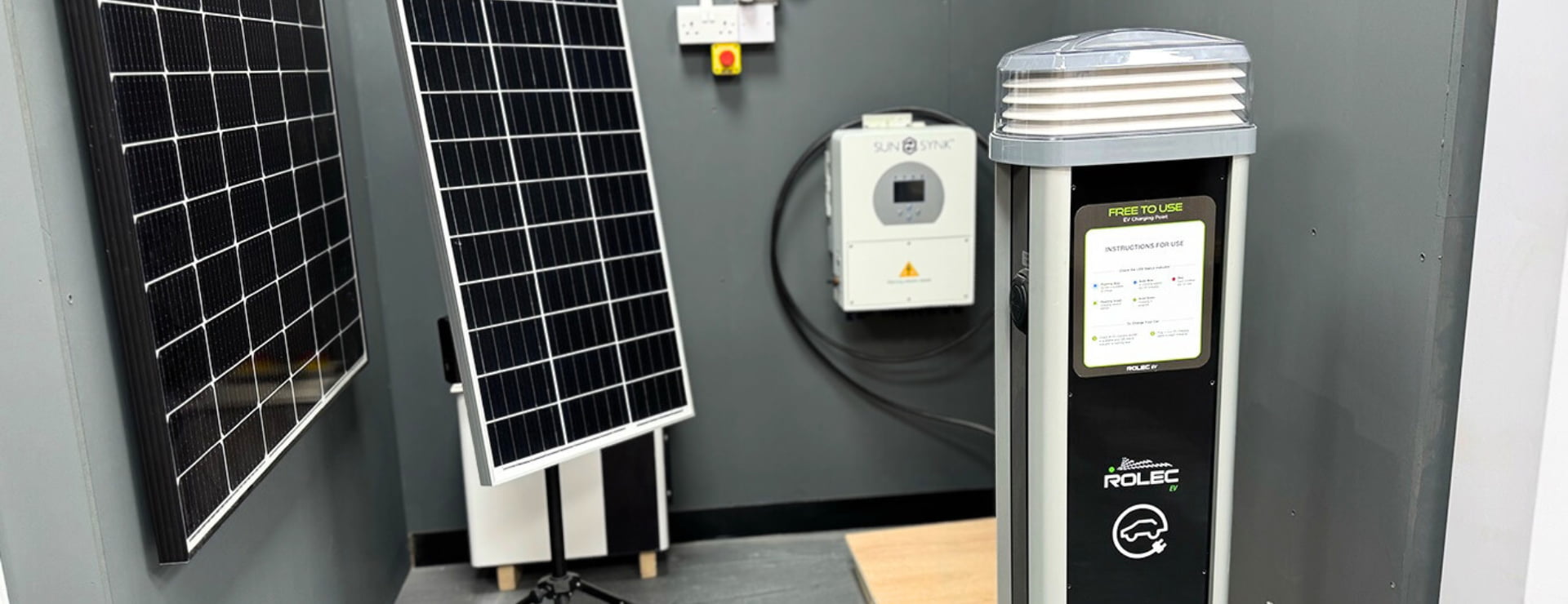
- Rolec: A long‑established UK brand offering a wide range of domestic and commercial charge points, often chosen for robust hardware and flexible configurations.
- Hypervolt: Known for a sleek design, weather resistance and feature‑rich smart charging, popular with both homeowners and installers.
- Ohme: Offers the Ohme Home Pro and other units focused on intelligent tariff integration and smart charging with energy suppliers.
- Myenergi Zappi: A leading choice where solar integration is important, supporting multiple eco‑modes and load balancing.
- Easee One: A compact, scalable charger that has been well‑reviewed, with a strong focus on flexibility and design.
Other notable brands include Wallbox, EO, Indra and BG Sync EV, many of which appear in independent “best home EV charger” round‑ups.
Comparing popular home charger options
Below is a simplified view of how some of the most talked‑about home chargers tend to differ in the UK market.
| Charger brand | Typical use case | Key strengths | Typical installed cost range |
|---|---|---|---|
| Tesla Wall Connector | Tesla‑centric | Designed to work seamlessly with Tesla vehicles but also compatible with most Type 2 EVs; high charging speeds, Wi‑Fi connectivity and tight integration with the Tesla app for scheduling and monitoring. | Commonly around £1,000–£1,300 supplied and installed, depending on cable run and any extras. |
| Pod Point | General home charging across the UK | One of the longest‑established UK providers, with a strong track record in home and public charging, an easy‑to‑use app and good customer ratings. | Often in the region of £900–£1,200, including standard installation. |
| Rolec | Value‑focused, robust home and mixed sites | Long‑established UK brand with a wide range of domestic and commercial charge points; durable hardware, flexible configurations and multiple power/output options. | Typically towards the lower to mid‑range, around £800–£1,100 for a standard 7kW home install. |
| Hypervolt | Style‑conscious, smart‑home users | Sleek design, built‑in cable management, rich smart features, solar‑ready modes and dynamic load management, popular with homeowners and installers. | Commonly mid to upper‑mid range, roughly £950–£1,250 installed. |
| Ohme | Smart‑tariff and cost‑conscious drivers | Ohme Home Pro and related units focus on deep integration with EV tariffs, automatic off‑peak scheduling and smart app control to minimise charging costs. | Frequently sold as a package via energy suppliers from around £900–£1,200, including installation. |
| Myenergi Zappi | Homes with solar PV and eco focus | Leading choice for solar integration, with multiple eco‑modes and advanced load balancing to maximise self‑consumption and protect the household supply. | Usually a premium option, often £1,000–£1,350 installed when CT clamps and accessories are included. |
| Easee One | Flexible, scalable and design‑led installs | Compact, modular charger with a strong focus on flexibility and aesthetics, supports scalable setups and is well‑reviewed in independent UK tests. | Typically mid‑range, with most installs around £900–£1,200 depending on configuration and property. |
*Always check current prices and quotes for your property.
Planning Permission & Permitted Development
For most homeowners in England with off‑street parking, a wall‑mounted EV charger fixed to an external wall within the boundary of your property will usually fall under “permitted development” rights. That means you typically do not need to submit a planning application, as long as the installation meets set criteria on size, location and height.
The Planning Portal explains that domestic chargepoints must not exceed specific height limits (generally around 1.6m for wall‑mounted units on a dwelling, rising to 2.7m in some parking areas) and must not be installed within the curtilage of a listed building or on a scheduled monument. In conservation areas, Areas of Outstanding Natural Beauty and other designated sites, permitted development rights can be restricted or removed by Article 4 directions, so you may still need permission even if you have off‑street parking.
Planning permission is more likely to be required where:
- You live in a flat or maisonette, or your property is leasehold with shared or communal areas.
- The building is listed, or in some cases if it sits in a sensitive conservation or heritage area.
- The charger or any associated infrastructure (like a freestanding post) is outside normal size/height limits or visually prominent on a main road frontage.
If permitted development rights do not apply, the Planning Portal notes that you may need to apply for householder planning permission or listed building consent, and your Local Planning Authority (LPA) can advise on what is required. In more complex cases, it is often worth highlighting the environmental benefits of EV charging in your application, as these can be treated as “material considerations” by the LPA.
Cables across pavements and public land
The rules change if your installation involves crossing a public pavement or highway. Under the Highways Act, it is generally illegal to run a loose cable across a public pavement, even with a simple cover, because it creates a trip hazard and obstruction for pedestrians, including people with disabilities. Many councils now state outright that trailing cables across pavements are not allowed and may be subject to enforcement.
If you do not have off‑street parking and need to charge on the street, you may need a formal “cross‑pavement solution” such as an approved cable gully or channel, installed with the consent of the local highway authority. In these cases, separate permissions can be required for:
- Highways consent to place apparatus across or under the pavement.
- Street works permissions for excavation and reinstatement.
- Sometimes a distinct planning permission for the cross‑pavement solution itself if it is not owned by the highway authority.
Government guidance for local authorities on cross‑pavement solutions stresses the need for safe design, proper electrical standards and clear conditions on use, such as removing cables when not charging and not reserving public parking spaces with cones or signs. In some cases, an authority may decide that installing a home charger or cross‑pavement system is not appropriate, in which event you may be directed towards public or workplace chargepoints instead.
How to check your position
Before booking an installation, it is sensible to:
- Use the Planning Portal’s interactive guidance for electric vehicle chargers to see if your project looks like permitted development.
- Contact your local planning authority, especially if your property is listed, in a conservation area, a flat/maisonette, or if any part of the route crosses public land.
- Speak with your installer, who should understand local practice and can often flag when a formal application or highways consent is likely to be needed.
If you or a previous owner have already installed a charger and are unsure whether it was lawful, you can apply for a Lawful Development Certificate to obtain formal confirmation for peace of mind and future property sales.
Landlords, Renters & Flats
Renters, leaseholders and flat owners are not shut out of home EV charging, but the process is more involved than for someone who owns a house with a private driveway. Permissions, grant eligibility and shared parking arrangements all need a bit of planning, yet there is generous support available through OZEV grants for both individual tenants and landlords.
Tenants: getting landlord permission
If you rent your home, you cannot usually install an EV charger without your landlord’s written consent, because it involves altering the building fabric and electrical installation. Most tenancy agreements treat this as a “structural” or “electrical” change, so fitting a charger without permission could breach your contract and cause problems at the end of the tenancy.
To improve your chances of a “yes”, it helps to approach your landlord or managing agent with a clear proposal: explain why you need a charger, where it would go, confirm that a qualified (ideally OZEV‑approved) installer will do the work, and clarify what happens to the charger when you move out. You can also highlight that dedicated EV charging can make the property more attractive to future tenants, which many landlords now recognise as a selling point.
Grants for renters and flat owners
The EV chargepoint grant for renters and flat owners can reduce the cost of buying and installing a home charger by 75%, up to a maximum of £350 per socket. To qualify, you must either rent a residential property or own and live in a flat, have a qualifying EV, and have access to private off‑street parking at your home.
The grant runs (at the time of writing) until at least March 2026 and is claimed by an OZEV‑approved installer on your behalf, with the discount applied directly to your invoice. Importantly, you still need all third‑party permissions in place before the installation, including written agreement from your landlord, freeholder or managing agent where relevant.
Flats, shared parking and landlord grants
For flats and developments with shared or communal parking, a single “one‑off” charger is often not enough, so landlords and managing agents may need to install shared infrastructure that can support multiple charge points over time. This can involve running cabling to several bays, installing a few active chargers now, and leaving other spaces “passive‑ready” so future chargers can be added more cheaply.
To help with this, there are specific EV infrastructure grants and EV chargepoint grants for landlords of residential properties, covering up to 75% of costs, with caps per parking space and per building. For example, the infrastructure grant for residential car parks can contribute up to £30,000 per building, with per‑space allowances for both active chargepoints and passive infrastructure, and can be combined with the landlord chargepoint grant as long as the same sockets are not claimed twice. For tenants and flat owners, this means that if your landlord is supportive, OZEV funding can make it much more affordable to roll out a proper, future‑proof charging solution for the whole block or estate.
Safety, Regulations & Installer Competence
EV charge points must be installed in line with the Wiring Regulations and manufacturer instructions, using suitable protective devices and appropriate earthing arrangements. Poor‑quality or DIY installations can create serious fire and electric shock risks, as well as voiding warranties and insurance.
In the UK, domestic installers should be suitably qualified electricians, often registered with a Competent Person Scheme and familiar with EV‑specific standards and guidance. Using an OZEV‑approved installer is also a requirement if you want to claim any of the government grants mentioned earlier.
How to Choose the Right Home Charger
When selecting a charger for your property, consider:
- Your vehicle and driving pattern: High‑mileage drivers benefit most from smart off‑peak scheduling and higher‑power units, while occasional drivers may be fine with simpler setups.
- Energy tariffs: If you are on or plan to switch to an EV‑friendly tariff, choose a charger with robust integration and scheduling features.
- Solar and future plans: If you have, or plan to install, solar PV or battery storage, pick a charger that supports integration to maximise self‑consumption.
- Aesthetics and location: Weather resistance, cable management and how the unit looks on your property can all influence your choice.
Always compare at least two or three quotes from qualified installers, checking what is included as “standard” and what counts as extra work.
Getting started as a homeowner or installer
For homeowners, the typical journey is:
- Check your parking and supply. Confirm you have off‑street parking and a suitable electrical supply; if you live in a flat or rented property, speak with your landlord or managing agent.
- Explore grants. See if you qualify for the EV chargepoint grant or related schemes and ensure you shortlist OZEV‑approved installers and products.
- Compare chargers. Shortlist a few brands that match your needs, from mainstream options like Pod Point and Ohme to specialist solar‑ready units such as Zappi.
- Obtain quotes and install. Arrange a survey, review the quote in detail, and book an installation date that suits you.
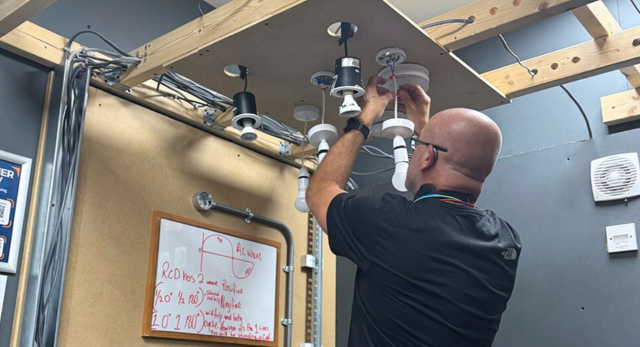
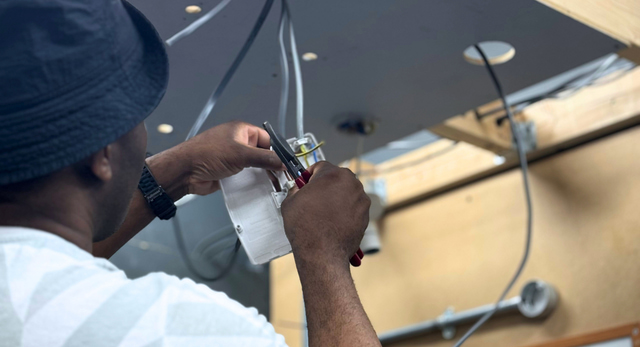
For electricians, upskilling with a dedicated EV charging course is now almost essential if you want to offer compliant, future‑proof installations. Logic4training’s EV charging and energy‑storage courses provide a structured route to this competence, backed by experienced tutors and hands‑on facilities.
How Logic4training Supports EV Charging Competence
Logic4training has been training UK electricians and multi‑skilled installers for over 23 years, supporting tens of thousands of learners with high‑quality, industry‑recognised qualifications. As demand for EV charge point installation has grown, Logic4training has developed specialist EV charging and energy‑storage courses that focus on real‑world skills, current standards and safe working practices.
Electricians looking to enter or grow in this market can explore the Electric Vehicle Charging and Energy Storage courses on Logic4training’s website, which cover design, installation, testing and integration with wider electrical and renewable systems. These courses combine classroom learning with practical workshops, giving you the confidence to specify and install home, workplace and commercial EV charging solutions.
FAQs
How much does it cost to install a home EV charger in the UK?
Most UK homeowners can expect to pay in the region of £800-£1,200 for a typical 7kW home charger, including a standard installation. The final amount depends on the model chosen, any grant support, and how complex the installation is.
Are there still UK government grants for home EV chargers?
Yes, but they are now targeted at specific groups. Renters, flat owners with dedicated parking, and certain landlords can get up to £350 or 75% off the cost of a chargepoint and installation, subject to eligibility. Applications must use OZEV‑approved installers and chargers.
Do I need planning permission to install a home charger?
In most cases, no. Installing a wall‑mounted charger within your property boundary with off‑street parking is treated as permitted development. Exceptions can apply for listed buildings, conservation areas or where cables cross public land, so it is wise to check local rules or speak with your installer.
How long does it take to charge an electric car at home?
On a typical 7kW home charger, many modern EVs will gain roughly 25-30 miles of range per hour of charging, depending on the vehicle. For a full charge, overnight charging is usually more than enough for daily use.
How can I become an EV charge point installer?
You will usually need a solid electrical background plus dedicated EV charging training that covers design, installation and testing to current standards. But to put it simply, you need to complete sufficient electrical training to be able to complete an electric vehicle charge point installation course successfully.


 Your latest offers & alerts