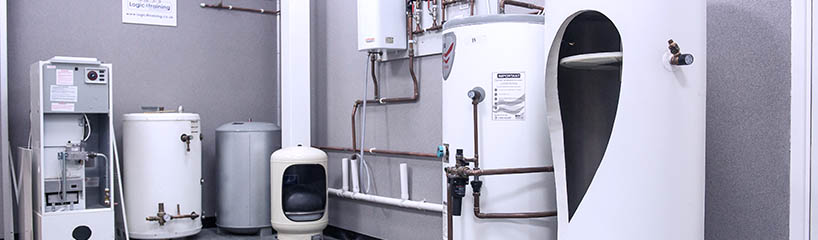

Installing or working on hot water cylinders in 2026 still comes with strict legal duties. You must notify Local Authority Building Control (LABC) or use a Competent Person Scheme (CPS), hold the right G3‑aligned qualification, and follow the latest Building Regulations to keep your customers safe and compliant. In this article, we cover when and how to notify, who can self‑certify, what’s changed recently, and how Logic4training can help you stay on the right side of the law with up‑to‑date Hot Water Systems & Safety (HWSS) training.
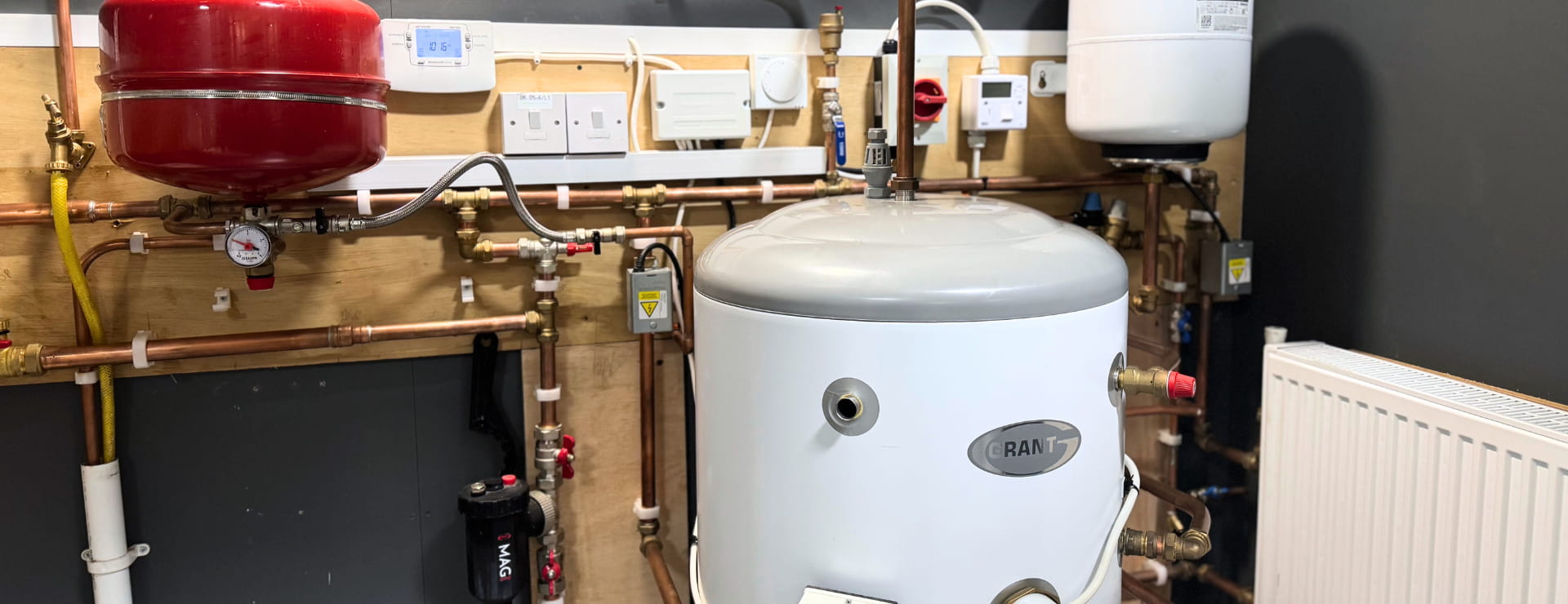
What work must be notified?
In simple terms, most new or replacement hot water storage systems over 15 litres are notifiable building work. This covers both vented and unvented cylinders used for domestic hot water.
Work that is usually notifiable includes:
- Installing a new unvented hot water cylinder.
- Replacing an existing vented or unvented cylinder with a new unit.
- Converting from vented to unvented storage.
- Moving a cylinder to a new location when it involves altering the safety devices, discharge pipework or capacity.
A small number of jobs fall outside the notification requirement. If the hot water storage vessel has a capacity not exceeding 15 litres, and any associated electrical work is also non‑notifiable under the Building Regulations, then the work does not have to be notified. This tends to cover small point‑of‑use heaters rather than typical domestic cylinders.
If you are in doubt, it is safer to assume the work is controlled and needs notification, or to check with the relevant scheme provider or your local building control team.
Quick reference: Notification options
| Situation | Notifiable? | Who can notify? | Typical route |
|---|---|---|---|
| New unvented cylinder with new gas boiler | Yes | Gas Safe engineer with HWSS | Gas Safe Register online/phone |
| Replacement unvented cylinder on existing gas system | Yes | Gas Safe engineer with HWSS | Gas Safe Register online/phone |
| Unvented cylinder with electric boiler | Yes | Installer in relevant CPS or using LABC | CPS portal or direct LABC notification |
| Vented cylinder replacement (>15 litres) | Yes | CPS member or LABC | CPS notification or Building Notice |
| Point‑of‑use heater (<15 litres, non‑notifiable electrics) | Normally no | N/A | No Building Regulations notification required |
How to notify: LABC vs Competent Person Schemes
There are two main ways cylinder installations get notified to Building Control in England and Wales.
1. Local Authority Building Control (LABC)
You (or the customer) submit a Building Notice or Full Plans application before work starts.
- The Local Authority Building Control may inspect during and/or after the job.
- On completion, they issue a completion certificate if the work complies.
If you are not part of a Competent Person Scheme that covers hot water cylinders, you must notify LABC directly for each controlled installation.
In most councils, this involves:
- Submitting a Building Notice or Full Plans application before the work starts.
- Paying a fee. Often running into hundreds of pounds per job, depending on the authority and scope of work.
- Allowing inspections, usually at key stages, so Building Control can verify compliance with Part G, discharge arrangements, and other relevant sections.
From a business perspective, repeatedly paying LABC fees can quickly become more expensive than joining a CPS for a year. For regular cylinder installers, joining a scheme often works out cheaper, faster and easier for you and your clients.
2. Competent Person Scheme (CPS)
- A registered installer self‑certifies that the work meets the Building Regulations.
- The scheme operator notifies LABC on the installer’s behalf and arranges for a Building Regulations compliance certificate to be sent to the homeowner.
Competent Person Schemes relevant to hot water cylinders include Gas Safe Register, OFTEC, NICEIC, APHC, NAPIT, HETAS, MCS and others that are approved to cover hot water storage systems under Part G and, where relevant, Part J.
Being a member of one of these schemes can remove a lot of admin, but you must hold appropriate qualifications, such as Hot Water Systems and Safety, and keep them current. Also, notifying via the LABC could cost hundreds of pounds per install, so you might as well join a CPS for a year instead.
How to notify through Gas Safe Register
Many installers are unclear about what can be reported through the Gas Safe Register when a cylinder is involved.
For Gas Safe Registered engineers, notifying hot water cylinder work and gas appliances is straightforward and low‑cost.
Simple process
- Log in to the Gas Safe Register online portal at the Gas Safe Register sign‑in page.
- Go to the Notifications area.
- Select Report Gas Work and input the relevant details of the boiler and, where applicable, the hot water cylinder.
- Confirm and pay the notification fee.
For the current period (1 April 2025 – 31 March 2026), the typical costs are:
- Online notification: £3.05 + VAT per job.
- Phone notification via 0800 408 5577: £5.63 + VAT per job.
Rules to follow
- If you fit a cylinder only to an existing gas‑fired heat producing appliance that you did not install, and you are Gas Safe registered for that category of work, you can notify the cylinder through Gas Safe Register.
- If you fit a cylinder only to a heat source using a different fuel (for example electric, oil, biomass), you cannot notify the cylinder via Gas Safe Register, even if you are GSR‑registered. This installation must be notified directly to LABC or through another relevant CPS.
- If you fit a gas appliance and cylinder together as one job, you can notify both through Gas Safe Register, as long as you hold the necessary categories on your registration.
In practice, that means Gas Safe is the notification route whenever the cylinder is connected to a gas boiler you are competent and registered to work on. If the cylinder is supplied by a non‑gas heat source, or you are not registered for the relevant gas category, Gas Safe is not the correct route.
Once you submit the details, Gas Safe Register notifies the relevant LABC and issues a Building Regulations compliance certificate to the homeowner or main contractor. This certificate is a key document when the property is sold or re‑mortgaged, so it is well worth making sure your customers keep it safe.
Why hot water cylinder notification matters
Hot water cylinders, especially unvented systems under G3, store pressurised hot water and can be dangerous if poorly designed, installed or maintained. That is why their installation is classed as “controlled work” under the Building Regulations and, in most cases, must be notified to LABC.
If work is not notified or signed off by an approved body, both you and your customer are exposed. The homeowner may struggle to sell the property due to missing compliance certificates, and you could face enforcement action, fines and reputational damage. Logic4training has worked with thousands of heating and plumbing engineers across the UK and sees notification compliance come up time and again during training and technical support calls.
In England and Wales, hot water safety and storage is mainly covered by Part G (Sanitation, hot water safety and water efficiency), alongside parts J and L for certain appliances and energy performance.
Legal risks: Fines, safety and property sales
Failing to notify controlled work does not just create paperwork problems; it can lead to legal and safety issues.
Key risks include:
- Fines for you and your customer: If a hot water cylinder installation is not notified or does not comply, the homeowner can be fined up to £5,000, and you could face an unlimited fine within 2 years of the offence.
- Enforcement action: LABC can insist that non‑compliant work is opened up, rectified or removed, which can destroy your profit on a job and damage your reputation.
- Safety hazards: Poorly installed unvented systems can fail catastrophically due to over‑pressure or overheating, with a serious risk to life and property.
- Problems when selling: Missing Building Regulations certificates are a common issue during conveyancing, leading to delays, remedial work or indemnity insurance costs.
By notifying work and using the right qualifications and CPS routes, you protect your customers, your business and the wider reputation of the industry.
Training and competence: Hot Water Systems & Safety (HWSS)
Under Building Regulations and industry guidance, unvented hot water cylinders must be installed, commissioned and serviced by competent operatives, typically those holding a recognised G3‑aligned qualification.
Our Hot Water Systems & Safety (HWSS) course (which replaced the old “unvented hot water” course) is designed for experienced plumbing and heating engineers who need to work on both vented and unvented systems. The qualification must be renewed every five years to keep you aligned with current standards and to maintain your ability to self‑certificate work through CPS routes.
Typical HWSS course content includes:
- Installation and safety of hot water systems.
- Regulations, standards and guidelines (including G3).
- Theory of hot water expansion and storage.
- Design considerations and system sizing.
- Components, controls and safety devices.
- Discharge pipework and integration with other systems.
- Maintenance and servicing of vented and unvented cylinders.
Completing HWSS demonstrates competence to employers, clients and CPS providers and supports your registration under the relevant Building Regulations categories.
Registering your qualification with CPS
Achieving your Hot Water Systems and Safety qualification is only part of the story. You must also register your qualification with your scheme provider so you can self‑certify work. The scheme will not automatically know that you have updated your training.
For existing gas engineers:
- Inform Gas Safe Register that you have achieved HWSS.
- Be prepared to upload or submit a copy of your certificate.
- Once linked, you can use your Gas Safe account to notify hot water cylinder installations carried out as part of gas boiler work, as long as they fall within your categories.
For other Competent Person Schemes (OFTEC, NICEIC, APHC, NAPIT, MCS, etc.):
- Notify your scheme operator that you have completed HWSS.
- Make sure you are registered under categories covering installation of hot water cylinders, typically associated with Part G and, where appropriate, Part J.
Once your HWSS is in place and registered with your chosen scheme, you have everything you need to sign off hot water cylinder work with confidence. Taking a bit of time now to upload your certificate, check your categories and confirm your registration status means fewer headaches later. No last‑minute calls to Building Control, no awkward gaps in paperwork, and a smoother experience for your customers.
Summary
Most domestic hot water cylinder jobs are still classed as controlled work, so you usually need to notify Building Control unless you are dealing with a very small point‑of‑use unit under 15 litres. We have covered which installations are notifiable, who can notify them, and how this works in practice for both LABC and Competent Person Schemes, including Gas Safe Register. It shows how using a CPS can save time and money compared with repeated local authority applications, especially if you are installing cylinders regularly. You will also see why training and qualifications such as Hot Water Systems and Safety (HWSS), plus registering your HWSS with your scheme, are essential if you want to self‑certify safely, minimise risk, and give your customers the paperwork they need when they come to sell or re‑mortgage.
FAQs
Do you have to notify the installation of a hot water cylinder?
Yes. In England and Wales, installing or replacing most vented and unvented hot water cylinders over 15 litres is notifiable building work under the Building Regulations, mainly Part G. This can be done either directly to Local Authority Building Control or via a Competent Person Scheme such as Gas Safe Register, OFTEC or NICEIC.
Who is allowed to install unvented hot water cylinders in the UK?
Unvented hot water cylinders must be installed, commissioned and serviced by competent installers who hold a recognised G3‑aligned qualification, such as Hot Water Systems & Safety (HWSS). Many CPS providers and insurers expect evidence of such training before allowing you to self‑certify work or cover it under their policies.
Can Gas Safe Register notify the installation of a hot water cylinder?
Gas Safe Register can notify hot water cylinder installations when they are part of, or connected to, a gas heat producing appliance and the installer is registered for the relevant categories. If the cylinder is connected to a non‑gas appliance (for example electric or biomass), the job must be notified via another CPS or directly to LABC instead.
What happens if I do not notify a hot water cylinder installation?
Failure to notify controlled work can lead to enforcement action by LABC, including orders to alter or remove the installation, fines for the homeowner and potentially unlimited fines for the installer in serious cases. It can also cause problems when the property is sold because there is no Building Regulations compliance certificate on record.
How much does it cost to notify a hot water cylinder through Gas Safe Register?
For the period 1 April 2025 to 31 March 2026, notifying notifiable gas work (including eligible hot water cylinder installations) typically costs £3.05 + VAT online or £5.63 + VAT by phone via Gas Safe Register. These small per‑job fees are usually lower than paying LABC building notice charges.
Is a small electric water heater notifiable under Part G?
If the storage capacity does not exceed 15 litres and any associated electrical work is also non‑notifiable, the installation is generally exempt from Building Regulations notification under Part G. Always check the manufacturer’s instructions and, if necessary, confirm with your local Building Control team.
How often do I need to renew my unvented hot water qualification?
The HWSS qualification normally needs to be updated every five years to keep you aligned with current Building Regulations and scheme requirements. Logic4training’s Hot Water Systems & Safety (HWSS) course is designed to support both initial qualification and renewal.
Which Logic4training course should I take to work on unvented hot water cylinders?
You should take the Hot Water Systems & Safety (HWSS) course, which covers installation, safety, design and maintenance for vented and unvented cylinders in line with G3 and related guidance. This course is recognised by CPS providers and is a key step towards self‑certifying hot water cylinder installations.


 Your latest offers & alerts