
Last updated: April 2026 | Originally published: November 2025
AI is transforming the workplace by automating predictable, computer-based jobs like interpreting, coding, and journalism, while hands-on careers such as plumbing and electrical work remain secure due to their reliance on practical skill and real-world judgement. As more office roles become vulnerable, building adaptable skills and investing in lifelong learning are key to staying resilient and future-proofing your career.
Key Takeaways
- Nearly 70% of UK jobs have high exposure to AI automation
- Bookkeepers, telephone salespersons, and bank clerks face automation risks of 87-94% in the UK
- BCG research (2026) shows 50-55% of jobs will be reshaped by AI and not necessarily replaced
- Only 10-15% of jobs face outright elimination over the next four to five years
- Skilled trades like electrical, plumbing, and gas work remain among the safest careers – fewer than 10% of tasks are automatable
- Goldman Sachs now estimates 300 million jobs globally are exposed to some form of AI automation

Understanding What Jobs AI Is Replacing
AI’s impact on the workplace is both profound and nuanced, fundamentally shifting what tasks and even entire roles are handled by people or technology. Microsoft’s research highlights that jobs with a high share of computer-based and repetitive processes are especially susceptible to automation. For example, in language services, interpreters and translators have seen a dramatic shift: advanced AI platforms can now execute 98% of these tasks almost instantly, handling everything from real-time speech translation to translating large bodies of text without the limitations of time zones or fatigue. This has immediate implications for multilingual customer support, international business correspondence, and even creative industries such as localisation for media and games.
- Interpreters and translators: AI can perform 98% of the tasks in these roles.
- Historians/Mathematicians: Research and documentation are easily replicated (91% overlap).
- Writers, authors, and journalists: Writing, proofreading, and editing are largely automatable (81-91% overlap).
- Data scientists, DJ/radio producers, product promoters, and customer service assistants are similarly exposed, with AI able to perform between 70% and 85% of core tasks.
Key Factors Driving Vulnerability
Jobs are most exposed to AI if their work:
- Is rule-based and involves processing information.
- Can be broken down into a sequence of predictable steps.
- Involves interaction through digital text or data rather than hands-on, in-person labour.
The common thread: these roles are largely performed through a screen, involve structured processes, and don’t require physical presence or real-time human judgement.
The UK Picture in 2026
Most coverage of AI job displacement focuses on the US, but the impact in the UK is just as significant and underreported.
A 2026 analysis of UK occupations found that nearly 70% of UK jobs have high exposure to AI. Clerical and administrative roles are under the greatest pressure, and fewer than 50% of UK workers are being offered any AI-related upskilling. The UK also lags behind Germany, the US, and even Poland in developing its AI-ready workforce.
UK Jobs at Highest Risk of Full Automation
| Role | Automation Risk | Median Annual Wage | UK Jobs |
|---|---|---|---|
| Bookkeepers, payroll managers, wage clerks | 94% | £25,889 | 249,000 |
| Telephone salespersons | 94% | £25,975 | 6,000 |
| Pensions and insurance clerks | 87% | £26,226 | 30,000 |
| Bank and post office clerks | 87% | £25,987 | 82,000 |
| Brokers | 85% | £47,158 | 17,000 |
| Customer service representatives | 76% | £23,356 | 365,000 |
| Travel agents | 75% | £24,730 | 20,000 |
| Finance officers | 70% | £26,411 | 24,000 |
| Librarians | 68% | £29,931 | 24,000 |
| Authors, writers, translators | 55% | £31,979 | 17,000 |
Source: AI in the UK Report, 2026
Are We Facing An AI Job Crisis?
The short answer is: not exactly, but things are changing rapidly, and the impact is already being felt.
In 2025, around 55,000 jobs in the US were directly attributed to AI-driven layoffs, which was the highest figure since the pandemic. By early 2026, a further 32,000 tech sector job losses had already been recorded in just the first two months of the year. Goldman Sachs updated its estimates in March 2026, putting the number of jobs globally exposed to AI automation at 300 million.
But here’s the crucial nuance that a lot of AI coverage misses.
BCG published research in March 2026, based on microeconomic modelling of 1,500 job roles across the US, that found just 10-15% of jobs face outright elimination in the next four to five years. The bigger figure of 50-55% of jobs will be reshaped, meaning the same or a similar role but with radically different expectations for how work gets done.
That distinction matters. Automation doesn’t always mean redundancy. For a large-scale call centre rep, it likely does, as AI handles the routine queries and fewer humans are needed. For a software engineer, AI can currently accelerate work and output, but in the future, will it just replace the software engineer?
History shows that technology shifts job patterns more than it causes wholesale destruction. The Spinning Jenny, the ATM, and the internet all prompted fears of mass unemployment that didn’t fully materialise. But this time, the pace and breadth of AI capability are genuinely different. It’s the first technology capable of affecting cognitive work across almost every sector simultaneously. That’s not scaremongering; it’s the consensus view from BCG, Goldman Sachs, and the Tony Blair Institute for Global Change, which estimates 92 million jobs could be displaced by 2030.
This is the first time that we are seeing a technology rollout that is capable of carrying out the work of many across a number of industries. At Logic4training, we think practical skills and adaptability will be crucial to lead to prosperous careers. Tradespeople, for example, are benefiting from AI tools to streamline admin or diagnostics, freeing them to focus on high-value, customer-facing, and creative aspects of their roles.
This dynamic shift signals that while worry and uncertainty are understandable, opportunity still exists for those ready to adapt. Success in the coming years will belong to people who actively develop practical, in-demand skills and can flexibly respond as industries evolve. Those who focus on tasks that AI struggles to replicate, like skilled trades, hands-on problem-solving, and customer-facing roles, will be especially well positioned. As we move forward, understanding exactly which sectors are most exposed to automation and which remain resilient is essential for anyone planning their next career move or training investment.
Which Sectors Are at Risk or Safe?
| Sector | % Tasks AI Can Automate | At Risk? |
|---|---|---|
| Interpreters / Translators | 98% | Yes |
| Historians, Coders | 90%+ | Yes |
| Journalists, Authors | 80%–90% | Yes |
| Customer Service | 70%–80% | Yes |
| Sales, Telemarketing | 65%–80% | Yes |
| Medical Support, Trades | 10% or less | No |
Which Jobs Are Less Exposed to AI
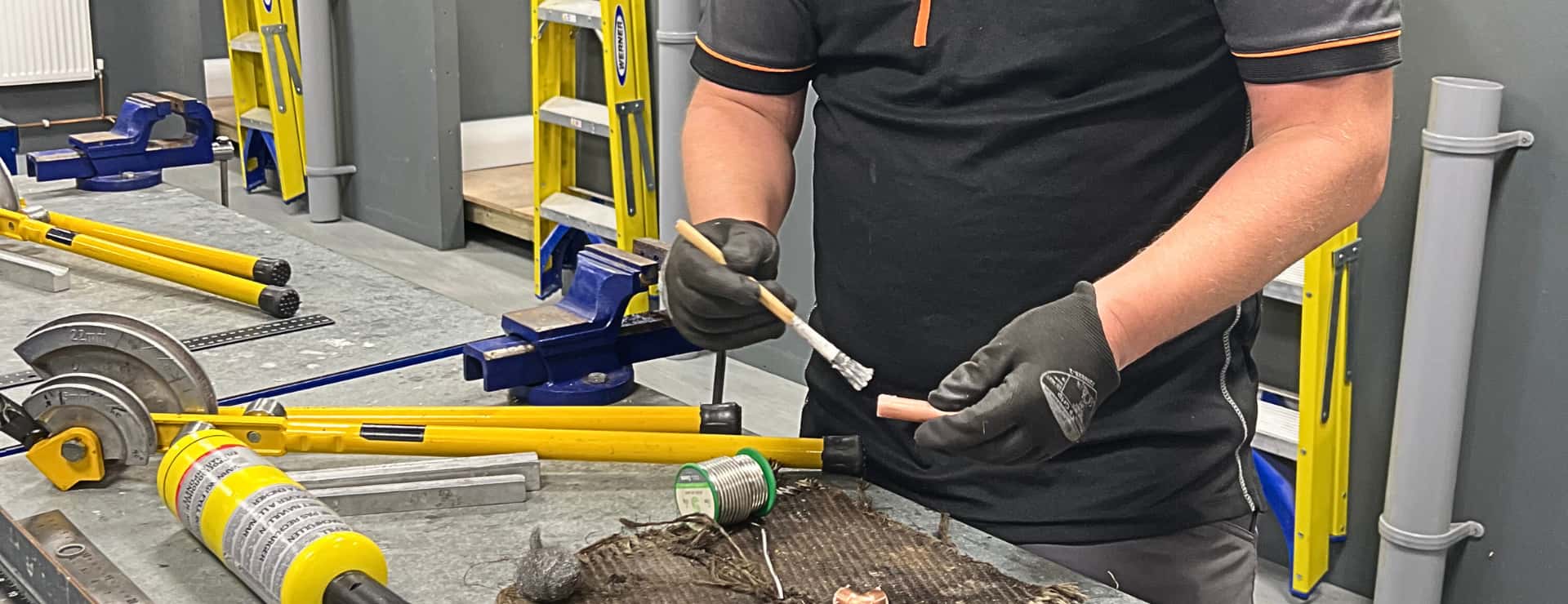
Trades and roles involving physical skill, creative collaboration, deep relationship-building, or complex problem-solving remain robust. For example:
- Gas engineer / “Gas labourer” (1%)
- Roofers (2%)
- Painter-decorators (AI performs just 4% of tasks)
- Firefighter supervisors (5%)
- Surgical assistants, ship engineers, and nursing assistants are all featured in the list of jobs that AI struggles to handle; typically, less than 7% of tasks can be automated.
This data comes from Sky’s article: The 40 jobs ‘most at risk’ from AI – and 40 it can’t touch. Whilst we don’t necessarily agree that all the jobs listed in the ‘Top 40 least exposed jobs’ section of the article are at less risk from AI, you can see that most jobs that are less at risk are practical, skilled careers. The reason for their resilience to AI? These professions require combining manual dexterity, situational judgement, and real-time problem-solving skills, at which machines still fall short. Relationship-based roles, such as therapists and teachers, are also less at risk. While some tasks, like administration and scheduling, may be supported or partially automated by AI, the core of trade work remains out of reach due to the need for human judgment and real-world decision-making.
BCG’s analysis reinforces this: 57% of all jobs depend heavily on physical human presence, hands-on work, or sustained human interaction and these are the least likely to be disrupted. Skilled tradespeople fall squarely into this group, alongside teachers, therapists, and clinicians.
The reason trades are so resilient comes down to three things: manual dexterity, situational judgement, and real-time problem-solving in variable environments. A fully qualified electrician arriving at a domestic rewire faces a different set of challenges on every job. Advanced robotics and AI can’t handle that on-site variability, and they certainly can’t make the safety-critical decisions that qualified tradespeople make routinely.
It’s also worth noting that demand for skilled tradespeople is increasing, not just holding steady. Labour shortages and the scale of infrastructure upgrades needed across the UK , including for heat pumps, EV charging, solar, and fabric-first retrofits, are creating long-term demand that AI can’t address. You can read more about this in our piece on why building services is an AI-beating choice for the next generation.
Advanced robotics and AI struggle with on-site variability and safety-critical decisions that are routine for electricians, plumbers, and similar professionals. As a result, not only do these roles remain secure, but demand for tradespeople is increasing in the face of labour shortages and the growing need for infrastructure upgrades. For those considering job security in the AI era, entering a skilled trade is a strong and future-proof choice.
AI and the Trades: A Safer Bet?
Skilled trades are not just surviving the AI era but they’re actualli benefiting from it in the right ways.
AI tools are already helping tradespeople quote jobs faster, manage their admin more efficiently, and carry out smarter diagnostics. That’s a genuine productivity improvement without threatening the core of the role. The actual installation, commissioning, fault-finding, and customer interaction remain human-led and will continue to be. If you run your own plumbing or heating business, our guide on how to use AI for your plumbing and heating business is well worth a read.
If you’re concerned about job security as technology changes, training in plumbing, electrical, gas, heating or HVAC gives you practical skills that employers value and are unlikely to be replaced by automation.
For someone choosing a career path right now, training in electrical, plumbing, gas, heating, or renewables offers something rare: a job you can be confident will still exist in 20 years, with growing demand, and that AI is making more productive rather than redundant. For a deep dive on this topic, see our articles:
- AI Job Losses & Why Tradespeople Are Safe from AI
- AI in the Trades
- The Rise of AI: Should You Rethink Going to University?

How to Futureproof Your Career From AI
Whether you’re in a vulnerable role or just thinking ahead, the principle is the same: build skills that AI finds hard to replicate.
- Develop manual, practical, or technical skills with real-world application
- Invest in people skills — empathy, communication, and customer relationships
- Embrace AI tools as productivity aids rather than threats
- Keep qualifications current; trades require ongoing CPD and certification
- Consider retraining if your current role scores highly on the risk factors above
The people who will struggle most are those who assume their role is safe without examining it critically. The ones who will thrive are those who either work in sectors with inherent resilience or who proactively develop the skills to stay relevant.
For those ready to invest in their future, Logic4training offers guidance, industry insights, and vocational courses tailored to help you secure resilient and rewarding roles.
AI job losses & future-proofing
FAQs
Which jobs are AI most likely to replace?
AI is replacing jobs built around predictable, data-driven tasks such as interpreters, translators, payroll clerks, data entry staff, telephone salespersons, and basic content writers. In the UK specifically, bookkeepers and wage clerks face an automation risk of 94%, alongside bank clerks at 87%. Customer service roles in call centres are also under significant pressure as AI handles more routine enquiries.
Are skilled trades at risk from AI?
No. Skilled trades like plumbing, electrical work, gas installation, and painting are among the safest roles from AI because they rely on manual skill, judgement, and in-person problem-solving that machines can’t replicate. Fewer than 10% of tasks in most trade roles are automatable, and demand for tradespeople is increasing due to labour shortages and infrastructure investment. BCG confirms that roles dependent on physical presence are the least vulnerable of all.
Is AI replacing jobs or just changing them?
Both. But the nuance matters. BCG’s 2026 research found that 50-55% of jobs will be reshaped by AI (same role, new expectations), while only 10-15% face outright elimination over the next four to five years. Whether a role is replaced or reshaped depends largely on how structured the work is and whether demand for the output expands when productivity improves.
Can I make my job AI-proof?
To minimise your risk, focus on building human skills like empathy, creativity, and practical know-how, and choose roles that need real-world judgement or interaction. Embrace new technologies and keep your qualifications up to date. For more, see Logic4training’s article on how to find an AI-proof job.
Where can I train for a safe, in-demand role?
Choosing a trade and gaining an accredited vocational qualification is a smart way to ensure job security. Logic4training’s courses in gas, electrical, plumbing, and renewables prepare you for hands-on roles that are in high demand and resilient to automation, backed by the latest technical and digital skills.



 Your latest offers & alerts