














Solar PV Course Level 3 RQF Solar Photovoltaic (PV) Installation Training
Representative example at 12 Months Interest Free Credit at 0% APR
£595
£59.5
£44.63
0%
Purchase price
Deposit
12 Monthly payment
Interest rate
Logic4training's Solar PV Course (Level 3 RQF) is tailored for experienced electrical operatives who want to learn solar photovoltaic installation in both domestic and commercial settings. Covering everything from system design and component selection to installation, commissioning and maintenance, you’ll gain the practical and theoretical skills needed to deliver high-quality solar PV projects.
This solar PV course is aimed at experienced domestic and commercial electrical operatives who wish to install solar photovoltaic packages.
As electricity bills continue to rise, many more people are looking for ways to generate their own power. Solar photovoltaics (PV) is the most popular choice for domestic electricity generation – in the first six months of 2022, there was an 80% increase in home PV installations.
The cost of panels has reduced dramatically over the last 10 years (by as much as 80%), which, when combined with sky-high bills, makes the return on investment much quicker and more attractive. The addition of battery storage will see a system pay for itself in an even faster timeframe.
Overall, solar panels provide certainty of power, less reliance on the grid and shield end-users from fluctuating electricity prices.
Take advantage of our package deal: Save 50% EESS course when you book with Solar PV training.
The LCL Awards Level 3 Qualification in the Installation & Maintenance of Small Scale Solar Photovoltaic Systems, covers both the practical and theory elements needed to safely and effectively fit this popular renewable technology.
The course is recognised by the Microgeneration Certification Scheme (MCS) – successful candidates can use it towards gaining MCS accreditation. An MCS certified system will give customers peace of mind, is a pre-requisite of any grants that may be available and will help end-users achieve the best export tariffs for power returned to the grid.
The most efficient solar pv systems incorporate a battery to store excess energy and provide renewable power even when the sun isn’t shining. We also deliver the LCL Awards Level 3 Qualification in the Design, Installation & Commissioning of Electrical Energy Storage Systems.
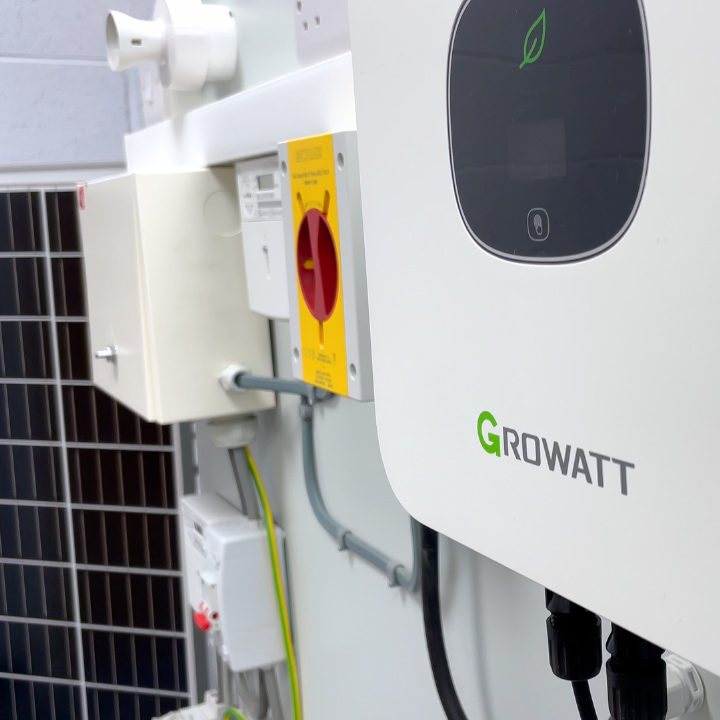
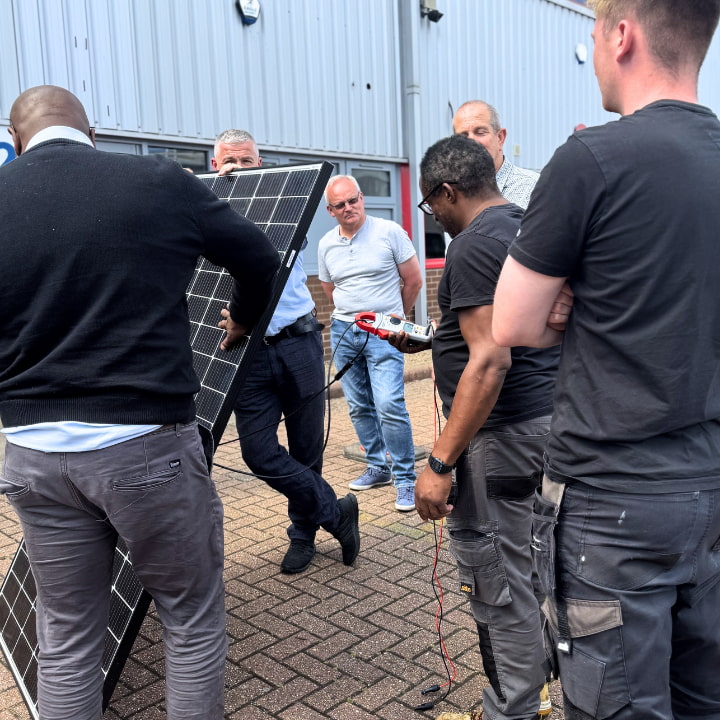
Training takes place in the classroom and on purpose-built rigs, including roof mounting kits and work on ‘live’ equipment. The course culminates in both a practical and written assessment.
The course covers the installation, commissioning and maintenance of small-scale domestic solar PV systems, including the following areas:
- Health & Safety
- All relevant regulations and standards
- The difference between AC and DC circuits
- Solar PV system and component installation
- Design principles to determine pv panel array size and position
- Preparatory work prior to installation
- PV system protection techniques
- Testing, commissioning and handover
- Routine inspection
The course provides practical and theoretical knowledge to:
- Design, install, commission, and maintain small-scale domestic solar PV systems.
- Understand AC/DC circuits and system protection techniques.
- Perform routine inspections, servicing, maintenance, and fault diagnosis.
- Servicing and maintenance.
- Fault diagnosis and rectification.
The course is designed for experienced electrical operatives who must have the 18th Edition Wiring Regulations (7671:2018+A3:2024) and one of the following:
- Level 3 NVQ Diploma in Electrotechnical Services (Electrical Installation or Maintenance)
- Level 3 NVQ Diploma in Installing Electrotechnical Systems and Equipment (Buildings, Structures and the Environment)
- Level 3 Electrotechnical Apprenticeship Qualification
- Level 3 NVQ in Electrotechnical Services Experienced Worker
- Level 3 Electrotechnical Experienced Worker Qualification
- Level 3 Electrotechnical in Dwellings Experienced Worker Qualification
- Building Services Engineering (Level 3) Electrotechnical Installation Qualification
- Level 3 Certificate in Installing, Testing & Ensuring Compliance of Electrical Installations in Dwellings
- SVQ in Electrical Installation at SCQF level 7
- Equivalent Qualifications listed in the EAS Qualifications Guide (See Tables A4.7 and A4.8)
- Current ECS Gold Card issued by the JIB or SJIB: Installation Electrician, Approved Electrician, Maintenance Electrician or Domestic Electrician.
FAQs
Solar PV has become increasingly attractive because installation costs have fallen by around 70-75% over the last decade, making systems far more affordable than they were in the early 2010s. Rising energy prices mean homeowners are looking for ways to reduce bills and gain more control over their electricity costs. By early 2024, an estimated 1.47 million UK homes had solar panels, showing how quickly adoption has grown.
The UK government’s ambitious net-zero targets have accelerated renewable energy adoption. With rooftop solar installations booming due to EU directives requiring solar on new builds, skilled installers are essential to meet this growing demand.
For a typical domestic rooftop system, the physical installation usually takes 1-2 days on site, depending on roof complexity, access, and system size. Additional time is needed for survey, design, DNO notification and commissioning, so the overall project timeline is often 1-3 weeks from initial assessment to final handover.
Most domestic solar PV installations in England, Wales and Scotland fall under permitted development rights and do not require planning permission, provided they meet certain conditions on roof height, positioning and glare. Exceptions can apply in conservation areas, listed buildings or where panels are installed on separate structures, so installers and homeowners should always check local planning guidance before work begins.
Solar energy is increasingly popular due to:
- Rising electricity bills are prompting homeowners to seek renewable alternatives.
- A dramatic reduction in panel costs (up to 80% over the last decade), with 2024 seeing the average price fall from £9,238 in January to £7,561 in December.
- Government incentives, such as export tariffs for surplus energy returned to the grid. In 2024 alone, there were a total of 184,462 home solar installations.
Battery storage allows homeowners to store surplus daytime solar generation and use it later, typically in the evening, increasing the proportion of self‑consumed energy. This can significantly reduce reliance on grid electricity and improve payback, especially when combined with time‑of‑use tariffs and off‑peak charging. Batteries also support grid flexibility and resilience as more intermittent renewables come online.
The MCS is a certification scheme that ensures high-quality renewable energy installations. Obtaining MCS accreditation provides customers with peace of mind about installation standards, is a prerequisite for accessing government grants and can help end-users achieve better export tariffs for surplus power.
Our article How to Become MCS Certified covers everything you need to know about MCS and becoming MCS certified. Should you need more information, please refer to it.