As artificial intelligence rapidly transforms the job markets, plumbers, gas engineers and electricians are left without having to worry as they are safe from AI. These hands-on careers require human skills that AI simply cannot replicate.

What you need to know about AI.

Job displaced icon

Up to 3 million jobs displaced

Between 1 and 3 million UK jobs could be displaced by AI by 2050, with losses peaking at 275,000 per year. The effect will be gradual and offset partially by economic and technological adaptation.

Admin roles at risk icon

45% of admin roles at risk

AI threatens 45% of UK analytical and clerical positions, including tax preparation, accounting, and underwriting, as these are highly routine and vulnerable to automation.

fear AI job loss

26% of workers fear AI job losses

26% of UK workers worry that AI will lead to job losses, reflecting concerns about economic security and workplace changes.

The trades rank among the safest careers.

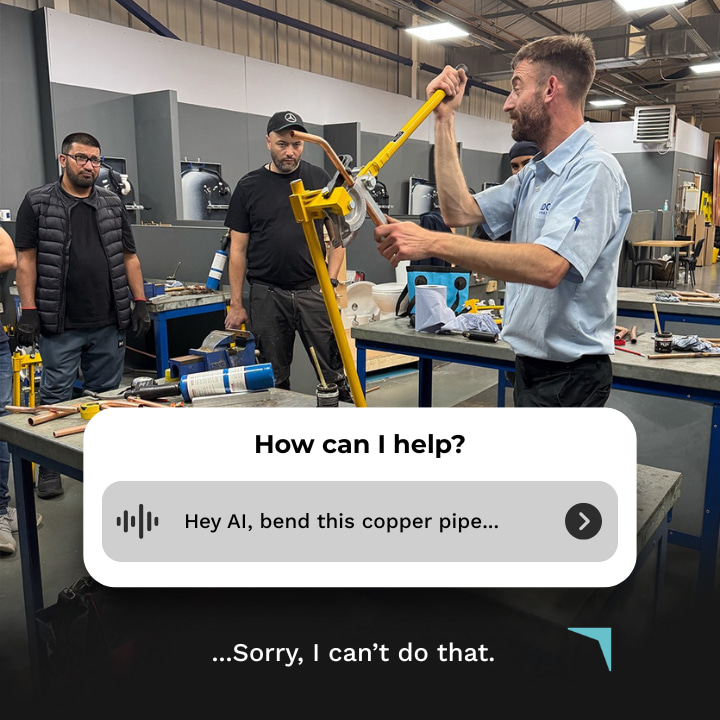
Ask any Large Language Model (LLM), such as ChatGPT, Perplexity, Gemini or Claude, to bend a copper pipe or use a volt testing stick. It will tell you how to use it, but it can’t do it itself, and these are the simplest of tasks within the trades.

Yes, companies like Tesla and Boston Dynamics are developing humanoid robots that will probably be able to do these tasks in the future. However, when it comes to more complex tasks, especially those carried out in tight spaces, robots and AI have no prior experience to fall back on.

Industries where jobs involve computer-based tasks will be most at risk, with 70% of tasks becoming transformed or replaced by AI, according to the Institute for Public Policy Research.

Ready to start your journey?
ai chat being asked to bend a copper pie

What does the industry think?

AI in the Trades Survey

Back in August this year, we ran a survey that asked tradespeople who have trained with Logic4training a number of questions to see what the trades think of the current state of AI.

Nearly half of the respondents are “somewhat familiar” with AI, while only a small minority actively use AI tools for design, diagnostics, or administration. Most remain curious but cautious about AI’s impact.

  • Nearly half of all surveyed tradespeople (47.6%) are “somewhat familiar” with AI, with only 11.9% actively keeping up with industry developments.
  • Direct experience remains limited, as just 4.8% use AI-powered tools for tasks such as diagnostics, design, or admin.
  • The vast majority are interested in learning more about AI’s practical benefits, anticipating “somewhat positive” or “neutral” impacts on the industry.

What the UK Government say about AI and the future of work.

The UK government’s AI Opportunities Action Plan highlights how artificial intelligence is quickly transforming industries and creating new opportunities for economic growth, innovation, and public services. While the plan focuses on embracing AI to boost productivity and develop high-skill jobs, it also recognises that not all roles are equally affected. Many traditional jobs will be changed or even replaced, but the government stresses the need for “lifelong skills” and reskilling to help workers adapt.

Importantly, the plan notes that roles requiring hands-on expertise, adaptability, and human interaction, like those in the building services trades, remain far less vulnerable to automation. As AI reshapes the employment landscape, choosing a career in the skilled trades is one of the most reliable ways to future-proof your job and benefit from the UK’s evolving economy.

UK's AI Opportunities Action Plan

Dexterity & Fine Motor Skills

Problem-Solving & Client Trust

Problem-Solving & Client Trust

Dexterity & Fine Motor Skills

Why Skilled Hands Matter

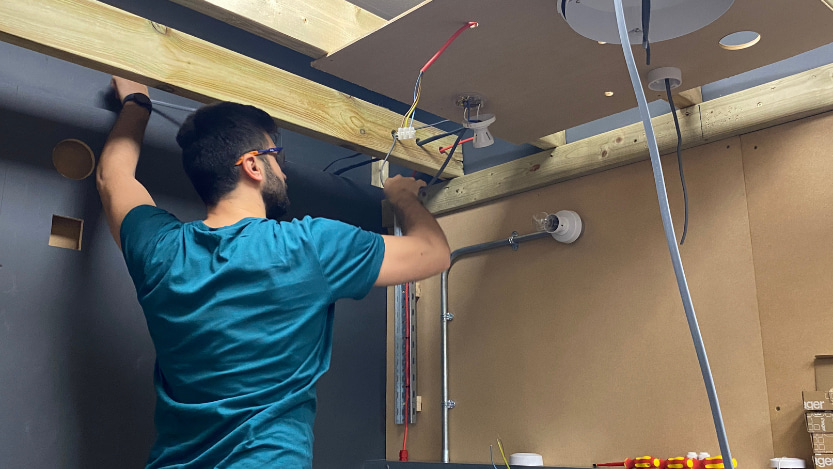
Many tasks in the trades, such as wiring a consumer unit, soldering pipework, or installing a boiler in a tight space, demand fine motor skills, steady hands, and the ability to adapt movements in real time. Human hands have millions of mechanoreceptors that provide feedback about pressure, texture, and grip, enabling highly nuanced judgment that robotic grippers have yet to rival. This tactile feedback and coordination are especially vital in unpredictable real-world settings, making it extremely difficult for AI and robots to replace the skills required in plumbing, electrical work, or carpentry.

Speak to our team
person rewiring a room

Problem-Solving & Client Trust

Expertise Meets Customer Care

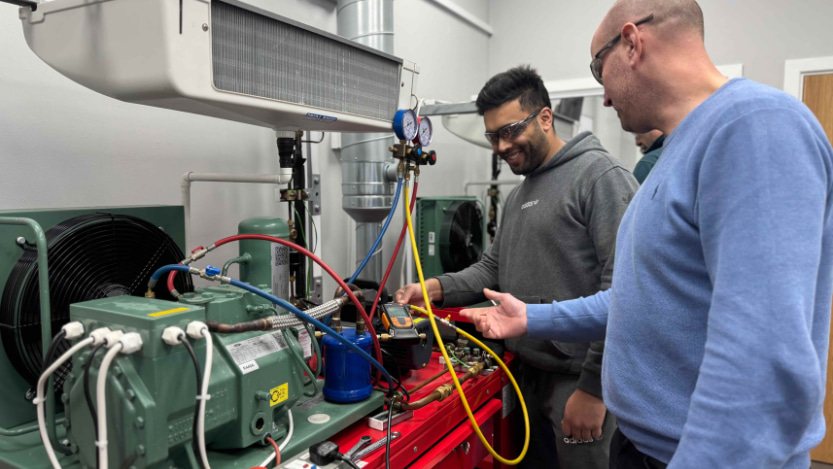
Tradespeople rely on complex problem-solving to tackle unexpected challenges on the job, from hidden pipework to outdated systems, while also building trust with clients by clearly explaining issues and providing reassurance.

Additionally, customers prefer working with people who can explain issues, offer reassurance, and adapt solutions to their specific needs, all of which require emotional intelligence and interpersonal skills that AI cannot genuinely replicate.

Speak to our team
2 men thinking of a solution for a problem

Problem-Solving & Client Trust

Expertise Meets Customer Care

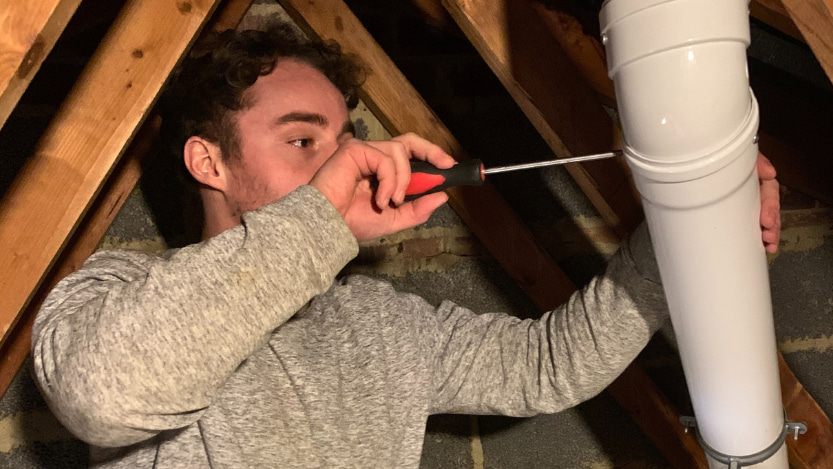
Every job is different, and no two sites are the same. Tradespeople must quickly assess new environments, work safely in cramped lofts or busy commercial premises, and adjust their approach on the fly. Whilst advanced robotics have shown to have fine motor skills, they’re performing tasks that require these skills in favourable, lab-like, environments that are designed for their success. Currently, AI systems struggle when faced with unstructured, variable settings, which is why automation is far less effective in the trades than in controlled factory environments. Human tradespeople excel at navigating these ever-changing conditions, making them indispensable.

Speak to our team
a person fixing a boiler's flue in a cramped loft

A practical career deserves in-person training

At Logic4training, we believe that learning the practical skills and theoretical foundations of a trade should take place in-centre. Not online. We won’t ask you to sit in front of a computer to learn the theories and principles that underpin the trade, unlike other training providers.

In-person training gives you the confidence and practical experience you simply can’t gain online, preparing you for the real-world challenges you’ll face on-site. Our approach ensures you develop the skills, judgement, and adaptability that set great tradespeople apart.

Why learn a course online or in the form of “blended learning” when you’re going to spend your career working with your hands?

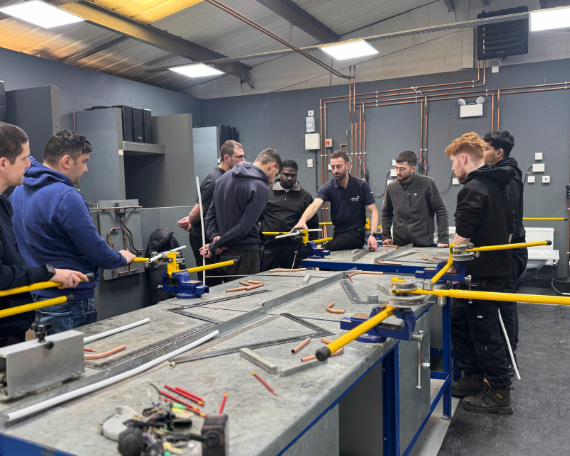
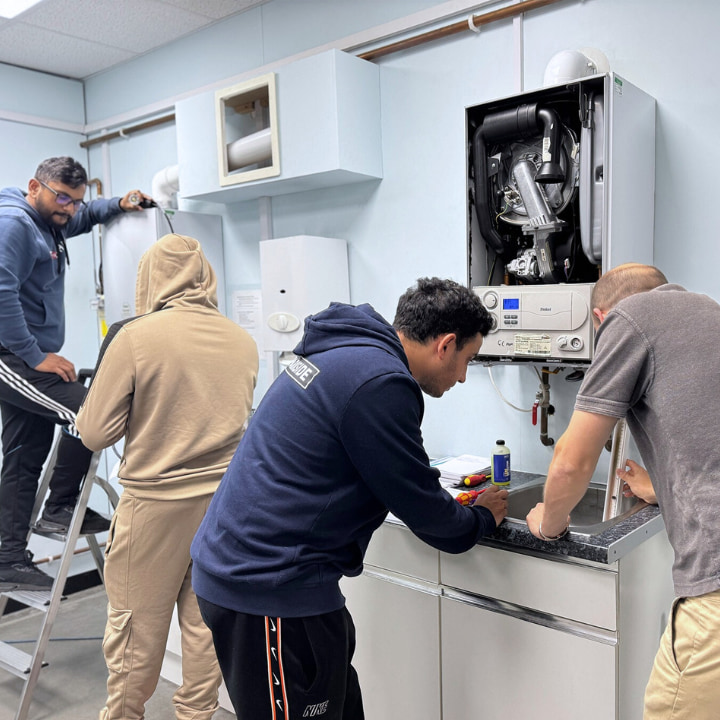
a group of gas students completing their training in-person

Practical, In-Centre Training

Over 2000+ five star reviews from our customers

At Logic4training, we’ve helped many beginners take their first steps into the electrical industry with confidence. Our candidates’ testimonials highlight the value of our expert guidance and practical training.

See more of our reviews
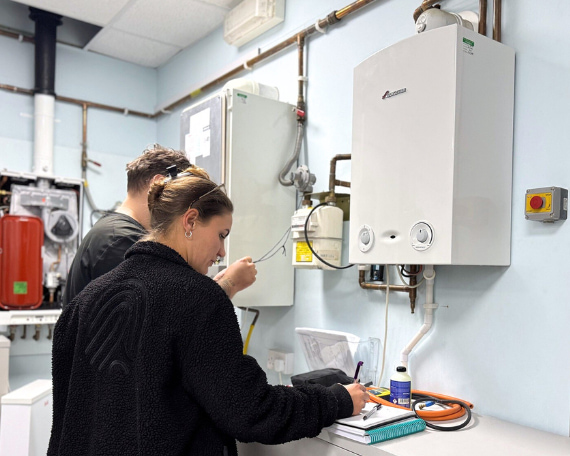
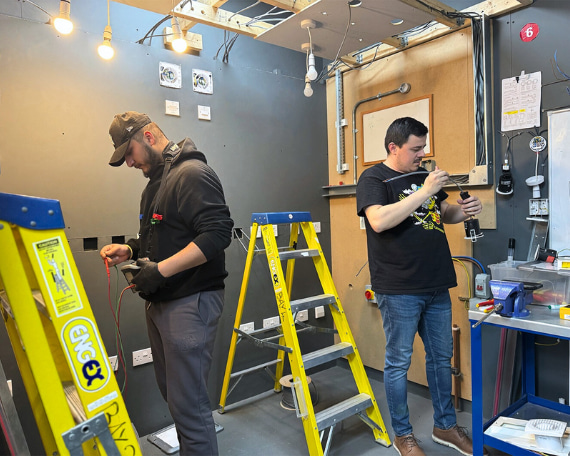
electrical class after completing their course
100% recommend to anyone wanting to get into...

Such an amazing place to learn the trade, throughly enjoyed the course, would 100% recommend to anyone wanting to get into plumbing. Staff are polite...

Tyler Eccott

A good starting point for your career

Good teachers, especially Russell, he shared his working experiences, and told us stories that we can learn from them. Good curriculum, I have registered for...

Paddy Wong

We are trusted by some of the Nation's most respected companies

Over the years, we have built many connections, and we are proud to say we have trained individuals from a range of companies.

Tesco logo
OVO logo
NHS logo
Eon logo
octopus energy logo
CBRE logo
HSS hire logo
John Lewis & Partners logo
Curry's logo
EDF logo
Morrison Energy Service logo
SSE Logo

Frequently asked questions

Need to speak to our team?

While AI will undoubtedly impact the trades industry, the physical dexterity, adaptability to different environments, and complex problem-solving required in these professions make them difficult to fully automate.

In the short to medium term. No. AI won’t replace tradespeople. However, in the future, say in 25-50 years, it’s impossible to predict due to the rapid development of LLMs and advancements in robotics.

You can read more on why the trades are secure from AI.

Ready to future-proof your career?

Learn a trade

We are proud to be accredited by

Phone icon
Get in touch
School icon
Find an apprenticeship
Phone icon
Get in touch
School icon
Find an apprenticeship