
Last updated: 13th July 2026 | Originally published: 13th March 2025
What qualifications do you need to be a plumber? Legally none, but in practice, the industry-standard route in the UK is a Level 2 Diploma in Plumbing and Heating followed by a Level 2 NVQ, which also unlocks your JIB Plumbing CSCS card for site work. With a CIPHE report estimating that 73,700 new plumbers will be needed by 2032, a recognised plumbing qualification is the most reliable foundation for a secure, well-paid career.
Plumbing qualifications at a glance
As a plumber, you would want to hold some of the following qualifications, depending on your career goals.
Vocational training: Diploma and NVQ
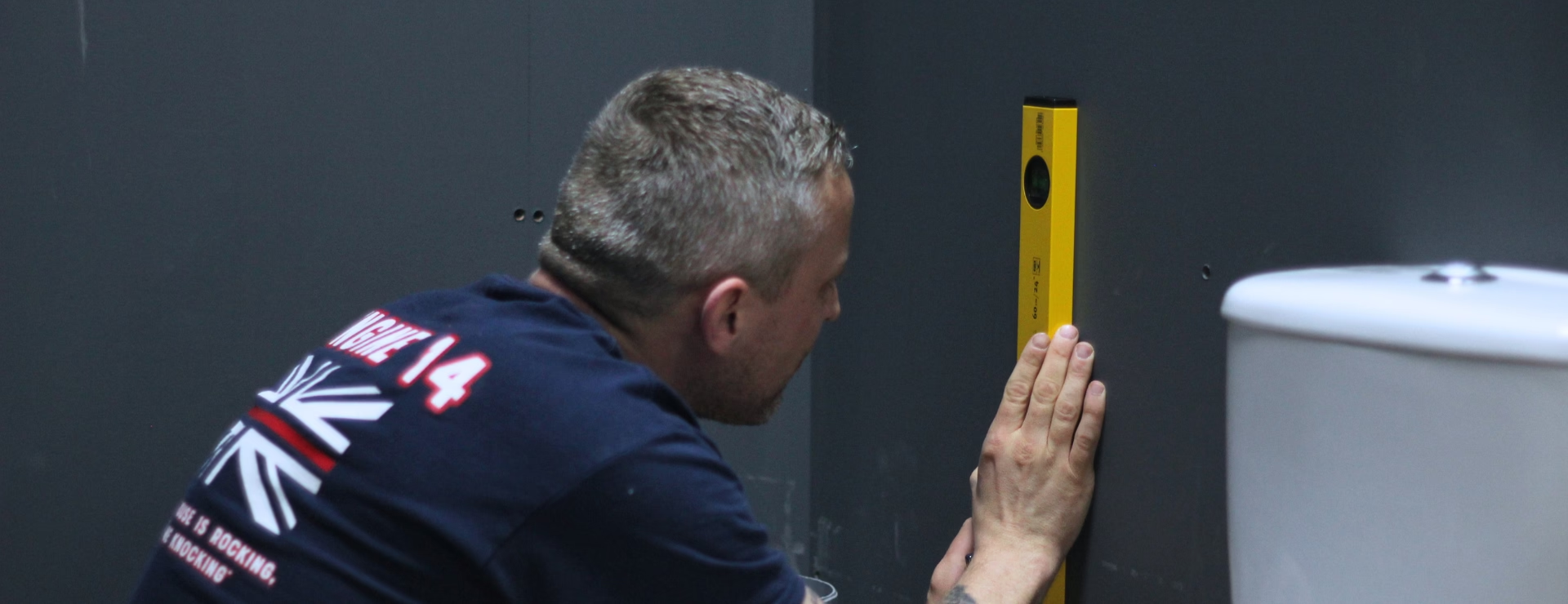
Most new entrants start with the Level 2 Diploma in Plumbing and Heating. This is a centre-based course covering pipework, hot and cold water systems, central heating, electrical safe isolation, and above-ground drainage. From there, the Level 2 NVQ assesses you doing real plumbing work on site, and it’s the qualification that lets you apply for your JIB Plumbing CSCS card.
Already been working in plumbing without a qualification for three years or more? You can go straight to the Level 2 NVQ in Plumbing and Heating. For a full breakdown of how the NVQ works, and for typical timescales for each route, see how long it takes to become a plumber.
Apprenticeships
The traditional plumbing apprenticeship is a tried-and-tested pathway, usually lasting about four years. This route combines on-the-job training with formal instruction, allowing you to earn as you learn.
A plumbing apprenticeship usually takes between 3 and 4 years, and is best suited to school or college leavers. They can be structured in many different ways and to different levels and because of this, it is important to see if the qualifications that you gain are exactly what you are looking for.
At the end of the plumbing apprenticeship, you’ll come away with an NVQ Diploma at Level 2, 3 or even 4, depending on how long you trained for.
External resources like the City & Guilds plumbing qualifications page provide further detailed information on recognised qualifications that boost your career prospects.
Do you need any formal education or entry requirements?
There are no formal entry requirements to train as a plumber in the UK. GCSEs in Maths and English are desirable, particularly for apprenticeships, but what matters most is a good grasp of English and the right practical mindset.
Formal Education
The answer is none. However, it’s desirable to have a GCSE in Maths and English. What you do need is a good grasp of English and a personality that’s suited to the job.
Traits that help make a good plumber
Some of the traits and skills that will help you get along in the trade and that are needed to be a plumber are:
- Good at problem solving – you need to be able to think for yourself
- A good communicator – you’ll often be working as part of a team
- Friendly – to get on with your colleagues and clients
- Fit and healthy – it can be physically demanding work
- Good with your hands – plumbing requires a high level of manual dexterity
- Able to work to deadlines – so you need to be good under pressure
Developing Plumbing Specific Skills
The journey to becoming a skilled plumber isn’t just about earning a qualification; it’s also about developing a set of specific skills to complete plumbing work safe and effectively.
Technical Skills
Whilst there will be a difference in the structure of training for plumbing apprenticeships and vocational courses, you learn a set of technical skills that cover the following topics:
- Pipework skills – including bending and soldering.
- Installing and fault finding for cold and hot water systems as well as central heating systems.
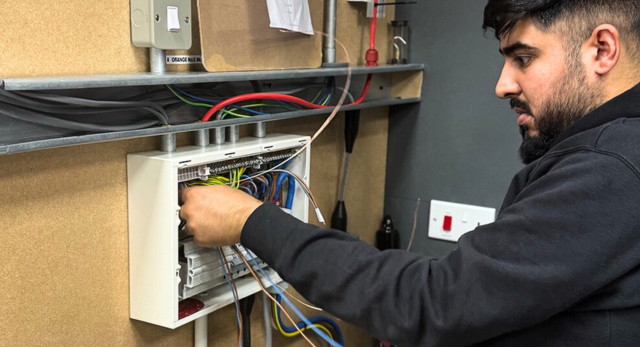
- Electrical installation of plumbing and heating components as well as electrical safe isolation.
- Installation and maintenance of above-ground drainage systems
Problem Solving
During the time that you are training, you will be given practical tasks to complete that involve you to think about the best way to complete it.
When you start learning in the plumbing industry, you’ll have a colleague, mentor or trainer there to help you build this skill and over time, it will develop so that you can swiftly and efficiently complete the job.
Communication & Customer Service
Engaging effectively with customers and other tradespeople makes a huge difference in building your reputation. Clear communication and consistent reliability build trust that can lead to repeat business and valuable referrals. Additionally, by actively listening to client feedback and collaborating with peers, you position yourself as a knowledgeable and dependable professional, which can lead to increased opportunities and industry recognition.
For further insights into what it takes to become a plumber, explore our how to become a plumber page.
Qualifications and registrations for upskilling plumbers
Once qualified, these are the plumbing qualifications and registrations that open up more (and better-paid) work:
- Water Regulations & unvented hot water (HWSS): Common add-ons (often included in training packages) that broaden the work you can take on.
- JIB Plumbing CSCS card: Often required on construction sites; needs a Level 2 NVQ in Plumbing and Heating.
- Gas Managed Learning Programme: The vocational route to working on gas, included in our plumbing packages or available standalone.
- Gas Safe registration: Mandatory for gas appliance work and requires ACS (CCN1 and CENWAT).
- Heat pump training: With a Level 2 NVQ you can upskill into heat pumps and low-carbon heating.
Qualification, certification or registration: What’s the difference?
These terms get used interchangeably, but in UK plumbing:
- A qualification (like the Level 2 Diploma or NVQ) proves your training and competence
- A certification is the certificate an awarding body (LCL Awards, City & Guilds, BPEC) issues when you pass
- A registration (Gas Safe, WaterSafe, JIB CSCS) is your licence-style entry on an industry register. Some registrations, like Gas Safe for gas work, are legally required.
Conclusion
The plumbing industry is not only a vital part of the building services industry, but it’s also a rewarding career path that offers plenty of opportunities for growth. With the right mix of training, hands-on experience, and certifications, you can build a robust career that stands the test of time.
We encourage you to explore each pathway and choose the one that provides you with the needed qualifications that align best with your ambitions. Remember, every step you take is a step toward becoming a skilled professional who makes a real impact on communities.
If you would like to speak to our team to discuss the best option for you, please call us on 020 8845 7222.
FAQs
Can I work as a plumber without qualifications?
While some plumbers enter the trade without formal qualifications, it is strongly advised to gain an industry-recognised qualification to ensure competence, safety, and employability. Qualified plumbers are preferred by employers and clients, especially for insurance and legal compliance.
Do I need formal education or GCSEs to become a plumber?
No formal education is required, but having GCSEs in Maths and English is desirable and improves access to apprenticeships and vocational training. What matters most is a strong grasp of English and practical problem-solving skills.
Do I need an NVQ as well as a Level 2 Diploma?
For most plumbers, yes. The Level 2 Diploma in Plumbing and Heating teaches you the skills; the Level 2 NVQ proves them through assessment of real work on site and it’s the qualification you need to apply for your JIB Plumbing CSCS card. Most new entrants complete both. Further information: NVQ Level 2 Plumbing Explained.
How long does it take to become a qualified plumber?
A traditional plumbing apprenticeship lasts three to four years. Fast-track courses such as the Level 2 Diploma in Plumbing and Heating can be completed in as little as six weeks, but practical NVQ assessment may take one to two months longer, based on job availability. Our article How Long Does It Take To Become A Plumber? covers this in more depth.
What skills are essential for being a good plumber?
Key skills include problem-solving, manual dexterity, teamwork, and communication. Technical skills cover pipework, fault-finding, system installation, electrical safety, and drainage.
Is Gas Safe registration required for plumbers?
Gas Safe registration is only mandatory for those working with gas appliances. To become Gas Safe registered, plumbers need to complete an ACS gas qualification and hold the modules such as CCN1 and CENWAT. The best route for plumbers to gain the ACS gas qualification is to complete a gas managed learning programme.
What are the options for upskilling after basic plumbing qualifications?
Qualified plumbers can specialise with courses in gas, heat pumps, Water Regulations, unvented hot water (HWSS), and other low-carbon technologies. Each specialism broadens the work you can take on and increases your earning potential. Hheat pump skills, in particular, are in growing demand as the UK moves to low-carbon heating.
Do I need professional registration to work as a plumber?
Registration with bodies like Gas Safe, WaterSafe, or through accreditation (e.g. JIB CSCS) is often required for particular jobs or working on construction sites. It boosts credibility and opens more work opportunities.
How do I find plumbing apprenticeships or work experience?
Seek apprenticeships through colleges, training centres, and local employers, and try to arrange your own work placements for real-life experience. Apprenticeships combine paid work and study for recognised qualifications and industry contacts.
Why should I choose a recognised training provider for plumbing qualifications?
Providers such as Logic4training and those offering LCL Awards, City & Guilds or BPEC certifications ensure quality, compliance, and support for developing both practical and soft skills needed for success in plumbing.


 Your latest offers & alerts