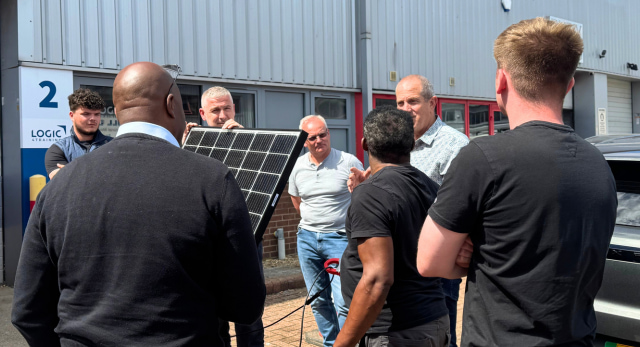

Solar PV is one of the fastest-growing areas in the UK’s renewables sector, creating strong demand for qualified installers who understand both the electrical side and how to design efficient, compliant systems. This article explains the qualifications you need to install solar PV, who the courses are for, how they link with battery storage, and how Logic4training can help you upskill and future‑proof your career.
Entry Requirements: What Do You Need to Start?
Unlike gas, there is no single legal “licence” to work on solar PV, but you do need a solid electrical foundation to train safely and meet industry expectations. Most reputable solar courses and employers expect you to be an experienced electrical engineer or electrician already before you step into specialist PV training.
For new entrants, that usually means first following an electrical route, building towards:
- Holding an NVQ Level 3 Electrotechnical qualification.
- Being registered with a Competent Persons Scheme (CPS) such as NICEIC or NAPIT
- And hold the 18th Edition Wiring Regulations (BS 7671) qualification.
If you are at this earlier stage, our guide to Becoming an Electrician and broader career overview, such as Learn a Trade in 2026, are useful starting points for gaining more insight.
Core Qualification: Level 3 Solar PV Installation & Maintenance
Once you have the right electrical background, the key qualification for installers is a Level 3 award in the installation and maintenance of small‑scale solar PV systems. This is the specialist training that takes you from “a general electrician” to “solar PV installer”.
At Logic4training, we offer the Level 3 RQF Solar Photovoltaic (PV) Installation Training course, accredited by LCL Awards and designed specifically for experienced electrical operatives. The course covers both theoretical knowledge and hands‑on skills, and is recognised by schemes such as MCS as part of an acceptable competence pathway.
Solar PV and MCS certification
There is no law that says you must be MCS certified to fit solar panels, but many customers, lenders and energy companies prefer or require MCS‑certified installations. Export tariffs and some finance products, for example, are often linked to MCS‑approved systems and installers.
To become MCS certified, installers or companies must show both technical competence and robust processes, including:
- Relevant Level 3 technical qualifications, such as Solar PV and EESS.
- Evidence of completed installations that meet standards.
- A quality management system and documented procedures.
Logic4training’s “How to Become MCS Certified” insight explains the routes you can take to becoming MCS certified, application criteria as well as outlining some of the benefits what are the benefits that come with being certified.
Training routes and pathways
Depending on where you are starting from, your route into solar PV may look different, but most paths fall into one of these broad categories.
1. Already a practising electrician
If you are already working as a domestic or commercial electrician and hold 18th Edition, NVQ Level 3 and inspection & testing:
- Book directly onto Logic4training’s Level 3 Solar PV course.
- Add the Level 3 Battery Storage (EESS) course or the combined package if you want to offer storage from day one.
2. Experienced electrical tradesperson without a full NVQ
If you have strong practical experience but are missing elements such as NVQ Level 3 or inspection & testing:
- Discuss your background with Logic4training. Our team can advise whether your experience and existing certificates meet entry criteria.
- If needed, complete gap‑fill courses (e.g. 18th Edition, Initial Verification) before progressing to Solar PV.
3. Complete new entrant
If you are starting from scratch:
- Follow a new‑entrant electrical training route, working towards completing the NVQ Level 3 Electrical Installation / Maintenance.
- Once qualified and gaining site experience, then add solar PV and then battery storage qualifications for a full renewables skill set.
Education, traits and training
Formal academic requirements for solar PV training are less rigid than for some trades, but the industry does expect a good grounding in maths, English and basic science. This helps with calculations (such as array sizing and yields), reading technical documentation and explaining systems clearly to customers.
Just as important are your personal traits:
- Comfortable working at height and outdoors in varying conditions.
- Detail‑oriented and methodical, especially with testing and paperwork.
- Able to keep up with changing technology and regulations.
Logic4training’s training style is designed to support different learning preferences, combining written materials, practical demonstrations and small‑group activities so you can build confidence step by step.
How Long Does it Take to Become a Solar PV Installer?
If you already have the required electrical qualifications, you can gain your Level 3 solar PV qualification in a matter of days. Logic4training’s course typically runs over three days, blending classroom learning, hands‑on installation practice and assessments.
If you choose to add the Level 3 Electrical Energy Storage Systems (EESS) course as well, you will usually need an extra two days, meaning you can become qualified in both solar PV and battery storage within about a working week of classroom time. For those starting further back on the electrical path, the overall journey will be longer, but solar PV then becomes a relatively quick upskill once the basics are in place.
Why Become a Solar PV Installer?
Solar PV is at the heart of the UK’s net zero plans, with more homes and businesses choosing solar to cut bills and reduce their dependence on the grid. Installers with recognised solar and electrical qualifications are in high demand, especially those who can also offer battery storage and other low‑carbon technologies.
For electrical operatives, adding solar PV is a natural evolution: you are working with familiar principles, but in a fast‑growing, future‑facing sector. Customers are also increasingly looking for installers with formal training and, ideally, links to schemes like MCS, which use qualifications such as Logic4training’s Level 3 Solar PV and EESS courses as evidence of competence.
What Does a Solar PV Installer Do?
A solar PV installer designs, fits and maintains grid‑connected solar systems, usually on domestic or small commercial properties. The job is a blend of office and site work, including surveys, design calculations, installation, testing, commissioning and customer handover.
On a typical project, a solar PV installer will:
- Assess the property, roof condition, shading and electrical supply.
- Design the system: panel layout, string configuration, inverter choice and protection.
- Install mounting systems, modules, DC cabling, isolators and inverters.
- Connect to the consumer unit, test, commission and complete documentation.
Many installers also offer ongoing servicing, fault‑finding and upgrades, such as adding battery storage or EV charging points later on.
Essential Skills For Solar PV Installers
Qualifications are only part of the picture; you also need a mix of technical and soft skills to succeed as a solar installer. Many of these are developed on your electrical journey and then sharpened through renewables training and real‑world projects.
Technical skills:
- Electrical design and fault‑finding on AC and DC circuits.
- Understanding of BS 7671 and the IET PV Code of Practice.
- Working at height safely and using access equipment correctly.
- Using test equipment, commissioning systems and completing certification.
Soft skills:
- Communicating options and payback to customers in plain English.
- Explaining how to use and monitor systems (apps, inverters, batteries).
- Problem‑solving on complex roofs, shaded sites or tight deadlines.
Working as a solar PV installer is about gaining a set of repeatable skills you can apply across many different jobs. These skills are developed through training, supervised work and, over time, your own projects.
Key solar‑specific skills include:
- PV design and performance estimation: Choosing module layouts, sizing strings, and estimating yields and payback.
- Roof work and mounting systems: Selecting and fitting mounting kits for different roof types, and protecting the building fabric.
- DC protection and isolation: Choosing appropriate breakers, fuses and isolators for the DC side.
- Interfacing with other technologies: Integrating PV with batteries, EV chargers or heat pumps.
Logic4training’s Solar Panel Installation: Everything You Need to Know article is a read that gives you a customer‑facing overview of how systems work, which you can mirror in your own explanations.
What the Logic4training Solar PV Course Covers
At Logic4training, our Level 3 Solar PV Installation Training Course is structured to give you everything you need to design, install and maintain domestic‑scale systems. Typical content includes:
- Health & safety for working at height, on roofs and with DC systems.
- Regulations and standards, including BS 7671 and the IET Code of Practice for Grid‑Connected Solar PV.
- AC and DC fundamentals and the specific hazards associated with DC and inverters.
- System components: modules, mounting systems, inverters, isolators, cabling and protective devices.
- Design principles: array sizing, tilt, orientation, shading, string configuration and inverter selection.
- Preparatory work: surveys, structural considerations and coordination with other trades.
- Installation, testing, commissioning and handover, including documentation.
- Routine inspection, servicing, maintenance and fault‑finding.
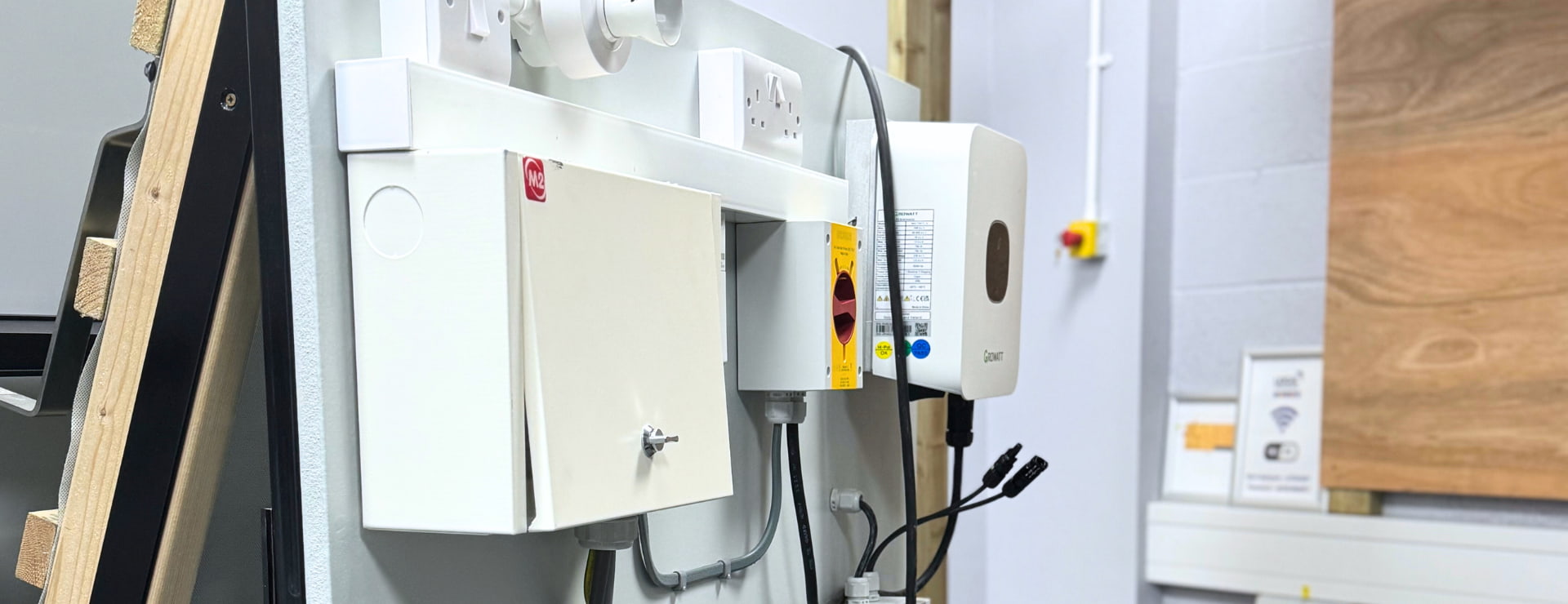
Training is delivered in the classroom and on purpose‑built rigs, including roof mounting systems and “live” setups, so you can practise in realistic conditions before working on customer properties.
Do You Need to be a Fully Qualified Electrician?
In practice, yes. You will need an electrician‑level skill set to get the most from Level 3 solar PV course and to work safely on live systems. Most specialist courses, including ours, are aimed at practising electrical operatives rather than complete beginners.
Logic4training’s entry requirements for the Solar PV course include:
- 18th Edition Wiring Regulations (BS 7671:2018+A2:2022).
- A Level 3 Electrotechnical qualification (NVQ/SVQ or equivalent).
- A Level 3 qualification in Initial Verification and Certification of Electrical Installations.
If you don’t yet hold these qualifications, we can help you plan a training pathway, starting with core electrical courses and then progressing to solar PV and, later, battery storage.
Adding battery storage: EESS Level 3
The most effective solar systems now include battery storage, allowing homeowners to use more of the electricity they generate and to take advantage of time‑of‑use tariffs. For installers, being able to design and fit Electrical Energy Storage Systems (EESS) is a major value add.
Logic4training offers the Level 3 Electrical Energy Storage Systems (Battery Storage) course, which covers:
- Battery technologies, operating modes and safety.
- System design and sizing, including integration with existing PV.
- Installation, protection, control and communication with inverters.
- Testing, commissioning, maintenance and fault‑finding.
There is also a Solar PV & Battery Storage Training Package where you can book both Level 3 courses together, with a promotional discount on the EESS element.
In summary
In summary, to become a solar PV installer, you will typically need an NVQ Level 3 Electrotechnical qualification (or equivalent), 18th Edition Wiring Regulations, registration with a Competent Persons Scheme, as well as a Level 3 Solar PV installation and maintenance qualification. With these in place, and ideally a Level 3 Battery Storage (EESS) qualification too, you can evidence the competence that customers, employers and schemes like MCS are looking for.
Becoming a solar PV installer is a smart move if you already have an electrical background and want to move into a fast‑growing, future‑proof area of the industry. With the right Level 3 qualifications in Solar PV, and ideally Battery Storage, you can design, install and maintain efficient systems that help customers cut bills and carbon while meeting current standards.
Logic4training’s pathway is built around this reality: start with core electrical qualifications and CPS registration, then add specialist training in Solar PV installation and Electrical Energy Storage Systems, either individually or via the Solar PV & Battery package. From there, you can work towards MCS certification, build real‑world experience and develop the technical and customer‑facing skills that set you apart in a competitive renewables market.
FAQs
Do I need to be Gas Safe registered or a plumber to install solar PV?
No. Solar PV is an electrical technology, so the key requirement is an electrical background and relevant Level 3 PV training, not Gas Safe registration or plumbing qualifications.
What qualifications do I need before taking the Logic4training Solar PV course?
You will need 18th Edition Wiring Regulations, a Level 3 Electrotechnical qualification (NVQ/SVQ or equivalent) and a Level 3 qualification in Initial Verification and Certification of Electrical Installations, or equivalent evidence of competence.
Is MCS certification mandatory to install solar?
MCS certification is not a legal requirement, but it is often required for export tariffs, finance packages and some tenders. Level 3 Solar PV and EESS qualifications form part of the recognised competence routes for MCS.
How long does it take to become a solar PV installer with Logic4training?
If you already meet the entry requirements, you can complete the Solar PV Level 3 course in around three days, and add Battery Storage in a further two days. If you still need core electrical qualifications, your total journey will be longer, but solar itself is a relatively short upskill.
Can I train in solar PV as a career‑changer?
Yes, but you will first need to gain core electrical qualifications and experience; then you can add Level 3 Solar PV and, ideally, Battery Storage. Logic4training’s new entrant routes and career guides are designed to support this kind of transition.


 Your latest offers & alerts