City & Guilds and LCL Awards inspection and testing qualifications covering initial verification on new installations, condition reports on existing ones, and PAT testing.
Electrical Inspection And Testing Courses
For electricians looking to certify new installations, carry out condition reports & test portable appliances.
Choose which inspection and testing course you'd like to complete
 electrical
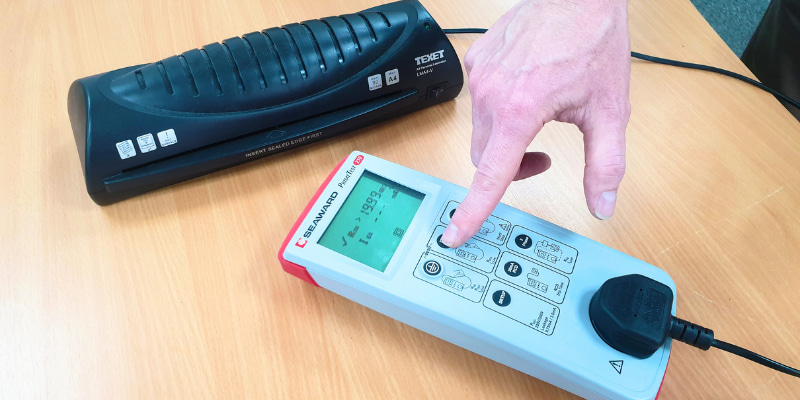
PAT Testing Course City & Guilds 2377
£310 + VAT
City & Guilds 2377 portable appliance testing qualification, covering inspection,...
intermediate Level
View course details
 electrical
Initial Inspection & Testing Course L3 RQF
£595 + VAT
Level 3 initial verification qualification covering inspection and testing of...
intermediate Level
View course details
 electrical
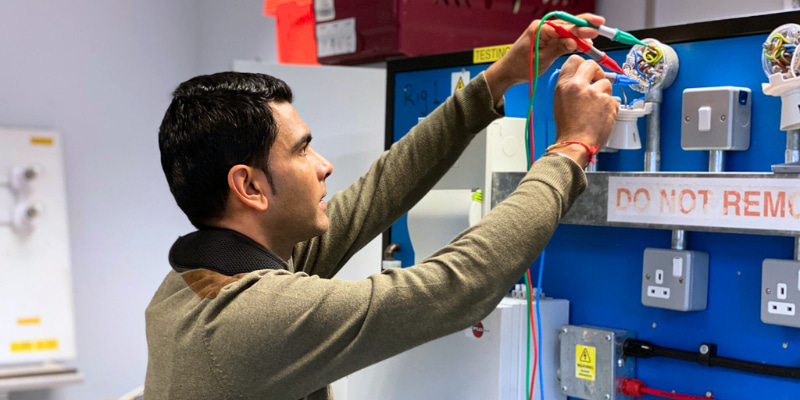
Periodic Inspection & Electrical Testing Course
£465 + VAT
Level 3 periodic inspection qualification for engineers producing EICRs on...
experienced Level
View course details
Compare Inspection and Testing Courses
Not sure which course you need? Compare PAT testing, initial verification and periodic inspection.

PAT Testing Course City & Guilds 2377
Best for
- Testing portable and in-service electrical equipment
Covers
- Workplace electrical equipment inspection and testing
Who for
- Experienced installers or maintenance staff who need to carry out PAT testing
Result
- Gain a recognised City & Guilds PAT Testing qualification
Initial Inspection & Testing Course L3 RQF
Best for
- Certifying new electrical installations
Covers
- Initial verification, inspection, testing and certification of new electrical work
Who for
- Experienced electricians working on new installations
Result
- Build competence in initial verification and certification
Periodic Inspection & Electrical Testing Course
Best for
- Condition reports and ongoing compliance
Covers
- Periodic inspection, testing, condition reporting and certification of existing installations
Who for
- Experienced electricians responsible for assessing the safety of existing electrical installations
Result
- Develop skills for periodic testing and condition reporting
Test it, certify it, sign it off.
2500+ 
Reviews
Accredited
Training Courses
4
Training Centres
 new-entrants
New to electrical?
Explore new entrant electrical training routes.
View electrical packageselectrical
Regulations up to date?
Inspection and testing assumes current BS 7671 knowledge.
View wiring regulations coursesElectrical verification at all stages.
Certification is a service line, not just a skill. From initial verification on new work, to EICRs on existing installations as well as in-service PAT testing. These qualifications let you test and legally sign off what you inspect.
- City & Guilds and LCL Awards qualifications
- Initial verification, periodic inspection and PAT
- Test rigs and instruments at our centres
Inspection and Testing courses explained.
Adding certification to your services? These quick answers explain what each qualification lets you inspect, test and sign off.
It depends on the work you carry out. Initial verification covers testing and certifying new installations.
Periodic inspection covers EICRs on existing ones.
PAT testing covers portable appliances rather than fixed wiring.
Periodic inspection covers EICRs on existing ones.
PAT testing covers portable appliances rather than fixed wiring.
Inspection and testing courses assume existing electrical competence, including current wiring regulations knowledge. They teach you to test and certify, not to install.
To complete an inspection & testing course, you need to hold an 18th Edition Wiring Regulations qualification or equivalent, and must have a practical working knowledge of both domestic and commercial electrical installations, including 3 phase installations.
For periodic inspection and testing, you will need at least 12 months on-site experience in initial inspection, testing and certification of electrical installations, a level 3 NVQ or SVQ, and a current ECS Gold Card. You can learn the specifics of the NVQ/SVQs on our periodic inspection course page.
PAT testing is the exception. The City & Guilds 2377 is open to people without an electrical background, because portable appliance testing sits outside fixed wiring work. With this said, will need to understand the fundamental electrical principles and because of this, it can be deemed as a challenging course if you don't have an electrical background.
To complete an inspection & testing course, you need to hold an 18th Edition Wiring Regulations qualification or equivalent, and must have a practical working knowledge of both domestic and commercial electrical installations, including 3 phase installations.
For periodic inspection and testing, you will need at least 12 months on-site experience in initial inspection, testing and certification of electrical installations, a level 3 NVQ or SVQ, and a current ECS Gold Card. You can learn the specifics of the NVQ/SVQs on our periodic inspection course page.
PAT testing is the exception. The City & Guilds 2377 is open to people without an electrical background, because portable appliance testing sits outside fixed wiring work. With this said, will need to understand the fundamental electrical principles and because of this, it can be deemed as a challenging course if you don't have an electrical background.
In practice yes. Periodic inspection requires at least 12 months of on-site experience in initial inspection, testing and certification, so initial verification comes first.
The logic is that you cannot properly assess the condition of an existing installation without first understanding how a compliant new one is tested and certified. Periodic inspection also requires a Level 3 NVQ or SVQ and a current ECS Gold Card, making it the most demanding entry bar in this range.
If you hold neither, start with initial verification and build the site experience before returning for periodic.
The logic is that you cannot properly assess the condition of an existing installation without first understanding how a compliant new one is tested and certified. Periodic inspection also requires a Level 3 NVQ or SVQ and a current ECS Gold Card, making it the most demanding entry bar in this range.
If you hold neither, start with initial verification and build the site experience before returning for periodic.
City & Guilds 2377 suits anyone responsible for the safety of portable appliances, including facilities teams, landlords, maintenance staff and electricians adding a service line. It covers inspection, test procedures, record keeping and making pass or fail decisions.
Yes. Competent Person Schemes require a Level 3 initial verification qualification as evidence that you can test and certify your own work.
This is the commercial reason most electricians take the course. Scheme membership lets you self-certify notifiable work under Part P rather than notifying building control on every job, which saves time and cost and is what makes running your own business practical. Assessors check the qualification at registration and at your annual assessment.
Periodic inspection is a separate qualification and is what you need if you also want to carry out EICRs. Our guide to Competent Persons Schemes sets out what each scheme expects.
This is the commercial reason most electricians take the course. Scheme membership lets you self-certify notifiable work under Part P rather than notifying building control on every job, which saves time and cost and is what makes running your own business practical. Assessors check the qualification at registration and at your annual assessment.
Periodic inspection is a separate qualification and is what you need if you also want to carry out EICRs. Our guide to Competent Persons Schemes sets out what each scheme expects.
The qualifications themselves do not expire, but they are tied to a specific edition of BS 7671, so currency matters.
Competent Person Schemes and employers expect your knowledge to reflect the regulations in force, which means keeping your 18th Edition up to date as amendments are published. Many electricians refresh inspection and testing alongside a wiring regulations update rather than waiting to be asked.
PAT testing follows the same pattern, with employers commonly setting their own refresher period.
Competent Person Schemes and employers expect your knowledge to reflect the regulations in force, which means keeping your 18th Edition up to date as amendments are published. Many electricians refresh inspection and testing alongside a wiring regulations update rather than waiting to be asked.
PAT testing follows the same pattern, with employers commonly setting their own refresher period.
An Electrical Installation Condition Report is the formal record produced when an existing installation is inspected and tested. Our periodic inspection course is the one that qualifies you to carry them out.
Demand has grown considerably since private landlords in England became required to have electrical installations inspected at least every five years. EICRs are also commonly required for commercial premises, on property sales and by insurers, which makes this a steady source of repeat work rather than one-off jobs.
The course covers inspection procedure, testing, classification codes and completing the report to a defensible standard.
Demand has grown considerably since private landlords in England became required to have electrical installations inspected at least every five years. EICRs are also commonly required for commercial premises, on property sales and by insurers, which makes this a steady source of repeat work rather than one-off jobs.
The course covers inspection procedure, testing, classification codes and completing the report to a defensible standard.
All three are certification documents, but they cover different types of work. The EIC certifies new installations, the EICR reports on the condition of existing ones, and the Minor Works certificate covers small alterations to an existing circuit.
An Electrical Installation Certificate (EIC) is issued for new work such as a rewire, a new circuit or a replacement consumer unit. It proves the installation complies with BS 7671 at completion and is safe to energise, and is completed by the electrician, contractor or developer carrying out the work.
An Electrical Installation Condition Report (EICR) is produced when an existing installation is inspected, such as the five yearly check required for rented properties in England. Rather than certifying new work, it records the ongoing condition of the wiring using C1, C2, C3 and FI classification codes, along with any remedial work needed. Landlords, homeowners and facilities managers are the usual clients.
A Minor Electrical Installation Works Certificate (MEIWC) covers small alterations where no new circuit is added, such as extra sockets or light fittings. It proves the limited work has been designed, installed and tested correctly on an existing circuit.
Completing these forms correctly is a core skill rather than an afterthought, and errors are a common reason work is rejected by clients, building control or insurers. Our initial verification course covers EIC and Minor Works certification, while periodic inspection covers EICRs.
An Electrical Installation Certificate (EIC) is issued for new work such as a rewire, a new circuit or a replacement consumer unit. It proves the installation complies with BS 7671 at completion and is safe to energise, and is completed by the electrician, contractor or developer carrying out the work.
An Electrical Installation Condition Report (EICR) is produced when an existing installation is inspected, such as the five yearly check required for rented properties in England. Rather than certifying new work, it records the ongoing condition of the wiring using C1, C2, C3 and FI classification codes, along with any remedial work needed. Landlords, homeowners and facilities managers are the usual clients.
A Minor Electrical Installation Works Certificate (MEIWC) covers small alterations where no new circuit is added, such as extra sockets or light fittings. It proves the limited work has been designed, installed and tested correctly on an existing circuit.
Completing these forms correctly is a core skill rather than an afterthought, and errors are a common reason work is rejected by clients, building control or insurers. Our initial verification course covers EIC and Minor Works certification, while periodic inspection covers EICRs.
Electrical Inspection And Testing Courses at Logic4training range from £310 + VAT to £595 + VAT, depending on the specific course you choose.
For example, the PAT Testing Course City & Guilds 2377 is priced at £310 + VAT.
For example, the PAT Testing Course City & Guilds 2377 is priced at £310 + VAT.
Need help choosing the right inspection and testing course?
Speak to our team and we'll help you choose between initial verification, periodic inspection and PAT testing for the certification you want to offer.


 Your latest offers & alerts