
COMCAT is the name for the appliance categories a gas engineer needs before working on commercial kitchen equipment. The four you will usually book are COMCAT 1, 2, 3 and 5, and each one covers different appliances. You also need a core qualification first: CCCN1 if you are new to commercial catering, or COCATA1 if you are crossing over from domestic gas. This guide explains what each one covers, which route suits you and what it costs.
TL;DR
What you need to know:
- COMCAT means commercial catering appliance categories. Each one covers a different group of kitchen equipment.
- COMCAT 1 covers ranges, ovens and boiling equipment.
- COMCAT 2 covers pressure steamers and water boilers.
- COMCAT 3 covers fryers, griddles and grills.
- COMCAT 4 covers fish and chip ranges.
- COMCAT 5 covers appliances with forced draught burners.
- A domestic gas qualification does not let you work on commercial catering appliances.
- You need a core qualification before any COMCAT: CCCN1 for the initial route, or COCATA1 for domestic engineers changing over.
- CMC1 is the separate route for mobile catering on LPG, such as food vans and trailers.
- Single COMCAT courses at Logic4training start from £310 + VAT. The core catering package is £995 + VAT.
- Certificates last five years, so plan your renewal early.
What does COMCAT mean?
COMCAT stands for commercial catering. It sits within the Gas Safe Register’s Accredited Certification Scheme (ACS). Each COMCAT is an assessment on a specific group of catering appliances. Pass it and the category can be added to your Gas Safe ID card.
The categories are not levels. COMCAT 5 is not harder than COMCAT 1. They simply cover different equipment, and holding one does not cover the others. If a kitchen has a range, a fryer and a steamer, the engineer needs the right category for each.
This matters to kitchen owners too. The Gas Safe Register says businesses must have catering gas equipment and extraction checked annually by an appropriately qualified Gas Safe registered engineer. The engineer’s card shows which categories they hold.
Can you use a domestic gas qualification?
No. A domestic qualification such as CCN1 does not cover commercial catering appliances, even in a small café or pub kitchen. Commercial catering is non-domestic gas work, so it has its own core and appliance assessments.
If you are new to gas altogether, start with our gas engineer courses and come back to catering once you have your domestic ticket.
The ladder: core first, then COMCAT
Many guides skip this part. You cannot just book a COMCAT. You need a core qualification first, and the route depends on your background.
Think of it as two parts. The core proves you can work safely on non-domestic catering gas systems, including pipework, ventilation and unsafe situations. The COMCAT proves you can work on the specific appliance. You need both. The route details are on our commercial catering ACS course page.
COMCAT 1: ranges, ovens and boiling equipment
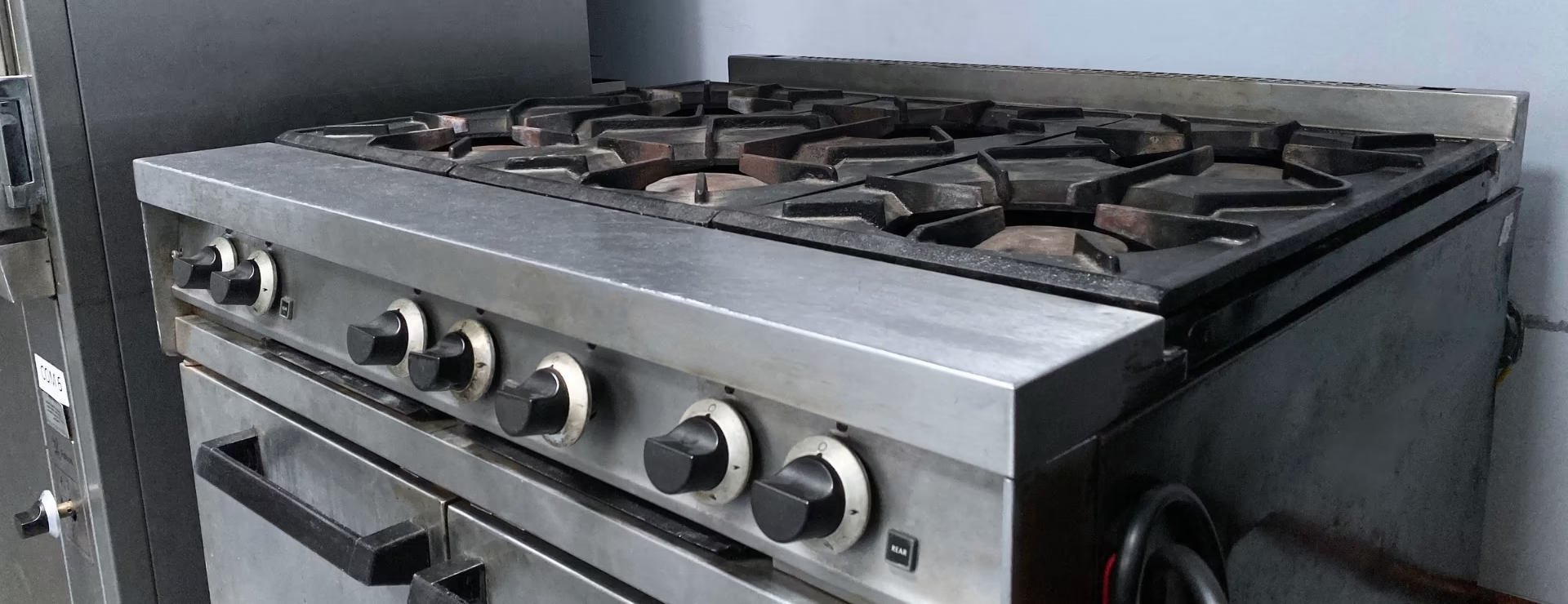
COMCAT 1 is the one most engineers start with. It covers commercial catering range cookers, including open and solid top ranges, combination ovens, forced convection and natural convection ovens, boiling pans and gas-fired dishwashers. Hull City Council’s guidance also lists ancillary equipment such as pizza ovens, tandoors and heated woks under this group.
In plain English, it is the hob, oven and boiling kit you would find in almost any restaurant, school or care home kitchen. Book COMCAT 1 training if you want the broadest first category.
COMCAT 2: pressure steamers and pressurised ovens
COMCAT 2 covers commercial catering pressure and expansion equipment. That includes pressure steamers and pressurised steaming ovens. You will see these in hospitals, canteens, schools and large catering operations.
Pressure equipment has its own risks, which is why it is assessed separately. If you work in larger institutional kitchens, COMCAT 2 is worth adding.
COMCAT 3: fryers, griddles and grills
COMCAT 3 covers deep fat and pressure fryers, griddles and grills. Hull City Council also includes simulated charcoal grills, over and under fired grills and salamander grills. If you service takeaways, burger bars, chicken shops and pubs, this is likely your most-used category.
COMCAT 1 and COMCAT 3 together cover the bulk of a typical working kitchen line, which is why they sit together in our core package. See the COMCAT 3 course for details.
COMCAT 4: fish and chip ranges
COMCAT 4 covers commercial gas catering fish and chip ranges. It is the category you will see missing from many training provider pages, which is why it causes confusion in search results. Local authority guidance, including Hull City Council’s, does list it as one of the five main categories.
In practice, the categories engineers train for and book today are COMCAT 1, 2, 3 and 5. Logic4training does not currently list a COMCAT 4 course. If you work on fish and chip ranges, contact our team before booking. We can check what your kitchen work needs and what the Gas Safe Register expects for your Gas Safe ID card.
COMCAT 5: forced draught burner appliances
COMCAT 5 covers non-domestic catering appliances with forced draught gas burners. Hull City Council gives pizza ovens and combi ovens as examples. These appliances use a fan to push air through the burner, so setting and testing them is different from an atmospheric appliance.
You can add COMCAT 5 to your training once your core qualification is in place.
CMC1: mobile catering on LPG
Food vans, trailers and event units are a different job from a fixed kitchen. CMC1 covers LPG appliances in mobile catering, including cylinder siting and ventilation. An engineer working on a mobile catering vehicle needs the right mobile catering LPG registration as well as the appliance type.
You must also hold LPG changeover to take CMC1.
Which COMCAT do you need?
A simple rule: look at the kitchens you actually service and match the equipment. Do not buy every category on day one. Add them as the work comes in.
Course prices and packages
Individual assessments (COMCAT 1, 2, 3, 5, COCATA1 and CMC1) start from £310 + VAT each. Packages bring the cost down:
- The Core Catering Gas Safety Package covers CCCN1, COMCAT 1 and COMCAT 3. It costs £995 + VAT over five days.
- The Catering Changeover Package covers CODC1 and COCATA1, which is equivalent to COMCAT 1 and 3. It costs £670 + VAT over four days.
Prices are from our June 2026 price list and exclude VAT, so check the course page for the latest figures. See the full commercial catering course range.
How long do the certificates last?
Commercial catering ACS certificates are valid for five years. Renew CCCN1 alongside each appliance category you hold, and book your reassessment before the expiry date. Once a certificate expires, you may need to sit the initial assessment again, so call us before booking if yours has lapsed.
Many engineers also keep a copy of our commercial catering gas safety training manual in the van for quick reference on site.
Why the right category matters
Gas Safe and local authority guidance both stress that catering gas work must be done by an engineer registered for the right appliance and gas type. The HSE’s catering gas safety guidance exists because faulty appliances and poor ventilation can lead to carbon monoxide exposure. Working outside your categories is a safety risk and a compliance problem.
Ready to book, or not sure which route fits? Speak to our team, and we will map the right route against the certificates you already hold.
Frequently Asked Questions
What does COMCAT mean?
COMCAT means commercial catering. It refers to the appliance categories in the ACS scheme that let a Gas Safe registered engineer work on specific commercial kitchen equipment, such as ranges, fryers or steamers.
Which COMCAT qualification do I need?
It depends on the appliances you service. COMCAT 1 covers ranges and ovens, COMCAT 2 covers pressure steamers, COMCAT 3 covers fryers and grills, COMCAT 4 covers fish and chip ranges and COMCAT 5 covers forced draught burner appliances. Most engineers start with the core catering package, which includes COMCAT 1 and 3.
Do I need CCCN1 before a COMCAT?
Yes. CCCN1 is the core commercial catering gas safety element and must be held before a COMCAT category is valid. If you are changing over from domestic gas, the COCATA1 changeover route applies instead.
Is there a COMCAT 4?
Yes. Some local authority guidance, including Hull City Council’s, lists COMCAT 4 as fish and chip ranges. Most engineers train for categories 1, 2, 3, and 5, and Logic4training does not currently list a COMCAT 4 course.
What is CMC1 and do I need it?
CMC1 covers LPG appliances in mobile catering units, such as food vans and trailers. You only need it if you work on mobile catering. It is assessed separately because cylinder siting and ventilation carry different risks from a fixed kitchen.


 Your latest offers & alerts