

Last updated: 9th November 2026 | Originally published: 11th August 2022
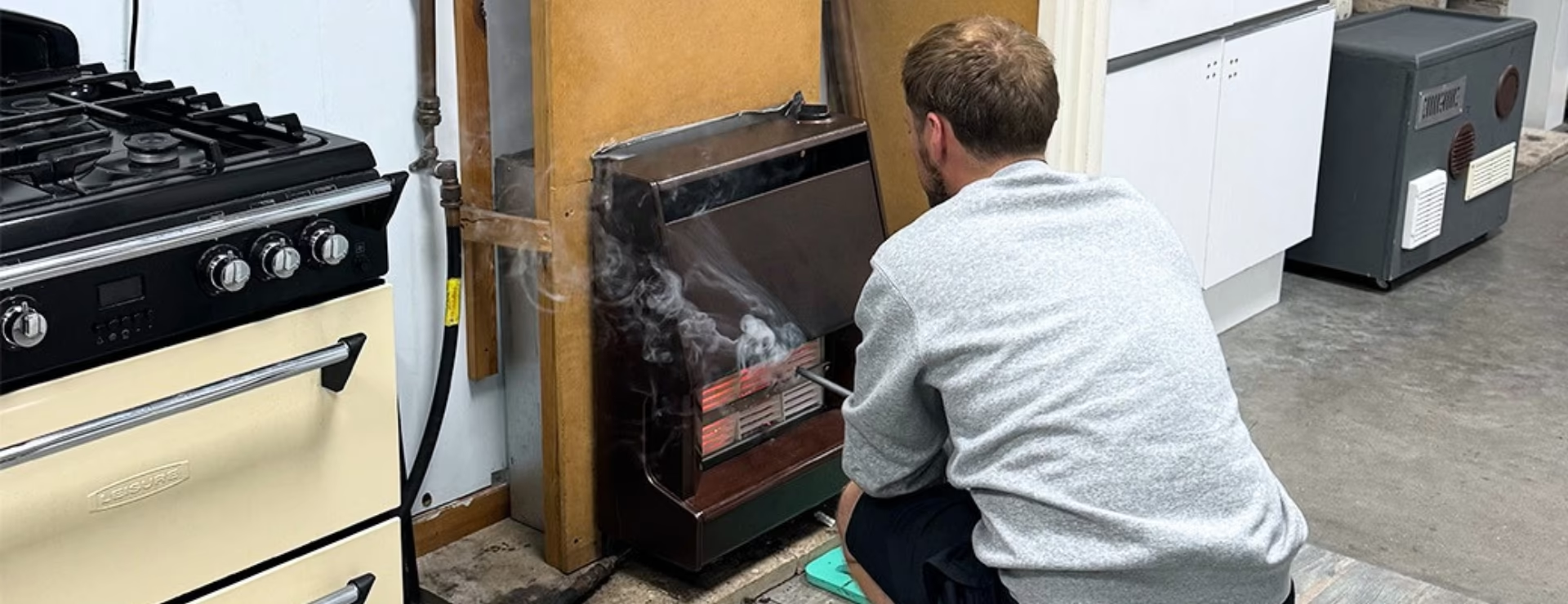
HTR1 is the ACS gas qualification for installing, commissioning, servicing and repairing domestic gas fires, wall heaters and similar space-heating appliances. It is an appliance-specific assessment, taken alongside the appropriate core gas-safety qualifications. This guide explains what HTR1 covers, who can take it, what assessment involves and how to keep your certification current.
TL;DR
What you need to know:
- HTR1 covers domestic gas fires and space heaters, including wall heaters.
- You need the appropriate core gas-safety competence. For domestic natural gas, this is normally CCN1. Logic4training also lists CPA1 as required for HTR1.
- HTR1 does not replace Gas Safe registration or automatically cover LPG installations.
- Engineers adding HTR1 through Logic4training’s standard appliance-extension route must be Gas Safe registered and have held CCN1 for at least 12 months.
- Assessment checks practical competence and underpinning gas-safety knowledge.
- ACS qualifications normally last five years. Arrange reassessment before your existing certification expires.
What is the HTR1 gas qualification?
HTR1 is the appliance category within the Accredited Certification Scheme, usually called ACS, for domestic gas fires and space heaters.
LCL Awards’ domestic ACS qualification guidance explains that engineers need the relevant core gas-safety assessment as well as the appliance elements covering their work. HTR1 sits alongside other domestic appliance categories, such as CKR1 for cookers and CENWAT for central-heating boilers and water heaters.
The distinction matters because gas competence is specific to the work you do. Being qualified to service a boiler does not automatically qualify you to service a gas fire.
Your core assessment provides the underlying gas-safety competence. HTR1 adds the appliance-specific knowledge and practical assessment for fires and space heaters. To carry out that work within the scope of the gas-safety regulations, you must also be appropriately Gas Safe registered, either through your own business or your employer.
For the wider picture, see our guide to the qualifications needed to become Gas Safe registered.
Which appliances does HTR1 cover?
HTR1 relates to domestic gas-fired space-heating appliances. Depending on the appliance and certification scope, examples include:
- Gas fires.
- Wall heaters.
- Convector heaters.
- Gas-fired stoves.
- Flueless gas fires, including models with catalytic converters.
These appliances can use different combustion and flue arrangements, including open-flued, balanced-flue and fan-assisted designs. Understanding those differences is part of working safely within the category.
However, “heater” is not a catch-all qualification category. Domestic warm-air heaters have their own assessment, DAH1. Logic4training’s current appliance course also lists greenhouse heaters and certain other leisure appliances under LEI1. Commercial heating equipment requires the relevant non-domestic qualifications.
Before accepting unfamiliar work, check the appliance type, fuel, installation setting and your current registration categories. The name on the appliance casing is not enough to establish whether it falls within your scope.
What do you need before taking HTR1?
The requirements depend on whether you are adding a new appliance category, renewing an existing one or entering the industry.
Existing natural-gas engineers adding HTR1
For Logic4training’s standard domestic gas appliance training and assessment course, you must hold a current Core Domestic Gas Safety qualification (CCN1).
The course also identifies CPA1 (Combustion Performance Analysis) as required for HTR1. Engineers adding the category through this route must be Gas Safe registered and have held CCN1 for at least 12 months.
Do not assume that holding CCN1 makes you automatically ready for assessment. The centre must check your eligibility and the relevant training and experience for the category you want to add.
LCL Awards’ explanation of the ACS gas scheme sets out the relationship between core gas safety and appliance assessments. For entry and assessment requirements, consult the LCL Awards Handbook for Learners and Approved Centres. Logic4training can confirm how the applicable requirements fit your existing certificates and experience.
New entrants to gas work
HTR1 is not a short-cut into the gas industry. Someone without the necessary gas training and experience needs an appropriate entry route before ACS assessment. This normally involves structured learning, supervised practical experience and evidence of competence.
Logic4training’s Gas Managed Learning Programme leads to initial assessment in CCN1 and CENWAT. Its published route allows engineers to add further appliance categories, such as HTR1, after 12 months of Gas Safe registration.
If you are comparing routes, our guide to how long it takes to become a gas engineer provides more context.
Does HTR1 cover natural gas and LPG?
HTR1 can form part of an appropriate natural-gas or LPG qualification route. However, holding HTR1 does not provide stand-alone permission to work on either fuel.
Your overall competence must match:
- The fuel being used.
- The appliance.
- The installation setting.
- The work you intend to carry out.
For example, a domestic natural-gas engineer cannot assume that their existing CCN1 and HTR1 certification covers an LPG fire in a park home or leisure vehicle. LPG work needs the relevant LPG core or changeover competence and any applicable installation or appliance categories.
LCL Awards’ LPG qualification guidance identifies the relevant core or changeover route alongside dwelling types and appliance codes.
Logic4training offers an LPG changeover and categories package for suitably qualified engineers extending into LPG.
Some work also has a separate appliance assessment. Our LPG closed-flue gas fires course covers HTRLP2 and has its own entry requirements.
The useful question is not simply, “Do I hold HTR1?” It is, “Does my current certification and Gas Safe registration cover this appliance, on this fuel, in this location?”
What does HTR1 training cover?
Logic4training’s domestic appliance course covers installation, commissioning, servicing, maintenance and basic gas-safety fault finding. HTR1 applies those activities to domestic fires and space heaters.
The technical work builds on your core gas-safety knowledge. The LCL Awards Domestic Gas Safety Training Manual supports engineers undertaking core and appliance assessments, including gas fires. Its subject areas include combustion, ventilation, flues and appliance safety.
Installation and commissioning
Installing a fire safely involves more than connecting it to a gas supply.
You need to establish that the appliance, location and installation arrangements are suitable. Relevant considerations include the gas supply, clearances, ventilation, flue or chimney arrangements and the manufacturer’s installation requirements.
Commissioning then establishes whether the installed appliance operates safely. The required checks depend on the appliance and its instructions. A fire lighting successfully is not, by itself, proof that the installation is safe.
Servicing and maintenance
Servicing requires a methodical approach to the appliance and its installation.
Depending on the model, this can involve checking components, burner arrangements, safety devices, ventilation and the removal of combustion products. The manufacturer’s instructions determine the relevant maintenance procedures and checks.
The assessment focus is safe gas work. It is not enough to clean visible parts and leave an appliance running without establishing its safe operation.
Basic gas-safety fault finding
HTR1 training also addresses identifying installation defects and basic gas-safety faults.
That means recognising when something is unsafe, investigating within your competence and taking the appropriate action. A component fault and an installation defect are not the same problem. Replacing a part will not resolve an unsuitable flue or inadequate ventilation.
Work should follow the relevant technical guidance and manufacturer’s instructions, rather than relying on a familiar routine from a different appliance.
Why are ventilation and flue checks so important?
Gas fires use different arrangements to supply combustion air and remove combustion products.
An open-flued appliance and a room-sealed appliance do not interact with the room in the same way. A flueless appliance has different requirements again. That is why the installation must be assessed against the correct appliance instructions and applicable standards, rather than a single rule applied to every fire.
Ventilation and flues are core subjects in LCL Awards’ domestic gas training material. These subjects underpin safe appliance work rather than sitting separately from it.
For engineers, this has a practical consequence: look beyond the appliance itself. The room, ventilation provision and flue arrangement form part of the safety picture.
This article is an overview of the qualification, not a servicing procedure. Appliance-specific testing and maintenance must follow the current technical requirements and manufacturer’s instructions.
What does the HTR1 assessment involve?
HTR1 assessment checks whether you can demonstrate the required gas-safety competence, not simply recall information from a training session.
Expect assessment of practical competence and underpinning knowledge. Logic4training will explain the assessment arrangements and any required evidence before your booking.
For HTR1, preparation should cover both the practical appliance work and the knowledge behind your decisions. Relevant areas include:
- Identifying the appliance and its installation requirements.
- Using the correct manufacturer’s instructions.
- Recognising installation defects.
- Understanding ventilation and flue arrangements.
- Checking appliance operation and safety controls.
- Demonstrating safe installation, commissioning and maintenance practices.
- Responding appropriately to unsafe conditions.
Training and assessment are related, but they are not interchangeable. Training develops or refreshes your skills. Assessment requires you to demonstrate competence against the relevant criteria.
Attendance alone does not guarantee certification. The LCL Awards learner handbook sets out the assessment and certification arrangements for learners and approved centres.
Can you take HTR1 on its own?
Yes. Eligible engineers can book HTR1 as an individual appliance module rather than repeating a full domestic gas package.
This can suit someone adding fires to an existing scope of work, or renewing an appliance category with a different expiry date from their core qualification. Your underlying core competence must still be current and appropriate.
These routes reflect Logic4training’s domestic appliance, new-entrant and LPG course information. The team should confirm the correct booking against your certificates and intended work.
How long does HTR1 training take, and what does it cost?
Logic4training currently lists its individual domestic appliance course at one day per appliance. The published price for initial appliance training and assessment is £235 plus VAT, including the certification fee. Appliance reassessment is listed at £195 plus VAT.
Your actual booking depends on whether you are adding HTR1, renewing it or taking several modules together. Confirm the duration, price and entry requirements before booking, particularly if you need additional preparation.
The domestic appliances course page provides current details.
How long does HTR1 last?
HTR1 normally follows the five-year ACS certification cycle. You need to maintain both the appliance qualification and the appropriate underpinning core competence.
Reassessment can normally be taken up to six months before expiry without losing the remaining validity period. Booking early helps avoid an interruption to the work you can undertake.
There is an important distinction between reassessment eligibility and permission to work.
Logic4training allows qualifying candidates to take reassessment up to 12 months after their existing qualification expires. That does not give you another 12 months to continue working under expired certification. Gas work requires valid competence covering the work concerned and the appropriate registration.
If a qualification has expired by more than 12 months, Logic4training’s published course information directs candidates towards initial assessment. Check your individual position with the team before booking. LCL Awards’ learner FAQs also explain certification validity and the distinction between initial assessment and reassessment.
Engineers renewing several domestic categories can explore our domestic ACS assessment and reassessment courses.
What happens after you pass HTR1?
Passing HTR1 provides evidence of competence in the assessed category. It does not replace the registration process.
Before undertaking gas-fire work, make sure your relevant certification and Gas Safe registration arrangements are in place. If you are adding HTR1 to your existing categories, confirm that your registration reflects the additional work you intend to undertake.
Our guide to Gas Safe registration explains how registration fits alongside qualifications.
Book HTR1 training with Logic4training
Whether you are adding gas fires to your services or renewing an existing category, the starting point is checking your current certificates.
Have your CCN1, relevant appliance certificates and expiry dates available when discussing your booking. Explain whether you want natural-gas work, LPG work or both, and which appliances you expect to encounter.
Explore our gas training courses and qualifications or call Logic4training on 020 8845 7222 to confirm the appropriate HTR1 training and assessment route.
FAQs
What is HTR1?
HTR1 is the ACS assessment category for domestic gas fires and space heaters, including wall heaters. It demonstrates appliance-specific gas-safety competence and sits alongside the appropriate core qualification. It does not replace Gas Safe registration.
What do I need before taking HTR1?
For Logic4training’s standard natural-gas appliance-extension route, you need current CCN1, the required CPA1 competence, Gas Safe registration and at least 12 months holding CCN1. Other entry routes require individual checks against the applicable scheme requirements. LPG work needs the relevant LPG competence too.
What does the HTR1 assessment involve?
Assessment checks practical competence and underpinning knowledge relevant to domestic gas fires and space heaters. This includes safe appliance work, recognising defects, understanding ventilation and flue requirements, and checking safe operation. The centre will confirm the assessment arrangements before your booking.
Can I take HTR1 on its own, or as a reassessment?
Yes. Eligible engineers can take HTR1 as an individual appliance module. Engineers who already hold the category can renew it through reassessment, subject to the entry and expiry rules. Holding other ACS appliance modules does not automatically mean you can take HTR1 as a first-time reassessment.
How long does HTR1 last?
HTR1 normally lasts five years. Arrange reassessment before the expiry date and keep your underlying core certification current. You can normally complete reassessment up to six months early without losing the remaining validity period. Eligibility for assessment after expiry does not authorise work using an expired qualification.



 Your latest offers & alerts