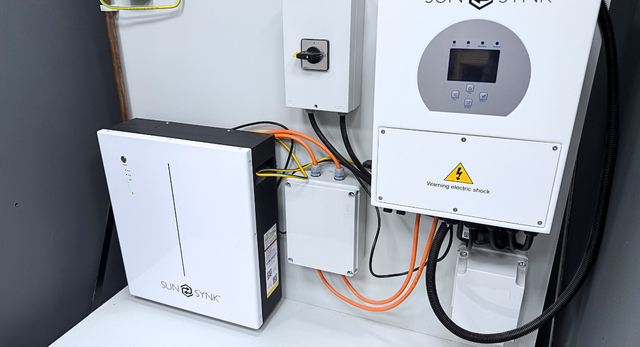

To become a battery storage installer in the UK you’ll usually need a solid electrical background (NVQ Level 3‑type qualification, 18th Edition and inspection & testing), plus a recognised Level 3 Electrical Energy Storage Systems (EESS) course such as Logic4training’s Battery Storage (EESS) qualification, which is aligned with industry expectations and recognised by schemes like MCS.
Unlike gas, there is no single legal licence just for battery storage, but the industry expects you to be a competent electrician before you work on live systems. Most installers follow this pattern:
- Core electrical qualification at Level 3 (for example, an Electrotechnical NVQ or equivalent).
- 18th Edition Wiring Regulations (BS 7671:2018+A3:2024).
- Level 3 Initial Verification and Certification of Electrical Installations (inspection & testing).
- A specialist Level 3 battery storage / Electrical Energy Storage Systems (EESS) qualification.
- Becoming MCS certified.
If you do not yet meet these entry requirements, our team can help you map a route via core electrical training courses, then on to Solar PV and EESS. We regularly support new entrants and improvers moving from general electrical work into low‑carbon technologies, so we can give realistic advice on timescales and training order.
Battery storage is an electrical technology, governed by the same wiring and safety rules as any other fixed installation. To keep you and your customers safe, reputable EESS courses are aimed at practising electricians and experienced electrical operatives rather than complete beginners.
At Logic4training, that specialist step is our Battery Storage Course (EESS), a LCL Awards Level 3 Design, Installation and Commissioning of Electrical Energy Storage Systems (EESS) qualification covering the design, installation, commissioning and maintenance of domestic‑scale electrical energy storage systems.
The Core Qualification: Level 3 Electrical Energy Storage Systems (EESS)
Once your electrical foundation is in place, the qualification that turns you into a battery storage installer is a Level 3 award in the design, installation and commissioning of small electrical energy storage systems.
Across the UK, training providers that deliver a Level 3 Award in the Design, Installation and Commissioning of Electrical Energy Storage Systems (EESS), often referred to as a battery storage course. These qualifications are designed for experienced electrical operatives and enable you to:
- Design, install, commission and maintain domestic‑scale EESS.
- Correctly size batteries to meet customer needs and maximise bill savings.
- Understand system arrangements, operating modes, regulations and safety considerations.
The qualification is recognised by the Microgeneration Certification Scheme (MCS) as part of an acceptable competence route for companies seeking certification in battery storage and combined solar‑plus‑storage systems.
Typical Training Routes Into Battery Storage
Your pathway into battery storage depends on where you are starting from. The end goal, however, is the same: a competent electrician with specialist Level 3 EESS training.
1. Practising electrician (domestic or commercial)
If you already hold NVQ Level 3, 18th Edition and inspection & testing, battery storage is a straightforward upskill. A typical route would be:
- Book directly onto a Battery Storage Course (EESS).
- Add the Solar PV course or a combined Solar PV & EESS package (like we offer at Logic4training) if you want to offer complete solar‑plus‑storage systems from day one.
This route is popular with electricians looking to future‑proof their skill set and access a fast‑growing segment of the domestic market.
2. Experienced electrical tradesperson without a full NVQ
You might be an experienced installer, improver or multi‑skilled tradesperson with substantial hands‑on experience but gaps in your formal qualifications. In this case:
- Speak to a training provider who is knowledgeable in the area. We can help you with this. In some cases, experience plus existing certificates may meet entry criteria for EESS and Solar PV.
- Where needed, we can signpost gap‑fill training, such as 18th Edition or Initial Verification, before moving on to renewables courses.
3. New entrant or career‑changer
If you are starting from scratch, you will first need to become an electrician. That means working through a structured electrical pathway (often over several years), then adding solar and storage later:
- New‑entrant electrical training and on‑site experience leading towards NVQ Level 3 Electrotechnical.
- Achieve 18th Edition and inspection & testing.
- Add Level 3 Solar PV.
- Add Level 3 Battery Storage (EESS).
At Logic4training, we provide both the new‑entrant electrical training and the renewables add‑ons, so you can plan your entire journey with one training provider and a consistent approach to standards and assessment.
How Long Does It Take To Become A Battery Storage Installer?
If you already meet the electrical entry requirements, the specialist battery storage step is relatively quick. Many Level 3 EESS courses, including Logic4training’s, are delivered over a short block (typically 2-3 days) and combine classroom and practical assessments.
If you choose our Solar PV & Battery Storage Training Package, you can often complete both Level 3 qualifications in around a working week of classroom time, depending on scheduling.
For new entrants or those still working towards NVQ Level 3 and 18th Edition, the overall journey into battery storage will take longer, but the EESS course itself remains a focused, short‑course upskill. Typically, if you have no electrical experience, it will take between 2-3 years to reach the point at which you can start your battery storage training.
Why Add Battery Storage To Your Skill Set?
Battery storage is becoming a standard part of the domestic renewables conversation. Homeowners increasingly want to maximise self‑consumption of solar, protect themselves from price volatility, and, in some cases, benefit from smart tariffs and vehicle‑to‑grid style setups.
For installers, that means:
- Higher value per job when you design and install complete solar‑plus‑storage systems.
- Repeat business from existing solar customers looking to add batteries later.
- A future‑proofed skill set aligned with the UK’s net‑zero and flexibility goals.
We’ve covered this topic in our insight, Solar & Battery Storage: Is It Worth It For UK Homes & Installers? digs into the commercial and technical benefits of offering both technologies together.
What Does A Battery Storage Installer Actually Do?
In many ways, the day‑to‑day work of a battery storage installer looks similar to that of a solar PV installer, but focused on storage, control and safety. Typical tasks include:
- Surveying properties to identify appropriate locations for battery cabinets and associated equipment.
- Designing systems that integrate batteries with solar PV, the consumer unit and, where relevant, backup circuits.
- Selecting battery products, inverters and control systems that meet BS 7671, manufacturer requirements and fire‑safety guidance such as PAS 63100.
- Installing and commissioning systems, programming operating modes (for example, time‑of‑use optimisation or backup) and setting up monitoring apps.
- Completing certification, handover packs and, where required, Building Regulations notification via a Competent Person Scheme.
Because battery systems interact with the wider installation and with grid protection, a battery storage installer must be comfortable fault‑finding on both AC and DC circuits and explaining system behaviour clearly to customers.
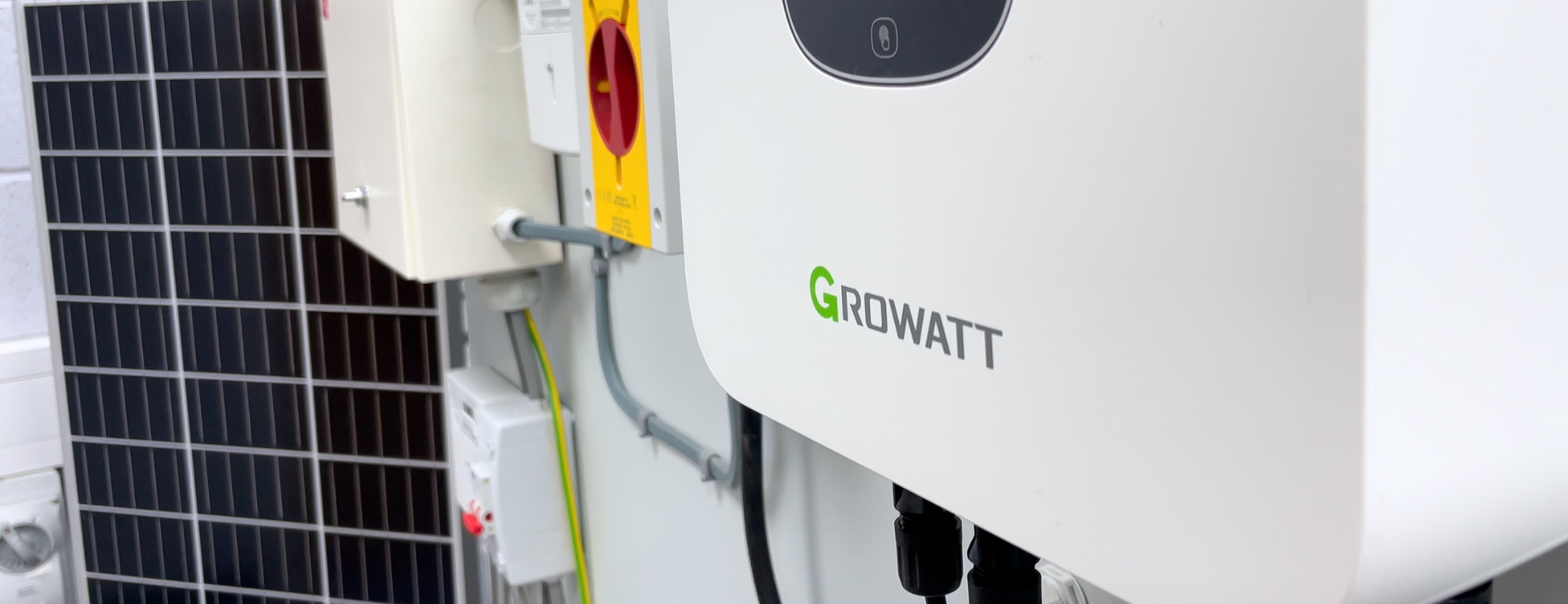
How Battery Storage Links To Solar PV & MCS
In practice, most domestic battery storage work in the UK is closely linked to solar PV. Homeowners either install batteries at the same time as a new PV array, or come back later to retrofit storage so they can use more of the energy they generate on site. Because of this, many installers choose to upskill in both technologies rather than treating them as completely separate services.
From a technical point of view, battery systems sit in the middle of a wider low‑carbon ecosystem. They interface with the PV array, the inverter, the consumer unit, export limitation devices and, increasingly, smart tariffs and EV chargers. To design systems that are safe, efficient and financially worthwhile for customers, you need a good grasp of how solar generation profiles, demand patterns and tariff structures interact.
Why Solar PV and battery storage go together
Linking Solar PV and battery storage offers several benefits to UK homeowners:
- Higher self‑consumption of on‑site generation, reducing imported electricity from the grid.
- Protection against peak‑time prices and greater flexibility around when electricity is used.
- The option, in some cases, to provide backup power to selected circuits.
For installers, offering both technologies means you can design one integrated system that deals with array size, inverter choice, battery chemistry, control strategy and safety as a whole. It also means you can return to existing PV customers and add storage later, creating a pipeline of retrofit work.
How MCS views Solar PV and battery storage
The Microgeneration Certification Scheme (MCS) sets technical and quality standards for small‑scale renewables in the UK. For Solar PV, the core installer standard is MIS 3002, while for battery storage MCS has introduced a dedicated Battery Installation Standard, MIS 3012, which covers the supply, design, installation, set‑to‑work and commissioning of electrical energy (battery) storage systems up to 50 kW.
Key points about MCS and battery storage:
- MCS certification applies to companies, but those companies must demonstrate that their technical staff are competent and appropriately qualified.
- MIS 3012 sits alongside standards such as MIS 3002 (Solar PV), so a company offering solar‑plus‑storage will typically hold both scopes.
- MIS 3012 has been developed alongside the IET Code of Practice for Electrical Energy Storage Systems and references BS 7671, so compliant installers must understand this wider regulatory context.
For many businesses, combining a Level 3 Solar PV qualification with a Level 3 EESS (battery storage) qualification is a clear, recognised way to show they meet the competence expectations behind MIS 3002 and MIS 3012, when supported by a documented quality management system and evidence of compliant installations.
The role of battery storage in MCS‑compliant system design
Under MIS 3012, an MCS battery installer is responsible for ensuring that the storage system is correctly specified, integrated and handed over to the customer. In practice, that means you must be able to:
Assess how adding a battery will change the performance of an existing or proposed PV system, including self‑consumption and grid import/export.
Select compatible components (modules, batteries, inverters, communication devices) and understand the MCS classifications of EESS (for example classes 1–4 as described in MIS 3012).
Meet safety and fire‑protection requirements, taking into account guidance documents such as the IET Code of Practice for EESS and PAS 63100, and then reflect this in your design and installation method.
Because these responsibilities cut across both generation and storage, the most robust competence profile for an installer or design engineer includes both PV and EESS training at Level 3. This is the knowledge base MCS expects to see evidenced when assessing a company’s competence, alongside documented processes such as design checks, commissioning procedures and customer handover.
Regulations & Standards Battery Storage Installers Need To Know
Even with the right qualification, battery storage installers must work to current regulations and industry standards. These shape both the design of systems and the way you install and sign them off.
Key documents and frameworks include:
- BS 7671 (18th Edition Wiring Regulations): Applies to all wiring, protection and isolation associated with battery systems.
- IET Code of Practice for Electrical Energy Storage Systems: Detailed guidance on safe and compliant EESS design and installation.
- Building Regulations (including Part P in England and Wales): Domestic battery installations are notifiable electrical work.
- PAS 63100:2024: Focuses on fire safety and protective measures for small‑scale battery storage in domestic and similar premises.
Being familiar with these documents is an important part of demonstrating competence to customers, insurers and certification schemes. The Logic4training EESS course is designed explicitly around this regulatory framework, so you are not learning in a vacuum.
Summary: Your route to becoming a battery storage installer
To become a competent domestic battery storage installer in the UK, you will normally build up from core electrical qualifications to specialist Level 3 training in Solar PV and Electrical Energy Storage Systems (EESS), then align your company with schemes such as MCS. This stepped approach gives you the technical depth, regulatory understanding and third‑party recognition that customers and main contractors increasingly expect.
Use the summary table below to check where you are now and what your next move should be.
| Stage | Recommended qualifications / status | Who it’s for | Notes |
|---|---|---|---|
| Core electrical foundation | Level 3 Electrotechnical qualification (NVQ/SVQ or equivalent) | Electricians and electrical trainees working towards full competence | Proves competence as an electrician and underpins all further training. |
| Regulations | 18th Edition Wiring Regulations (BS 7671) | Anyone designing or installing electrical installations | Required by most employers and certification schemes for electrical work. |
| Inspection & testing | Level 3 Initial Verification and Certification of Electrical Installations | Electricians are responsible for testing and signing off on installations | Enables safe testing, certification and reporting on new work. |
| Battery storage | Level 3 Electrical Energy Storage Systems (EESS) qualification | Practising electricians adding battery storage to their services | Core credential for battery storage design, installation and commissioning. |
| Complementary | Level 3 Solar PV installation and maintenance qualification | Installers offering solar‑plus‑storage packages | Enables you to design and install integrated PV and battery systems. |
| Scheme alignment | MCS certification for your company (PV and battery scopes) | Renewables businesses working on MCS‑backed projects and tariffs | Improves access to certain tariffs, finance products and customer trust. |
FAQs
Do I need to be a fully qualified electrician to install battery storage?
In practice, yes. Battery storage involves working on fixed wiring, protection devices and live systems, so an electrician‑level skill set is expected. Most reputable EESS courses, including Logic4training’s, require Level 3 electrical qualifications, 18th Edition and inspection & testing before you enrol.
Is an EESS qualification legally mandatory?
There is currently no single law that says you must hold a particular EESS certificate to install domestic batteries, but you must be competent under BS 7671 and Building Regulations. An industry‑recognised Level 3 battery storage qualification is the clearest way to evidence that competence to customers, insurers, employers and schemes such as MCS.
How does MCS relate to battery storage?
MCS certification applies to companies rather than individuals, but technical staff must hold relevant Level 3 qualifications (for example Solar PV and EESS) as part of the competence requirements. Having a recognised EESS qualification from Logic4training supports your company’s MCS application for solar PV and battery storage technologies.
Can I just fit batteries without offering solar PV?
Yes, some installers focus on retrofitting batteries to existing solar systems or on storage‑only setups that charge from the grid at off‑peak times. However, holding both Solar PV and EESS qualifications gives you more flexibility and makes it easier to design integrated systems that work efficiently and comply with current guidance.
How long does the Logic4training Battery Storage (EESS) course take?
Logic4training’s EESS course is a short Level 3 programme, typically delivered over 2 days with a mix of theory and practical assessments. Exact dates and duration can vary between centres, so check the latest details and availability on the
Battery Storage Course (EESS) page.
Is battery storage training suitable for career‑changers?
Yes, but only once you have gained core electrical qualifications and meaningful on‑site experience. If you are completely new to the trade, you will need to follow an electrical training route first, then add Solar PV and EESS later. Logic4training offers guidance and structured new‑entrant pathways to help you plan this journey.
Where can I book Logic4training’s battery storage installer course?
You can find dates, prices, entry requirements and booking options on our dedicated Battery Storage Course (EESS) page. From there, you can also explore our Solar PV course and the Solar PV & Battery Storage Training Package.


 Your latest offers & alerts