
Thinking about a career change at 40 or later? You’re not alone. More people across the UK are choosing to retrain as an electrician, leaving behind unfulfilling roles in search of something more practical, stable, and future-proof. If you’ve been wondering whether it’s possible to become an electrician later in life, the answer is yes, and it’s already happening. In this article, we explore real electrician career change UK stories from people who’ve successfully made the switch, showing what it really takes to start again and build a new career in electrics.
TL;DR
- It’s not too late – Many people in their 30s, 40s, and beyond successfully retrain as electricians
- No experience needed – Beginner-friendly courses are designed to take you from scratch to job-ready
- Proven career change path – Real stories show people transitioning from hospitality, academia, and other industries
- Strong job demand – An ageing workforce and skills shortage mean excellent long-term opportunities
- Structured training – Step-by-step courses with expert support make the process clear and achievable
- Flexible entry routes – Whether you’re starting fresh or changing careers, there’s a pathway for you
- Hands-on, future-proof work – Opportunities to specialise in areas like EV charging, solar PV, and battery storage
- Clear progression – Start in domestic installation and build towards advanced qualifications and higher earnings
👉Ready to start? Explore Logic4training’s New Entrant Electrical packages to begin your journey.
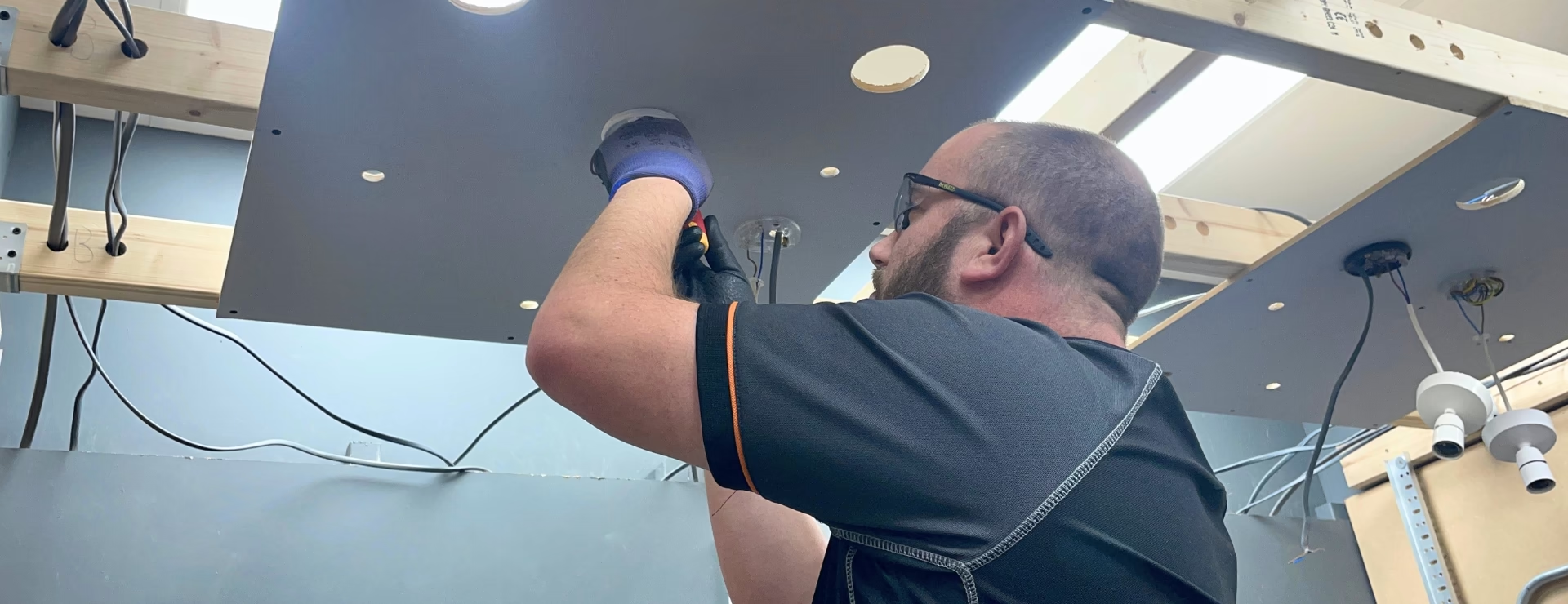
Is It Really Possible to Become an Electrician Later in Life?
If you’re in your 30s, 40s, or beyond, and thinking about a career change, one question tends to come up again and again:
“Is it too late?”
The more useful question is actually:
“What’s the smartest next step for me now?”
Many people reach a point where their current role no longer delivers – whether that’s due to burnout, lack of progression, redundancy, or simply the feeling that something’s missing. And increasingly, they’re looking toward skilled trades like electrical work for a fresh start.
Why?
- Strong, ongoing demand for qualified electricians across the UK. With the average age of electricians now being over 50 and 25% looking to retire in the next decade, there are real opportunities for new entrants.
- Long-term career stability in a sector that isn’t easily automated – the hands-on, practical nature of trades work cannot be replicated by AI. Find out more about how tradespeople are safe from AI here.
- Hands-on, practical work with real, visible outcomes. You can even upskill into Solar PV, Battery Storage Systems (EESS), and Electric Vehicle Charging.
People from completely different backgrounds are successfully retraining and building new careers in electrics.
Here are real stories from people who made the switch.

Career Changers Who Successfully Became Electricians
From Barista to Electrician – Olha’s Story
Before:
Olha spent 11 years working as a barista. It was stable, but there was limited opportunity to grow or progress.
Trigger for Change:
Redundancy became the turning point. Later exposure to property maintenance whilst working for a letting company sparked an interest in something more practical and skill-based.
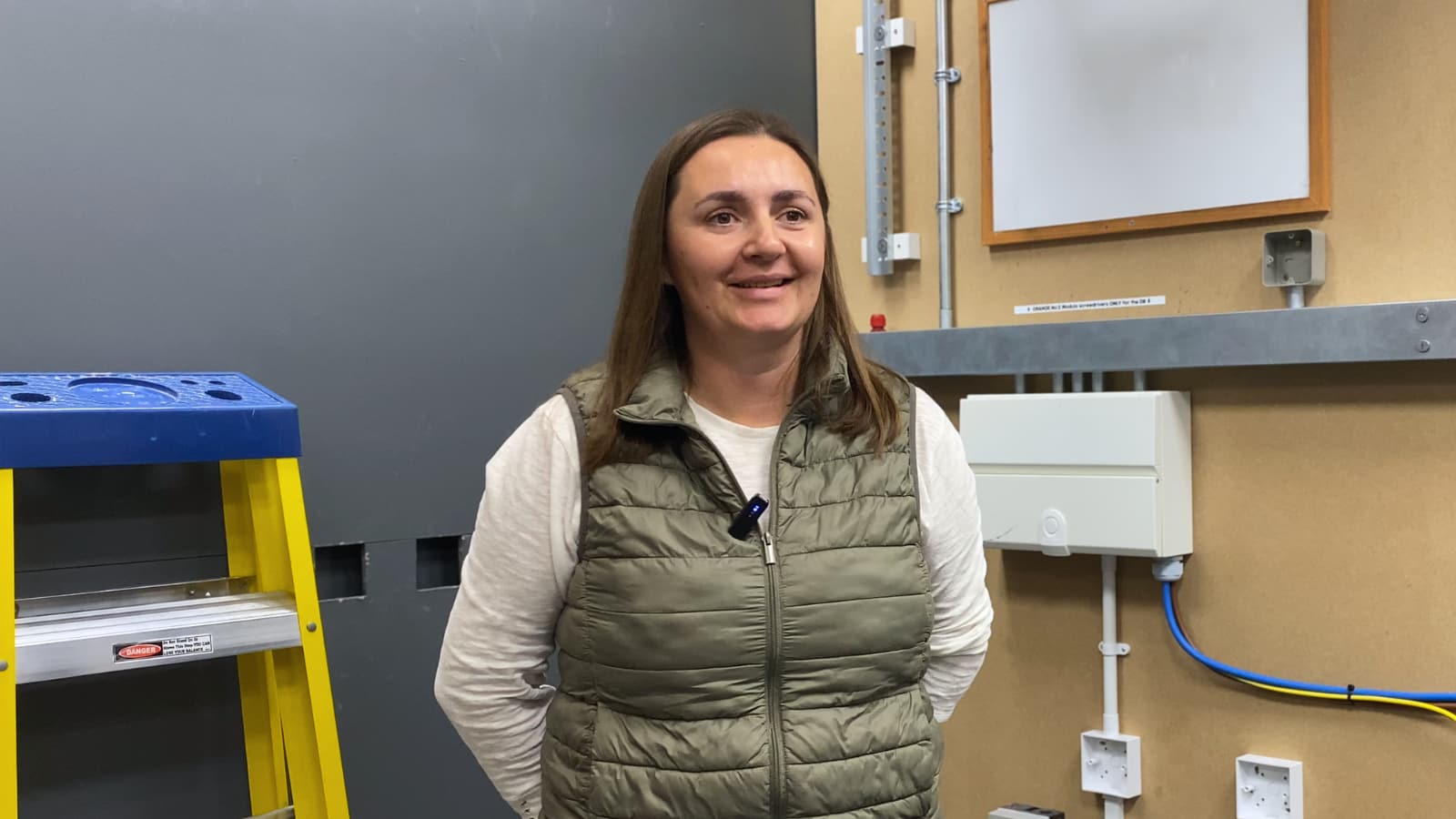
After calling in a plumber due to her boiler breaking down, Olha met Rachel, a part-time trainer from Logic4training. Seeing a woman confidently working as an expert in the trades gave Olha the reassurance and motivation she needed to take the next step and enrol on the New Entrants Electrical course at our Northolt centre.
Training Experience:
Starting from scratch, Olha entered structured electrical training. Although initially finding the theoretical elements of the course challenging, with the addition of having to fit the course around her day job, both her trainers and course mates helped her to succeed.
Outcome:
Step by step, she built both her technical knowledge and confidence, despite having no prior experience. Olha now has a Level 2 qualification in Domestic Electrical Installation, as well as 18th edition and verification and testing qualifications, and is able to change sockets and light fittings and check wiring in the properties her company lets. She is currently building up her portfolio so she can work as a qualified electrician.
Why this matters:
Olha’s story resonates with anyone facing unexpected change. It shows that starting over isn’t just possible – it can lead to something more secure and rewarding.
From Biotechnology to Electrical Installer – Syed’s Story

Before:
Syed followed a traditional academic path, earning a degree in biotechnology and moving into a professional role within the field. While his career was stable, it lacked the sense of fulfilment he was looking for.
Trigger for Change:
Despite his qualifications, Syed found himself increasingly disengaged. He wanted a career that was more hands-on, practical, and varied, something where he could see the results of his work day to day. After a friend recommended Logic4training, he decided to take the leap and retrain.
Training Experience:
Syed completed an intensive six weeks of electrical training at our Luton centre. Although the course was fast-paced, the structured environment and small group size helped him progress quickly. Guided by experienced trainers, Syed was able to apply his academic discipline while developing practical, job-ready skills.
Outcome:
Having completed his training, Syed is now actively seeking an entry-level role with an electrical installer. He’s updated his CV, built his online presence, and is ready to begin his new career in the trade.
Looking ahead, he already has a clear progression plan: gaining experience, returning to complete a Level 3 qualification, and ultimately working independently as a fully qualified electrician.
Why this matters:
This is a powerful example for professionals considering leaving white-collar roles. It challenges the idea that a degree locks you into one path, and proves that switching to a trade can be a smart, strategic move.
New Entrant Electrical Courses
Becoming an Electrical Installer – Mandeep’s Journey
Before:
Mandeep was looking for a clear and reliable route into a new career. Like many career changers, he wanted something practical, structured, and with long-term potential.
Trigger for Change:
He made the decision to pursue a complete career change, choosing to retrain in electrics as a way to build a more stable and rewarding future.
Training Experience:
Mandeep enrolled on the New Entrant Domestic Electrical Installer course, designed to take learners from beginner level through to job readiness.
During the course, he found particular value in the theoretical elements, which helped him understand the principles behind electrical work. While the practical side presented challenges, it ultimately strengthened his ability to follow correct procedures and industry standards.
A key part of his experience was the supportive learning environment. The centre provided a comfortable, focused space where learners from different backgrounds could develop their skills with confidence.
His trainer, Thoney, played an important role in his progress, breaking down complex concepts into clear, manageable lessons and offering consistent support throughout.
Outcome:
After completing the course, Mandeep is now equipped to begin work as a domestic electrical installer, carrying out tasks such as installing and replacing electrical components, adding new circuits, and fitting appliances in residential properties.
His training has given him a solid foundation, with a clear pathway to progress further – whether that’s gaining additional qualifications, becoming a qualified supervisor, or eventually working independently.
Why this matters:
Mandeep’s journey highlights how structured training can take you from uncertainty to a clear career path.
It shows that:
- You don’t need prior experience to get started
- A step-by-step training route removes guesswork
- With the right support, you can move confidently into a new industry
For anyone considering a career change, his story reinforces a simple but important point:
With the right training, the path into electrics is not only possible – it’s clearly defined.
How People With No Experience Enter the Electrical Trade
Govind’s NEDEI Experience
Starting Point:
Govind came into the electrical industry with no prior experience or background in the trade. Like many new entrants, he was looking for a practical way to build new skills and start a career with long-term potential.
Trigger for Change:
Wanting to develop a hands-on skillset and move into a more stable industry, Govind recognised that choosing the right training course would be key to getting started.
Training Journey:
Govind enrolled on the New Entrant Domestic Electrical Installer (NEDEI) course, designed specifically for complete beginners.
A standout part of his experience was the practical, hands-on training, where he developed core electrical skills from the ground up:
“I enjoyed the practical training the most, like feeding the wires through, connecting it to the right terminals, doing all the testing and stuff.”
The course structure allowed him to start with the fundamentals and gradually build confidence through real-world tasks. Over the four-week programme, he was supported in a learning environment that felt both accessible and focused.
Another key factor was the quality of teaching. His trainer, Thoney, guided him from the very basics—making the course especially suitable for someone with no previous experience.
The training environment itself also played an important role. With a convenient local location and supportive atmosphere, Govind felt comfortable throughout his learning journey.
Outcome:
After completing the course, Govind now has the skills needed to begin working as a domestic electrical installer, carrying out installations, testing, and maintenance in residential settings.
This qualification opens the door to:
- Entry-level roles in domestic electrical work
- Strong job opportunities across the UK, driven by a shortage of skilled electricians
- Earning potential ranging from approximately £125 to £600 per day, depending on experience and location
It also provides a clear progression pathway, with opportunities to upskill into areas such as:
- EV charger installation
- Solar PV
- Battery storage systems
Why this matters:
Govind’s journey tackles one of the most common concerns head-on:
“Can I really start with no experience?”
His experience shows that:
- Training is designed to take you from complete beginner to job-ready
- Practical learning builds confidence quickly
- Supportive trainers and environments make a real difference
For anyone hesitating because they’ve never worked in a trade before, his story reinforces a simple message:
You don’t need experience to start, just the right training and a willingness to learn.

What These Stories Prove About Becoming an Electrician
Career Change Is Realistic
Becoming an electrician isn’t limited to school leavers – it’s a path many people move into later in life.
From hospitality and office-based roles to academic careers, people are successfully retraining and entering the trade with no prior experience. What matters isn’t your background, but taking that first structured step.
With clear training routes designed for beginners and strong demand in the industry, switching to electrics isn’t a rare success story – it’s a proven and increasingly common career move.
Training Provides a Structured Entry
One of the key advantages of training with Logic4training is the clear, step-by-step pathway into the industry. Courses are designed specifically for beginners, guiding you from the fundamentals through to job-ready skills.
You’re not left to figure things out on your own, firstly our course advisors will suggest the best route for you based on your prior experience. Once you start your course with us, a combination of classroom learning, hands-on practical training, and support from experienced trainers, will help you to build confidence and competence gradually.
Demand for Electricians Is Strong
A major reason people are switching to electrics is the long-term stability the industry offers. Demand for qualified electricians continues to grow across both domestic and commercial sectors, driven by housing needs, infrastructure projects, and the shift towards low-carbon technologies.
From installing and maintaining electrical systems in homes to supporting developments like EV charging and renewable energy, electricians play a critical role in modern life.
For career changers, this means more than just job availability, it means reliable, ongoing work and clear opportunities to progress in a sector that isn’t going anywhere.
Multiple Entry Routes Exist
There’s no single “correct” starting point:
- Complete beginners (like Govind)
- Career changers (like Olha and Syed)
- Structured progression seekers (like Mandeep)
With flexible course packages and clear progression routes, Logic4training makes it easier to take that first step – whatever your background or starting point.
Start Your Own Electrical Career Journey
Explore Entry-Level Electrical Courses
If you’re starting from scratch, Logic4training offers beginner-friendly training routes designed specifically for new entrants. These courses take you from the basics through to practical, job-ready skills, with a clear structure to support your progression.
Whether you’re completely new to the trade or looking to retrain, you’ll find a pathway that helps you build confidence and gain recognised qualifications.
Understand Your Training Options
From short introductory courses to complete career packages, Logic4training offers a range of options to suit different goals, experience levels, and schedules.
Whether you’re looking to build foundational knowledge or fast-track into a new career, you can choose a training pathway that fits around your commitments while still delivering industry-recognised qualifications.
Plan Your Career Pathway
Take time to explore where your training could lead – and how to progress once you’re qualified.
Want to speak to someone first?
Speak to an advisor about your career change by giving us a call at 020 8845 7222 or an email at [email protected]
FAQs
Am I too old to become an electrician?
No, many people start in their 30s, 40s, or later. With the right training, age isn’t a barrier.
Can I become an electrician with no experience?
Yes. We have structured training programmes are designed specifically for beginners. Find out more about them here
How long does it take to become an electrician?
It varies depending on your route, but many learners begin working in the industry within months of starting training. You can find the lengths of each training package here
What qualifications do I need to start?
You don’t need prior electrical qualifications, our Bronze Route starts with the Level 2 Diploma, which covers fundamental electrical science and the practical skills needed to begin a career from scratch.
Is becoming an electrician a good career change?
For many, yes. It offers stability, practical work, and strong earning potential.
How much can electricians earn?
Earnings vary by experience and specialism, but qualified electricians can achieve strong, competitive incomes. You can find out more about electrician day rates here
What is the best course for beginners?
New Entrants packages are typically the most comprehensive starting point.
Can I train while working full-time?
Weekend training options are available, making it possible to balance learning with existing commitments. Give our course advisors a call at 020 8845 7222 to discuss this further.
What jobs can I do after training?
Options include domestic installer roles, maintenance work, and progression into more advanced electrical specialisms, such as Solar PV, EV Charging and Battery Storage Systems (EESS)


 Your latest offers & alerts