

Plumbers and heating engineers often work on the hot and cold water systems where Legionella risks can develop. The right Legionella training depends on your role: choose the Operative route if you carry out practical treatment and disinfection, or the Manager route if you assess, manage or oversee water hygiene risks.

TL;DR
- Legionella training helps people identify, prevent and control risks from Legionella bacteria in water systems.
- Plumbers should understand water hygiene because they may install, alter or maintain tanks, cylinders, showers, outlets and pipework.
- Legionella awareness training is useful foundation knowledge, but it is not a substitute for role-specific competence.
- Choose Operative training for practical work such as treatment and disinfection of residential water systems.
- Choose Manager training if you are responsible for risk assessments, control schemes, records, contractors or water safety oversight.
- At Logic4training, the Operatives course requires a valid WRAS Water Regulations certificate; the Managers course has no formal entry requirement, although a sound understanding of water systems is recommended.
Operatives Legionella training
What Is Legionella Training?
Legionella training teaches people how to identify, manage and control the risks associated with Legionella bacteria in water systems. It is part of a wider water hygiene approach. The aim is to help those involved with a system understand where risk can arise, what controls are needed and when they should escalate an issue to a suitably competent person.
Legionella bacteria can multiply in certain conditions within man-made water systems. Risk management is not simply about reacting to a positive sample or a known issue. It involves designing, operating and maintaining water services so that conditions do not allow bacteria to grow or spread. The Health and Safety Executive (HSE) guidance on preventing and controlling risk highlights the need to avoid stagnation, control conditions that support growth, keep systems clean, monitor controls and retain records.
Course content varies by level and provider, but water hygiene Legionella training commonly covers:
- Legionella bacteria, exposure routes and risk factors
- Hot and cold water-system risks
- Prevention and control measures
- Monitoring, inspection and record keeping
- Cleaning, treatment and disinfection methods
- Risk assessment and written control schemes
- Relevant legislation, standards and HSE guidance
The key point is simple: training must reflect the person’s actual responsibilities. Someone who cleans and disinfects a system needs different practical competence from someone who appoints contractors, reviews a risk assessment or manages a building’s compliance records.
What Is the Legionella Operative Route?
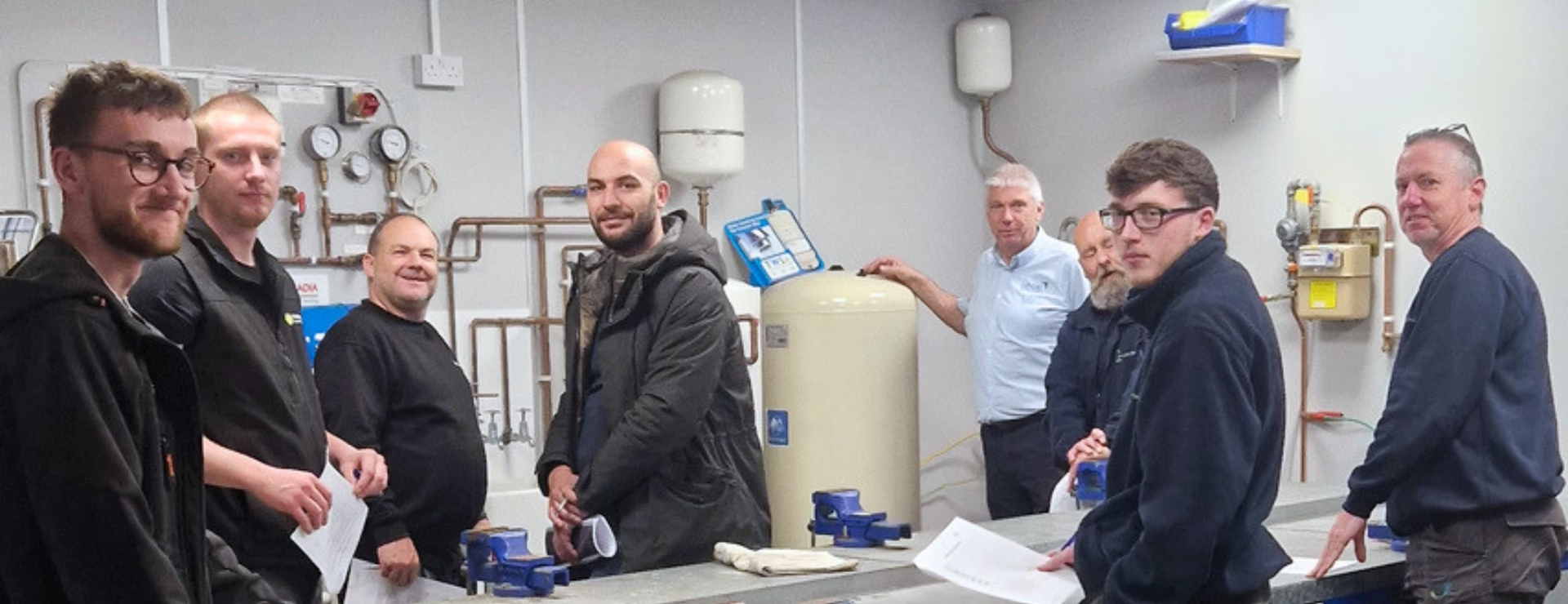
The Legionella Operative route is designed for installers and engineers who physically work on residential hot and cold water systems. It is the more practical route for people whose role includes treating, disinfecting, maintaining or carrying out risk-related work on those systems.
Logic4training’s Legionella Prevention and Water Treatment Operatives course is aligned with ACoP L8 and covers Legionella background and growth, exposure, legal duties and records, risk assessment, risk control, treatment methods, prevention and disinfection. Successful candidates complete both written and practical assessment.
For residential and small commercial water systems, the course enables successful candidates to undertake risk assessments and carry out disinfection using methods including bleach, chlorine and silver hydrogen peroxide. It is not designed as a cooling-tower course; those systems require their own specialist competence and guidance.
A valid WRAS Water Regulations certificate is required before attending the Operatives course. This makes sense: anyone altering or maintaining a drinking-water installation needs a solid grounding in the Water Regulations and the practical consequences of their work.
What Is the Legionella Manager Route?
The Legionella Manager route is for people who plan, manage or oversee the safe installation, control and maintenance of water systems. Typical learners include landlords, managing agents, housing associations, local-authority staff, supervisors and people appointed to take responsibility for water hygiene arrangements.
Logic4training’s Legionella Prevention and Water Treatment Managers course focuses on the risk-assessment process, ACoP L8, HSE guidance, British Standards, Water Regulations, duties, records, risk reduction, treatment and prevention. Candidates complete a written assessment, including a multiple-choice paper.
The course is aimed at domestic and small commercial water systems and does not cover cooling towers in depth. There are no formal entry requirements, although candidates should have a good understanding of water systems and current best-practice legislation.
Manager-level training is about more than knowing the theory. A person who oversees Legionella control must be able to understand the risk assessment, set clear responsibilities, ensure controls happen when due, check that contractors are competent and maintain records that demonstrate what has been done. The HSE says a responsible person needs sufficient authority, competence and knowledge of the installation to make sure procedures are carried out effectively.
Legionella Operative vs Manager Training: What’s the Difference?
The decision comes down to your role. Operative training is for hands-on work with water systems. Manager training is for planning, assessment, compliance and oversight. In smaller businesses, one person may have both practical and management responsibilities, but training should still be selected against the tasks they actually carry out and their competence.
Choose the Operative route if you physically carry out treatment and disinfection. Choose the Manager route if you are responsible for assessing, managing or overseeing Legionella risk. If your duties overlap, speak to the training provider before booking so that your training plan reflects your scope of work.
What Does Legionella Training Cover?
Most Legionella courses cover the principles that sit behind safe water-system management. The depth changes according to the route, but the core areas normally include:
- Legionella bacteria and the conditions that support growth
- How exposure can occur, especially through inhalation of contaminated aerosols
- Identifying system risks and vulnerable areas
- ACoP L8 and relevant HSE technical guidance
- Risk assessment, written schemes and review arrangements
- Control measures such as temperature, flushing, cleaning and system design
- Monitoring, inspection and corrective action
- Treatment and disinfection, where this is within the course scope
- Record keeping, roles and responsibilities
Good training should also make clear what it does not cover. Course completion does not automatically make someone competent for every water system, especially complex systems or cooling towers. Competence is task-specific and depends on training, knowledge, practical skill, experience and the authority to act.
Legionella Awareness Training
Legionella awareness training provides the essential background needed to understand how Legionella risk develops and how basic controls work. It is useful for plumbers, maintenance teams, supervisors, landlords and others who encounter water systems but do not necessarily undertake specialist treatment or lead the management process.
An awareness course will usually explain:
- What Legionella is and how people can be exposed
- Why warm, stagnant water and poor system hygiene can increase risk
- Common risk factors in hot and cold water systems
- Basic measures such as flushing, temperature control and cleanliness
- When to report defects, unusual conditions or missed monitoring
- The importance of following site procedures and records
Awareness training is valuable, but it has limits. It should not be treated as evidence that someone is competent to carry out a detailed risk assessment, select a treatment regime or disinfect a system. Those tasks need training, knowledge and experience that are proportionate to the complexity of the system and the work being done.
Water Hygiene Legionella Training
Water hygiene Legionella training looks at the day-to-day actions that help keep a water system safe. Legionella control sits within wider microbiological water hygiene. It is about managing the conditions in which bacteria can grow, survive or spread, rather than relying on one isolated action.
Depending on the route, a Legionella water hygiene course may cover water-system hygiene, temperature control, avoiding stagnation, flushing little-used outlets, cleaning removable parts, monitoring, treatment, disinfection and accurate record keeping. The precise checks and frequencies should be based on the system’s risk assessment and written control scheme, not a one-size-fits-all checklist.
Why Is Legionella Training Important for Plumbers?
Plumbing work can directly affect water hygiene. A plumber may install, modify or maintain parts of a system where temperature, water movement, cleanliness and dead legs all influence risk. That does not make every plumber the responsible person for Legionella control, but it does mean plumbers should recognise the issues their work can create or resolve.
Relevant systems and components include:
- Hot and cold water distribution systems
- Storage cylinders and calorifiers
- Cold-water storage tanks and cisterns
- Showers, taps, hoses and other outlets that can create aerosol
- Pipework, including redundant branches and little-used sections
- Water treatment equipment and filters
A practical example is a refurbishment where a shower room is removed but the associated pipework is left in place. That unused branch can allow water to stagnate. A Legionella-aware plumber knows that redundant pipework should be considered rather than simply capped and forgotten. The HSE specifically advises dutyholders to prevent stagnation by keeping pipe lengths short where possible or removing redundant pipework.
Training supports better decisions on temperature control, flushing, commissioning, cleaning and disinfection. It also helps engineers recognise when a job is outside their competence or needs to be referred to a specialist. This is particularly relevant when working in occupied or managed properties, such as housing, care settings, schools, hotels and small commercial premises.
Under HSE guidance, employers and people in control of premises have duties to identify, assess and manage Legionella risks. They must ensure that people involved in controlling those risks, including contractors, are competent for their assigned tasks. See the HSE’s Approved Code of Practice L8 and supporting technical guidance for the regulatory framework.
What Is ACoP L8?
ACoP L8 is the HSE Approved Code of Practice, Legionnaires’ disease: The control of Legionella bacteria in water systems. It provides practical advice to help dutyholders meet their legal responsibilities for controlling Legionella risk. It sits alongside the HSE’s HSG274 technical guidance, which gives more detailed advice for particular types of system.
In practical terms, ACoP L8 supports a structured approach:
- Identify and assess the Legionella risk.
- Appoint people with suitable competence and authority.
- Introduce and implement a written control scheme where risk cannot be eliminated.
- Monitor whether the controls are working.
- Keep appropriate records of assessments, checks, maintenance and actions.
- Review the assessment and scheme when conditions change or at suitable intervals.
The responsible person does not have to do every task personally. However, they must have the authority, knowledge and competence to manage the work properly. They also need to make sure contractors understand their responsibilities and are competent for the work they are asked to perform.
How Can Legionella Training Support a Plumbing Career?
Legionella prevention training gives plumbers a useful specialist layer of knowledge alongside core plumbing skills. It can be particularly helpful for engineers who work with landlords, managing agents, housing providers and small commercial clients, where water hygiene records and competent maintenance are often part of the service expectation.
It can help you:
- Recognise water hygiene risks while installing or maintaining systems
- Discuss practical control measures with clients and site teams
- Work more confidently on hot and cold water systems
- Build evidence of relevant competence for the work you undertake
- Broaden your services into water safety responsibilities within your training and competence
- Develop a clearer route towards supervisory or responsible-person duties
It is not a replacement for sound plumbing practice, system knowledge or the need to work within your competence. It is a way to develop them further. Browse our wider range of plumbing training courses if you are planning your next qualification or specialist skill.
Choose the Right Route
For plumbers, Legionella knowledge is part of working responsibly around water systems. The route you need depends on what you are expected to do. Operative-level training is the stronger fit when you carry out practical treatment and disinfection. Manager-level training is designed for people responsible for assessing risk, managing controls, keeping records and overseeing contractors.
Choose training that matches your real responsibilities, the systems you work on and the limits of your competence. That gives you a more useful qualification and helps clients, occupants and dutyholders manage water hygiene with greater confidence.
Operatives Legionella training
FAQs
What Legionella training do plumbers need?
The appropriate course depends on the plumber’s responsibilities. Plumbers who physically carry out treatment or disinfection work may need Operative-level training. Those who manage water safety, undertake or oversee risk assessments, manage contractors or maintain compliance records may need Manager-level training. Awareness training is a useful starting point, but it should match the level of responsibility and complexity of the work.
What is the difference between Legionella Operative and Manager training?
Operative training focuses on practical water-system work, including treatment and disinfection. At Logic4training, it includes written and practical assessment. Manager training focuses on risk assessment, legal and organisational duties, management of control measures and record keeping. It is assessed through a written assessment. Both routes cover relevant ACoP L8 and HSE guidance, but they apply that knowledge to different job roles.
Do plumbers need Legionella awareness training?
Legionella awareness training is valuable for plumbers who work on water systems because it helps them recognise risk factors and understand basic control measures. Whether further training is needed depends on the work undertaken. A plumber who only needs awareness has a different training need from one who disinfects a system or acts as the person responsible for water safety.
Who is responsible for controlling Legionella?
The employer or person in control of premises is responsible for managing Legionella risk. They may appoint a competent person, often called the responsible person, to manage the day-to-day arrangements. The dutyholder must ensure risks are assessed, appropriate control measures are introduced, systems are monitored and suitable records are kept. The HSE’s Legionnaires’ disease guidance explains these duties in more detail.
Do I need a WRAS certificate for Legionella training?
Entry requirements depend on the course. Logic4training currently requires a valid WRAS Water Regulations certificate for the Legionella Prevention and Water Treatment Operatives course. The Managers course has no formal entry requirement, although candidates should have a good understanding of water systems and current best-practice legislation. Always check the current course page before booking, as requirements can change.


 Your latest offers & alerts