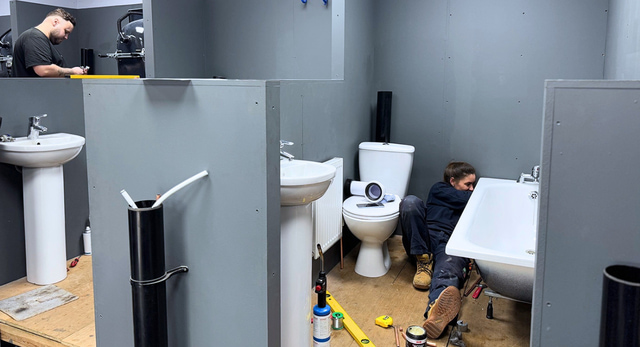

The NVQ Level 2 Plumbing is a recognised, work‑based qualification that proves you can carry out plumbing tasks safely and competently on real jobs, not just in a classroom. For many working plumbers, it is a key step towards a JIB Plumbing CSCS card, stronger employability and formal recognition of skills they already use every day.
TLDR
- The NVQ Level 2 Plumbing is a competency‑based qualification assessed on real workplace plumbing and heating jobs.
- It is designed mainly for experienced or trained plumbers who need formal proof of their skills, rather than complete beginners.
- You build a portfolio of evidence and are assessed on live installations, maintenance work and compliance with industry standards.
- A Level 2 NVQ is required for many site‑based roles and is used to support applications for JIB‑PMES plumber blue cards and plumbing CSCS cards.
- Logic4training’s NVQ plumbing courses offer flexible routes for different starting points, helping you get your skills recognised and progress your career.
What Is an NVQ Level 2 Plumbing Qualification?
NVQ stands for “National Vocational Qualification”. In plumbing, an NVQ Level 2 Plumbing and Heating qualification is a national, work‑based standard that measures whether you are competent to perform core plumbing and heating tasks safely and to industry requirements.
Unlike traditional classroom‑only certificates or diplomas, a plumbing NVQ is competency‑based. This means assessors look at the actual work you do day‑to‑day: installations, fault‑finding, maintenance and compliance, carried out in real properties or on live sites. You are assessed against set criteria that reflect current regulations and recognised good practice, rather than just exam performance.
For the Level 2 NVQ Diploma in Plumbing and Heating, awarding bodies such as LCL Awards and City & Guilds specify a range of installation and maintenance outcomes you have to demonstrate, covering pipework, hot and cold water systems, and related components. When you complete the qualification, it shows that you can perform plumbing work safely and competently in real‑world conditions and have the documentation to prove it.
Who Is NVQ Level 2 Plumbing For?
NVQ Level 2 Plumbing is aimed at people who already have, or can access, real plumbing work, rather than complete beginners sitting in a classroom. Logic4training offers routes tailored to different starting points on its NVQ Plumbing courses.
Experienced Plumbers Without Formal Qualifications
If you have been working as a domestic plumber or maintenance plumber for several years but never gained a recognised NVQ, Level 2 is often the right starting point. You may have a Level 2 technical certificate, a plumbing diploma or simply time‑served experience; the NVQ allows an assessor to look at your work, evidence your skills and award a qualification that employers and schemes understand.
This includes:
- Self‑employed domestic plumbers working on bathrooms, kitchens and general repairs.
- Maintenance plumbers handling ongoing repairs, replacements and minor installations.
- Time‑served plumbers who learnt the trade informally but now need a qualified plumber certification.
Logic4training’s NVQ Level 2 Plumbing course includes a specific experienced worker route for candidates with at least three years’ verifiable plumbing and heating experience.
Construction Site Operatives
If you work on construction sites carrying out pipework, first‑fix and second‑fix plumbing, most principal contractors now expect you to hold a relevant NVQ. A Level 2 NVQ Plumbing qualification is often the minimum standard for site‑based plumbers, and is closely linked with access to
JIB‑PMES CSCS cards and related schemes.
As site requirements vary, it is essential to check what your employer, project or card scheme expects. The underlying pattern, though, is clear: NVQ Level 2 is widely seen as the foundation level for recognised site competence.
Learners Completing Plumbing Training
If you have already completed a Level 2 Plumbing Diploma in college or with Logic4training and now work in the industry, the NVQ Level 2 is usually your next step. Classroom diplomas focus on skills development and theory, but do not fully prove occupational competence in the workplace.
Completing an NVQ builds on what you have learnt and converts it into a recognised work‑based qualification. If you are in this position, take a look at Logic4training’s Level 2 Diploma in Plumbing & Heating and its NVQ plumbing courses to understand how the classroom and workplace routes fit together.
What Does NVQ Level 2 Plumbing Cover?
Although awarding bodies vary slightly, NVQ Level 2 Plumbing and Heating follows a common scope. It focuses on the core skills and behaviours you need to install, maintain and repair standard domestic plumbing and heating systems safely, consistently and to recognised standards.
Installing Plumbing Systems
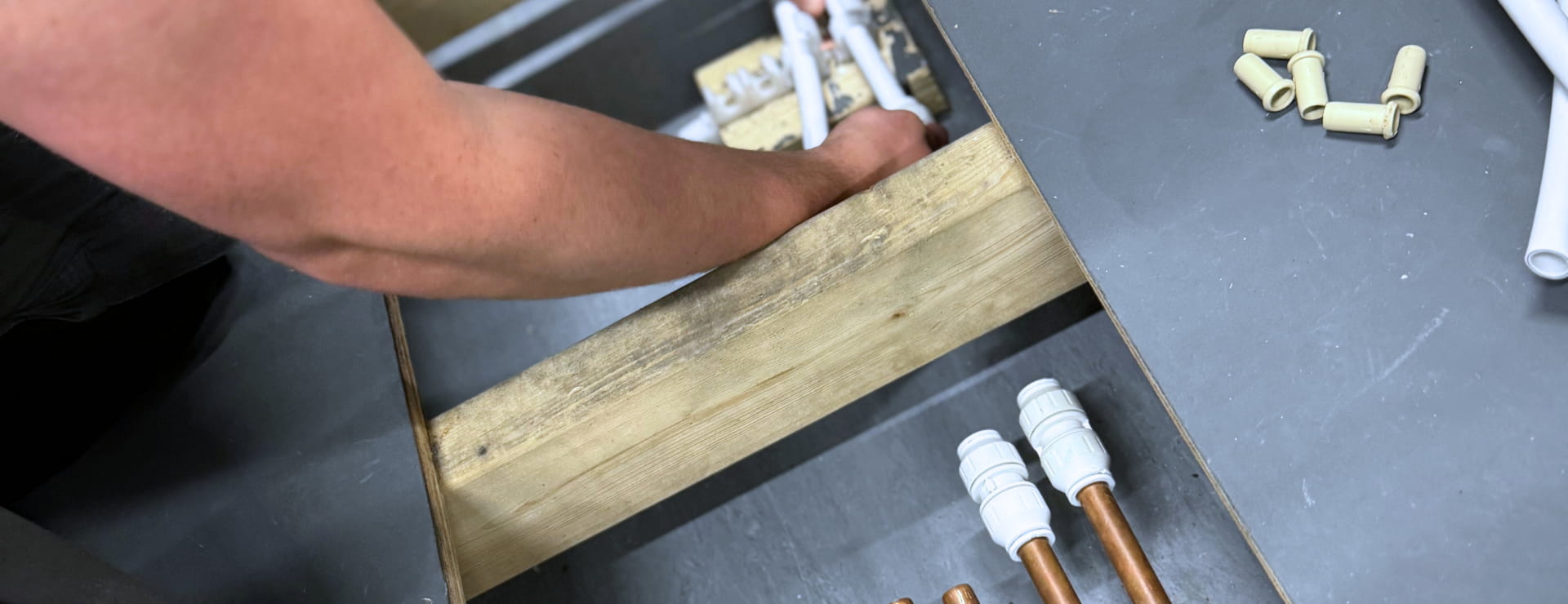
The NVQ is built around your real‑world installation work on live sites, not classroom simulations. As part of your on‑site portfolio, you will be assessed on tasks such as:
- Measuring, cutting and joining copper, plastic and other pipe materials accurately.
- Installing hot and cold water services, including cylinders, storage tanks and distribution pipework.
- Fitting sanitaryware (basins, WCs, baths, showers) and associated components such as traps, valves and accessories.
These jobs come from your actual workload rather than staged exercises. The NVQ is evidence that you can perform these tasks on real properties.
Every candidate, regardless of route, must complete two witnessed on‑site assessments plus a body of supporting installation evidence uploaded to a portfolio. At Logic4training, our portfolio system is an e-portfolio platform that improves the candidate experience through its ease of use. These assessments require you to demonstrate your installation skills on live jobs without waiting for an assessor to travel.
Across these installations, you must show that you:
- Plan and set out work correctly.
- Use tools and materials safely and effectively.
- Produce neat, leak‑free, compliant pipework and fittings.
These tasks must reflect current legislation and manufacturer requirements, and be completed in line with recognised standards such as those set by the awarding bodies, such as City and Guilds and LCL Awards. Logic4training covers these skills throughout its plumbing training courses.
Maintenance and Repairs
A significant part of the NVQ involves maintenance, diagnostic and remedial work. You will need to provide evidence that you can:
- Identify faults in existing plumbing and heating systems using logical diagnosis.
- Replace or repair faulty components such as valves, taps, traps, pumps or sections of pipework.
- Restore systems to safe, reliable operation and test them correctly after work is complete.
For many domestic and commercial plumbers, this is the reality of day‑to‑day work, such as investigating issues, choosing appropriate repairs, and making sure the system is working properly before leaving the site. The NVQ ensures this side of the job is captured and assessed, not just new installations.
Your portfolio might include:
- Photos and descriptions of fault‑finding jobs.
- Job sheets or invoices showing remedial work.
- Witness statements from supervisors or customers confirming successful repairs.
This allows the assessor, internal verifier and LCL Awards to see that you are competent across both installation and maintenance activities.
Health and Safety
You must demonstrate that you work safely, protect yourself and others, and follow relevant site rules at all times. Health and safety is woven through the NVQ rather than treated as a standalone topic. During on‑site assessments and evidence review, assessors look for:
- Correct use of PPE appropriate to the task.
- Safe working at height and in confined spaces where relevant.
- Safe isolation procedures when working on systems with electrical or pressure risks.
- Good manual handling practices when lifting cylinders, sanitaryware or materials.
You are also expected to understand your responsibilities under health and safety law and follow site‑specific inductions and permit systems where required. At Logic4training, our Level 2 Plumbing NVQ requires you to have access to live plumbing installation work, which means you will naturally operate within normal site safety controls as part of your evidence.
Working to Industry Standards
Finally, the NVQ requires clear evidence that your work meets quality and compliance expectations, not just that it “works”. Across your portfolio and site assessments, you will be expected to show that you:
- Follow manufacturer instructions for installation, commissioning and maintenance.
- Comply with building regulations and water regulations where applicable, including correct pipe sizing, routing and backflow protection.
- Complete jobs to a professional standard that meets customer and employer expectations in terms of neatness, reliability and safety.
At Logic4training, we place a strong emphasis on this aspect of the NVQ. Your evidence goes through three levels of quality assurance before your certificate is issued: first by your Logic4training assessor, then by a separate internal verifier (IQA), and finally by the qualification’s awarding body through external verification. This multi‑stage review ensures that your work genuinely meets the industry benchmark before you are signed off.
Together, these elements mean NVQ Level 2 Plumbing is not just a checklist of tasks. It is a structured, externally verified way of proving that your installation, maintenance, health and safety and compliance practices all meet the standards expected of a competent plumber in the UK.
How Is an NVQ Level 2 Plumbing Assessed?
For many plumbers, the key question is how the NVQ is actually assessed. There are three main parts: workplace evidence, site assessments and knowledge‑based components.
Workplace Evidence
You build a physical or digital portfolio of real jobs that demonstrate different aspects of plumbing and heating work. This can include:
- Photographs of completed installations.
- Job sheets and invoices.
- Factual accounts of tasks you have carried out.
- Witness testimonies from supervisors or clients.
At Logic4training, we use an e‑portfolio platform on our NVQ plumbing courses so you can upload evidence remotely, making the process more flexible around your workload.
Site Assessments
As part of the NVQ Level 2 Plumbing course at Logic4training, each candidate must complete at least two witnessed on‑site assessments. An assessor observes you performing live installation or maintenance tasks, either in person or via remote video tools such as Microsoft Teams.
This allows the assessor to verify that you:
- Follow safe working practices.
- Work methodically and accurately.
- Meet the competence criteria for the qualification.
Most NVQ providers follow a similar model: one profiling session plus two site visits is a typical pattern used across the industry. If you want to see how this works in practice, watch one of our Plumbing NVQ Level 2 testimonies from a recent learner.
Knowledge‑Based Components
Although NVQ Level 2 Plumbing focuses on competence, you still need to show underpinning knowledge. This may be assessed through:
- Professional discussions with your assessor.
- Written or verbal questions about regulations and system design.
- Supporting certificates from previous diplomas or training.
The key insight is that you are judged on work you already perform, backed up by knowledge evidence, rather than traditional classroom exams alone.
NVQ Level 2 Plumbing and CSCS Cards Explained
One of the main reasons plumbers pursue an NVQ Level 2 is to gain access to construction sites and industry‑recognised registration schemes through CSCS and JIB‑PMES cards.
What Is a CSCS Card?
CSCS cards are widely used across UK construction to show that workers have appropriate training, qualifications and health and safety knowledge. Many principal contractors require a valid CSCS or partner scheme card before you are allowed on site, especially for plumbing and mechanical services.
Individual site requirements can vary, so it is always worth checking what your specific project or employer expects.
What Is a JIB Plumbing CSCS Card?
In plumbing and mechanical engineering services, CSCS cards are administered through the JIB‑PMES CSCS Registration Scheme. For plumbers, achieving an appropriate NVQ, typically Level 2 or Level 3, depending on the card, is a key part of the eligibility criteria.
LCL Awards explicitly note that completing their Level 2 NVQ Diploma in the Installation & Maintenance of Plumbing & Heating Systems enables you to apply for a JIB‑PMES blue plumber card and join approved plumber schemes. Logic4training’s NVQ Level 2 Plumbing course is designed with this requirement in mind, making it suitable for plumbers who need recognised cards for site work.
For detailed card criteria, you can refer to:
- JIB‑PMES scheme coverage guidance.
- The JIB‑PMES plumber blue card application form.
- The JIB‑PMES plumber gold card guidance.
Why Employers Value Recognised Cards
Employers and contractors value CSCS and JIB‑PMES cards because they:
- Provide quick proof of qualifications and competence.
- Help them meet health and safety and compliance obligations on site.
- Reduce the risk of unqualified workers carrying out safety‑critical tasks.
For you, holding the right card improves credibility, makes site access smoother and often opens doors to higher‑value work.
Is NVQ Level 2 Enough to Be a Plumber?
The short answer is yes. For many plumbing roles, particularly domestic work and general maintenance, NVQ Level 2 is recognised as demonstrating occupational competence. It can be enough to support employment, self‑employment and access to card schemes at the foundation level.
However, your long‑term career goals, the type of work you want to carry out and employer expectations may mean that further qualifications, such as NVQ Level 3 Plumbing, are beneficial or required.
Domestic Plumbing Careers
In domestic plumbing, many sole traders and small firms focus on bathroom installations, general repairs and minor upgrades. NVQ Level 2 is often seen as the benchmark for being a competent plumber in these areas, especially when combined with experience and good customer feedback.
You might supplement your NVQ with short courses in areas such as:
We outline these options in our blog on plumbing courses for experienced plumbers.
Construction and Commercial Roles
On larger construction and commercial projects, expectations can be higher. For advanced responsibilities, supervision, complex heating systems or specialist work, employers may expect NVQ Level 3 or equivalent.
In some JIB‑PMES card categories, Level 2 is not sufficient for higher‑level cards such as the Plumber Gold card, which typically requires Level 3 NVQ or similar advanced craft qualifications. That makes NVQ Level 2 a strong foundation but not necessarily the end of the road if you aim for senior site roles.
Future Progression Opportunities
Completing NVQ Level 2 puts you in a good position to progress to Level 3, specialist pathways or more advanced responsibilities. If you see plumbing as a long‑term career, Level 2 is often step one of a structured progression against recognised standards.
Many installers use their NVQ Level 2 as the foundation for upskilling into air source heat pump training and related renewable heating qualifications, which build on core plumbing skills to cover system design, installation and commissioning of modern energy‑efficient systems. This creates a clear route from competent plumber to multi‑skilled heating professional working in high‑demand areas of the market.
Logic4training can support this journey, offering plumbing courses and qualifications that help you move from new entrant to fully qualified plumber and beyond. You can also download our Ultimate Guide to Plumbing Careers for a broader look at routes and options.
NVQ Level 2 vs NVQ Level 3 Plumbing
Many people search specifically for the difference between Level 2 and Level 3 Plumbing.
Which Qualification Do You Need?
If your goal is to prove competence for domestic plumbing, small works or general maintenance, NVQ Level 2 is usually the right place to start. JIB‑PMES explicitly issues the Plumber Blue card to operatives who have achieved a full Level 2 NVQ Diploma in Plumbing and Heating or an accepted equivalent, which aligns directly with what we deliver on our NVQ Level 2 Plumbing course. For sole traders, domestic installers and maintenance plumbers, this combination of Level 2 NVQ plus a blue plumber card is widely recognised as the benchmark for being a competent, qualified plumber on standard systems.
If you want to lead teams, manage complex commercial systems or hold higher‑status JIB cards, you should plan to progress to NVQ Level 3 in time. JIB‑PMES guidance states that gold cards, including the Plumber Gold card, are intended for operatives with advanced qualifications such as Level 3 NVQ Diplomas or equivalents. This is the level associated with supervisory responsibilities, complex plant rooms, commercial installations and, increasingly, low‑carbon roles like the PMES Low Carbon Heating Technician gold card.
Ultimately, the “right” qualification depends on the type of work you do now and where you want your plumbing career to go over the next few years. Taking time to map your current role, future ambitions and card requirements against Level 2 and Level 3 standards will help you choose a route that supports both immediate employability and long‑term progression.
What Are the Benefits of an NVQ Level 2 Plumbing Qualification?
NVQ Level 2 Plumbing delivers several practical benefits to working plumbers and employers.
1. Industry Recognition
Holding a Level 2 NVQ shows that your skills have been assessed against nationally recognised occupational standards. It is widely understood and accepted across the UK plumbing industry, making it easier for employers and schemes to recognise your competence.
2. Improved Employability
Employers increasingly expect formal qualifications as well as experience. An NVQ Level 2 Plumbing qualification strengthens your CV, gives you a competitive edge in job applications and makes it easier to demonstrate competence quickly.
3. Access to Industry Card Schemes
As noted earlier, completing an NVQ Level 2 Plumbing and Heating qualification is commonly used to support applications for JIB‑PMES plumber cards and other registration schemes. Without a recognised NVQ, you may be limited to lower‑level cards or find site access more difficult.
You can review official criteria using the JIB‑PMES CSCS scheme coverage page.
4. Increased Confidence and Credibility
For many experienced plumbers, finally getting a recognised qualification adds confidence when pricing work and dealing with clients. It reassures customers that you meet current standards and helps you justify your rates more clearly.
5. Career Progression Opportunities
NVQ Level 2 is a gateway qualification. Once you have it, you can progress to Level 3, apply for more advanced roles or specialise into areas such as heating, renewables or site supervision.
Can Experienced Workers Get an NVQ Level 2 Plumbing Qualification?
Yes. Experienced plumbers can gain NVQ Level 2 through an experienced worker route without repeating an apprenticeship or full classroom programme.
This option is designed for people who already work as plumbers, have a track record of fitting bathrooms, heating systems and pipework, and now need a recognised qualification to support card applications, scheme membership or career progression.
The experienced worker route is aimed at:
- Plumbers with at least three years of verifiable plumbing and heating experience.
- Installers who have learned on the job but never completed a formal Level 2 qualification.
- Operatives who have moved between employers or self‑employment and now need an NVQ to obtain a JIB Plumbing CSCS card.
Typical examples include long‑serving bathroom fitters, domestic installers and site‑based plumbers who are already responsible for full installations and repairs but lack a formal NVQ certificate.
How the Route Works in Practice
The experienced worker route focuses on assessing and evidencing the skills you already use every day, rather than teaching you the basics from scratch. There are three main elements:
1. Pre‑assessment / profiling
- Before you start, you complete a pre‑assessment or skills test so an assessor can understand your current level.
- You discuss the types of work you carry out (bathrooms, cylinders, heating pipework, maintenance) and provide proof of experience such as employment records, references, or self‑employment evidence.
- This confirms that you are suitable for the experienced worker route and identifies any gaps that might need targeted support.
2. Portfolio‑based assessment of real work
- You build a structured portfolio based on actual jobs: installations, maintenance work, fault‑finding and compliance tasks.
- Evidence can include photos, job sheets, reports, drawings, technical information and witness testimonies from supervisors or clients.
- The focus is on showing that you meet all the NVQ performance and knowledge outcomes through the work you already do, rather than simulated college tasks.
3. Targeted site visits and professional discussions
- Every candidate must complete at least two witnessed on‑site assessments, where an assessor observes you installing or maintaining systems on live jobs.
- Logic4training conducts these assessments remotely via Microsoft Teams, so you can be observed while working on real projects without waiting for an assessor to travel.
- Professional discussions and, where required, short knowledge checks help confirm that you understand regulations, safety requirements and system design principles behind the work you do.
Across all routes, your completed NVQ portfolio is internally assessed, internally verified and then externally verified by the awarding body (LCL Awards), so your qualification carries the same weight as one achieved through a more traditional pathway.
Logic4training’s Three NVQ Level 2 Routes
To accommodate different starting points, Logic4training has structured its NVQ Level 2 Plumbing route into three categories, all feeding into the same Level 2 NVQ outcome.
Category 1: LCL Awards Level 2 Diploma holders
- For candidates who already hold the LCL Awards Level 2 Plumbing & Heating Diploma.
- You “top up” your existing diploma by adding the NVQ element, with 1-2 days of assessment plus portfolio.
Category 2: Other recognised Level 2 qualifications
- For candidates with a Level 2 plumbing qualification from City & Guilds, BPEC or EAL.
- Typically involves an initial assessment, a short in‑centre period (around one week) and then portfolio and on‑site assessment.
Category 3: No formal qualification but 3+ years’ experience
- For experienced plumbers who have never completed a formal Level 2 qualification but can evidence at least three years in the trade.
- Often combines a short in‑centre programme (for example, around three weeks) with portfolio‑only NVQ assessment, allowing you to achieve both the diploma and NVQ in a compressed timeframe compared to a new entrant route.
Routes 2 and 3 include a basic skills test or pre‑assessment to check suitability and ensure your starting point and experience match the demands of the NVQ.
Why Experienced Workers Use This Route
For experienced plumbers, the experienced worker route offers several advantages:
- You do not have to start again with a long apprenticeship or full‑time college programme.
- Assessment is built around your existing workload, so you can continue working while you complete the NVQ.
- You gain a nationally recognised qualification that supports applications for JIB‑PMES plumber cards and approved plumber schemes, which increasingly list Level 2 NVQ as a minimum requirement.
You may not need to start from the beginning if you already work as a plumber; instead, the qualification process focuses on capturing, evidencing and verifying the skills you already use every day, so they are recognised formally by employers, card schemes and the wider industry.
Is NVQ Level 2 Plumbing Worth It?
For most plumbers, NVQ Level 2 Plumbing is a worthwhile investment in professional recognition and future opportunities.
Decision Guide
If these outcomes align with your goals, NVQ Level 2 Plumbing is likely to be an important next step in formalising your skills and opening up more options in the trade. It brings together your day‑to‑day experience, recognised industry standards and the card schemes many sites now rely on, giving you a solid foundation for whatever direction you want your plumbing career to take next.
FAQs
What is an NVQ Level 2 in Plumbing?
NVQ Level 2 Plumbing is a work‑based, competency‑based qualification that assesses your ability to carry out plumbing and heating tasks safely and to industry standards in real workplaces. It focuses on installations, maintenance, diagnostics and compliance rather than classroom exams alone, as outlined in Logic4training’s NVQ Level 2 Plumbing course.
Is NVQ Level 2 enough to be a plumber?
For many domestic and general plumbing roles, NVQ Level 2 is recognised as proving occupational competence and can be enough to work as a plumber, especially when combined with experience. Some advanced site roles and higher‑level card categories, however, may require NVQ Level 3 or equivalent, as set out in the JIB‑PMES Plumber Gold card guidance.
Can I get a CSCS card with an NVQ Level 2 Plumbing qualification?
Completing an NVQ Level 2 Plumbing and Heating qualification is commonly used to support JIB‑PMES plumber card applications, including blue plumber cards linked to CSCS. You should always check the current JIB‑PMES CSCS scheme coverage and CSCS card guidance, as card requirements and health and safety test rules can change over time.
How long does an NVQ Level 2 Plumbing take?
Typical NVQ Level 2 plumbing qualifications take 6 months and allocate up to 3 years for completion, but many experienced plumbers finish much sooner once they have gathered evidence and completed site assessments. At Logic4training, we see many of our Level 2 NVQ Plumbing candidates complete the qualification in 2-5 months.
Can experienced plumbers get an NVQ without an apprenticeship?
Yes. Experienced plumbers can follow an assessment‑only or experienced worker route where their existing workplace skills are profiled, evidenced and assessed without repeating an apprenticeship. Logic4training’s NVQ plumbing courses explain the categories available and the pre‑assessment required to confirm the right route.



 Your latest offers & alerts