

Last updated: 10th November 2026 | Originally published: 11th August 2025
Looking for a Gas Safe course in London to become a gas engineer, renew your ACS qualifications or add another specialism? Logic4training offers routes for beginners and experienced tradespeople, plus assessments for existing engineers.
This article explains which gas engineer course to choose, how training leads to registration and where you can study in London and the surrounding counties.
TL;DR
What you need to know:
- New to gas? Choose a structured new-entrant route with practical training, supervised site experience and initial ACS assessments.
- Already a plumber or working in a related trade? An experienced-trades Gas Managed Learning Programme may be appropriate.
- Already qualified? Book ACS reassessment for your existing categories, or an eligible extension course for new work.
- Training, ACS certification and Gas Safe registration are separate stages. A course attendance certificate does not authorise gas work.
- Northolt is our West London centre. Basildon, Luton and Sittingbourne serve learners travelling from London and the surrounding counties.
- Course availability varies by centre. Confirm where each part of your chosen programme takes place before booking.
What is a Gas Safe course?
“Gas Safe course” is a common search term for training that helps you qualify for gas work or renew your existing qualifications. It is not one universal qualification. The right course depends on your experience, the fuel and appliances you want to work on, and whether you are gaining or renewing competence.
Three stages matter: training develops your skills, the relevant assessments establish evidence of competence, and Gas Safe registration provides the registration arrangements needed for legal gas work. Gas Safe Register explains these requirements in its path to Gas Safe registration.
For example, a complete beginner needs more than a short assessment course. An established boiler engineer renewing current qualifications does not normally need to repeat a beginner’s programme. A gas safety course for a property manager serves a different purpose again: awareness training does not qualify someone to install or service gas appliances.
Which gas engineer course should you choose?
Start with your current skills and intended work, rather than the shortest advertised duration. Our gas training courses and qualifications cover domestic gas, commercial heating, commercial catering, LPG, metering, commercial laundry and gas safety awareness.
Choosing a gas training route by experience
Gas engineer courses for complete beginners
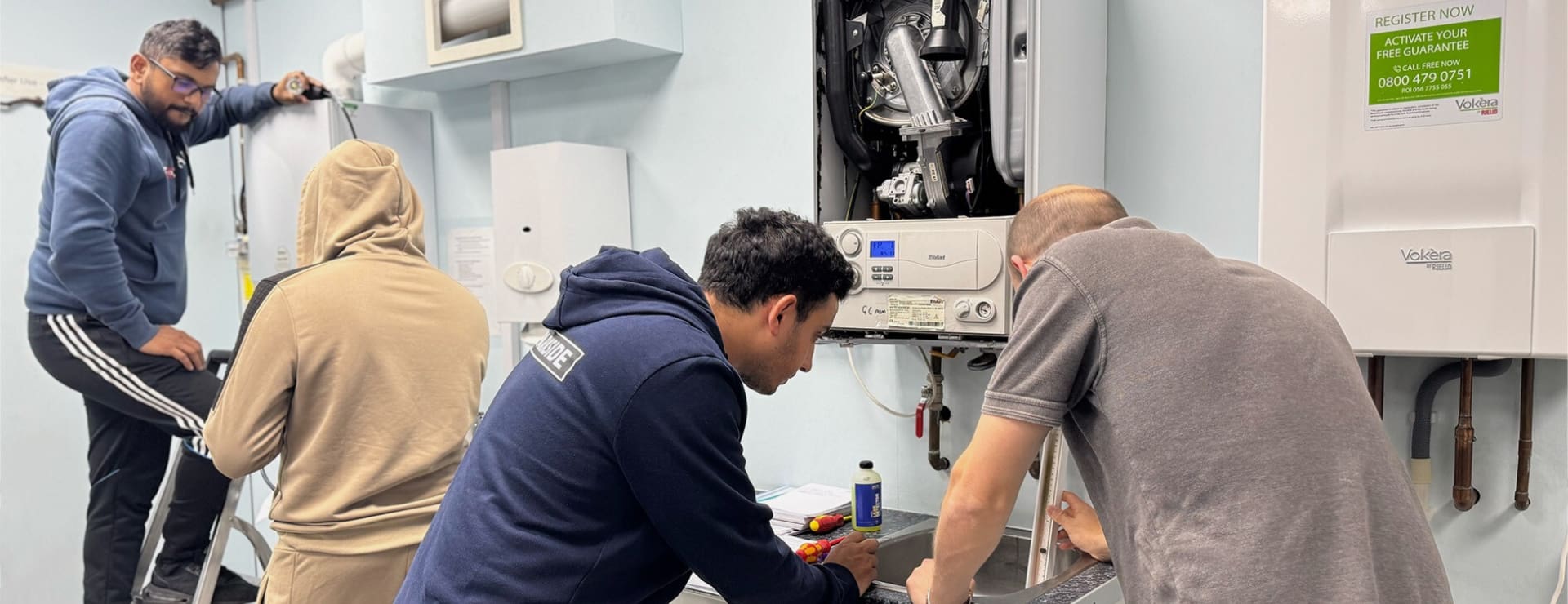
Our Domestic Gas Heating Installer New Entrants Route combines foundation plumbing and heating skills with a Gas Managed Learning Programme (MLP). You develop practical skills in the centre, complete supervised gas work and return for the relevant assessments.
The published domestic route works towards CCN1, Core Domestic Gas Safety, and CENWAT, covering central-heating boilers and water heaters. It does not automatically qualify you for every domestic appliance. Additional categories, commercial work and LPG have their own requirements.
Package options offer different levels of support and additional training. Before choosing, check who arranges your supervised experience and whether portfolio-building support is included. Those details can make a bigger difference to your progress than the headline number of training weeks.
Gas training for plumbers and experienced tradespeople
If you already have relevant practical experience, our gas training for experienced trades may be a better starting point. This route is designed for people such as plumbers and kitchen fitters moving into domestic gas work.
Existing trade skills can reduce the foundation training you need, but they do not replace gas-specific competence. You still need the required learning, supervised portfolio evidence and initial assessments. The centre checks your suitability before confirming the route.
Our article on what a Gas Managed Learning Programme involves explains the difference between learning in the centre and demonstrating your skills through supervised work.
For a closer look at the training itself, explore our Gas Managed Learning Programme (MLP) course. The course page explains the entry requirements, practical training, supervised portfolio, and initial ACS CCN1 and CENWAT assessments, along with current prices and centre options.
Initial ACS assessment and reassessment
The CCN1 initial course and appliance assessments suit eligible candidates gaining initial certification, including learners who have completed the required training and experience. This is not a stand-alone beginner’s route that skips the portfolio.
Existing engineers can explore our CCN1 and appliances reassessment course. Bring your current certificates and expiry dates so the team can confirm which categories you need to renew and whether you meet the reassessment entry criteria.
ACS certificates normally follow a five-year cycle. You can generally complete a reassessment up to six months before expiry without losing the remaining validity period. Gas Safe Register’s registration information explains the need to maintain current evidence of competence. Eligibility to take an assessment after expiry does not permit you to continue working under an expired category.
Adding appliances, commercial gas or LPG
Choose further training around the work you actually intend to undertake. Our domestic appliance training and assessments cover categories such as CKR1 for cookers and HTR1 for fires and wall heaters. Entry requirements apply when extending your scope.
For example, Logic4training’s commercial heating upskill package requires engineers to have held CCN1 for 12 months and have some basic commercial on-site experience. Separate commercial gas training packages cover other starting points, including new-entrant and renewal routes.
Domestic natural-gas certification does not automatically cover LPG, commercial catering or commercial heating. Check the fuel, appliance type and installation setting against both your qualifications and registration categories.
Where can you take gas courses in London?
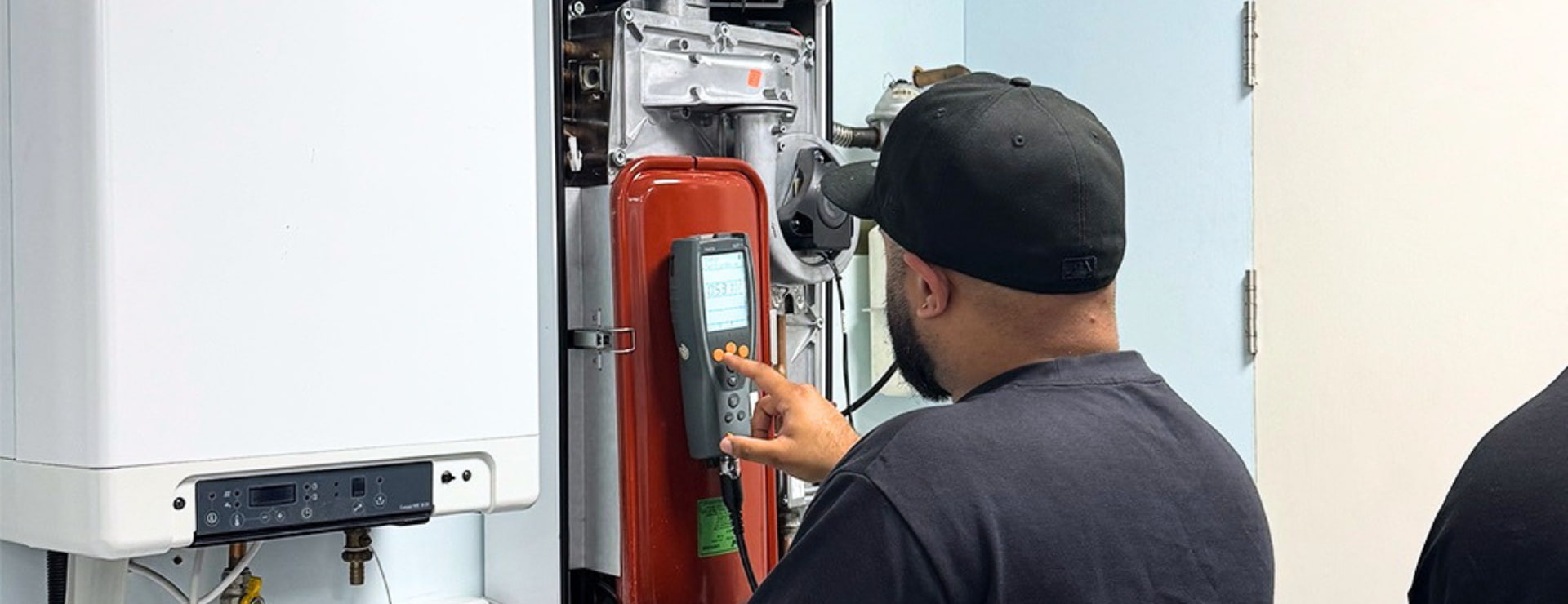
Logic4training has four training centres serving London and the South East. Northolt is in West London; the other centres are in Essex, Bedfordshire and Kent. Compare the journey for the full programme, not just your first day, and check course availability at your preferred location.
Northolt: gas engineer courses in West London
Our Northolt training centre is our original, flagship site, based on Rowdell Road, UB5 5QR. It offers a broad range of gas and building-services training and is a practical option for learners based in West London and Middlesex.
Northolt is particularly important for complete beginners: our new-entrant course information identifies it as the location for the Domestic Gas Heating Installer foundation course. The MLP element is available across the four centres, subject to current scheduling. Confirm your complete itinerary rather than assuming every stage runs at your nearest centre.
Basildon: an option for East London and Essex
Our Basildon training centre is based at Victoria House, Hemmells, Laindon North, SS15 6ED. It provides an alternative for learners travelling from East London and Essex who would prefer not to cross the capital.
Gas training forms part of a wider building-services offer at Basildon. Check the specific domestic, commercial or catering route you need, along with dates and assessment arrangements, before committing to travel or accommodation.
Luton: an option for North London and Bedfordshire
Our Luton training centre, in Bedfordshire, serves learners from North London and surrounding counties. It offers gas training within a purpose-built building-services training environment.
If you are comparing Luton with Northolt, check where each element of your package runs. An experienced tradesperson booking an MLP may have different location options from a complete beginner who also needs foundation plumbing and heating training.
Sittingbourne: an option for Kent and South East London
Our Sittingbourne training centre serves Kent and learners travelling from South East London. It can be a useful alternative to travelling across London for gas training or ACS renewal.
On-site parking is available at all four centres. Use our training centre directory for centre details and contact numbers. Check your own journey at the times you will travel, rather than relying on a fixed commuting estimate.
What will you learn on a gas safety course?
The content depends on the route. A domestic gas engineer course develops both practical skills and the knowledge behind safe decisions. Relevant subjects include gas legislation, combustion, ventilation, flues, pipework, tightness testing, purging, controls and responding to unsafe situations.
Appliance training then applies that knowledge to installation, commissioning, servicing and fault diagnosis within the relevant category. Understanding why a check matters is as important as remembering the sequence. An appliance running is not, by itself, evidence that the installation is safe.
At Logic4training, gas qualifications are awarded by LCL Awards. Training combines classroom learning with practical work, while eligible new entrants also complete supervised site evidence. ACS assessment checks underpinning knowledge and practical competence; attendance alone does not guarantee certification.
ClubLogic provides online learning and revision alongside relevant programmes. It supports preparation and revision, but does not replace hands-on training, supervised work or assessment.
How does the gas portfolio work?
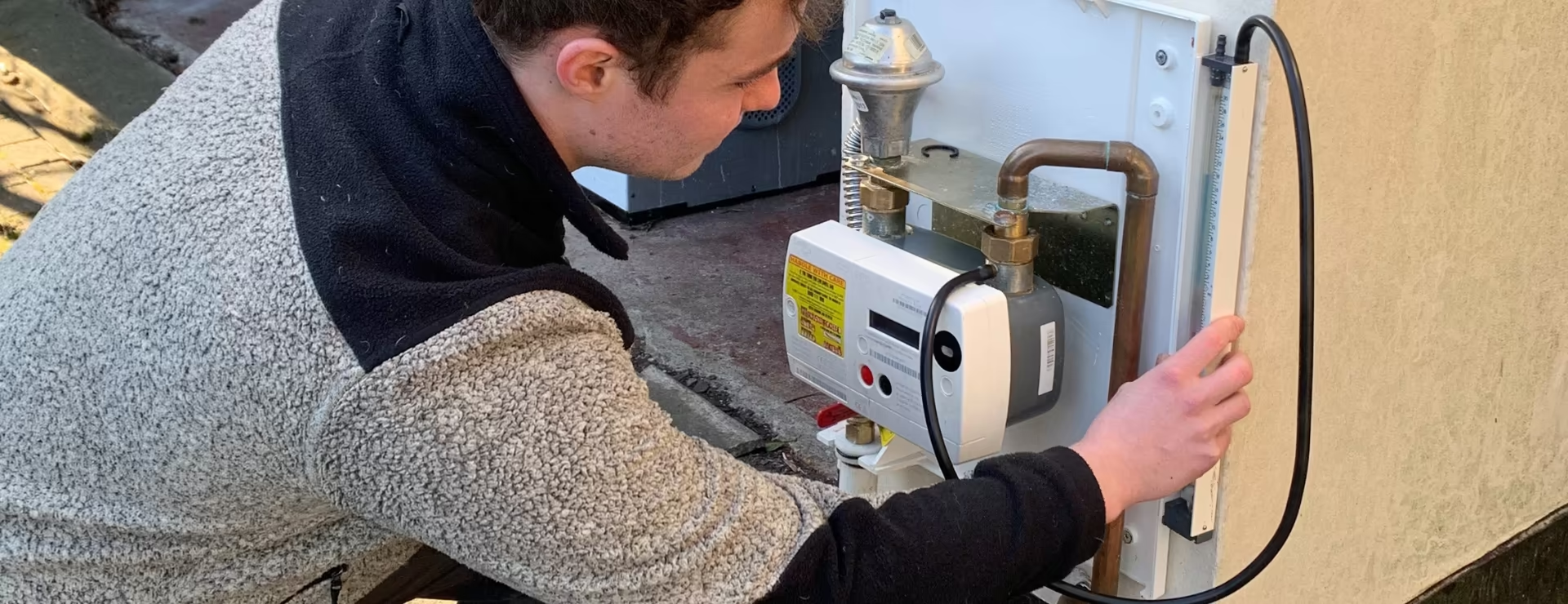
For a new entrant, the portfolio is a required record of supervised work, not an optional extra. It shows how you have applied your learning on suitable jobs under an appropriately qualified Gas Safe registered engineer.
Logic4training’s published domestic route includes in-centre direct observations and on-site evidence covering four boiler installations, four services and four breakdown jobs. Confirm the current requirements and evidence format with the centre before arranging your placement.
The range of work matters. If your supervising business mainly replaces boilers, you still need access to suitable servicing and breakdown work. Discuss this early, keep records as you progress and submit evidence for review at the agreed stages.
How long does a gas engineer course take?
This will depend on the type of gas course. Our domestic beginner packages advertise eight weeks of training for Bronze and Silver, plus the on-site portfolio. Experienced-trades packages advertise four weeks, plus the portfolio. Additional package elements can extend the timetable.
These are not promises of registration within eight or four calendar weeks. Supervised work availability, evidence reviews, assessment dates and the registration process all affect the overall journey.
As a guide, we say that it takes the time for the following gas courses:
- Domestic beginner packages (Bronze and Silver): Usually 10-12 months. Eight weeks of training, plus the time needed to complete your supervised on-site portfolio.
- Experienced-trades gas packages: Usually 8-12 months. Four weeks of training, plus the time needed to complete your supervised on-site portfolio
- Packages with additional training: allow extra time for any additional qualifications or course elements included in your chosen package.
These timings describe the training, not the full journey to Gas Safe registration. Your overall completion time also depends on access to suitable supervised work, portfolio reviews, assessment dates and the registration process.
Renewal courses are shorter because they assess existing competence. Selected courses have weekend options, but availability depends on the route and centre. Read our article on how long it takes to become a gas engineer for more context, or call our team for help.
How much do Gas Safe courses in London cost?
Price depends on whether you need a complete entry route, an experienced-trades programme, reassessment or an additional appliance category. Compare the full route rather than treating a short ACS assessment fee as the cost of becoming an engineer from scratch.
- Check whether initial ACS assessments and certification fees are included.
- Confirm whether you must arrange your own supervised placement or can purchase portfolio support.
- Ask about textbooks, revision resources, additional training and any reassessment or retake charges.
- Allow for VAT, travel and time away from work, as well as separate Gas Safe registration fees.
Use the linked course pages for current prices and our gas engineer course cost guide to compare booking types. Request a written breakdown of your chosen package before enrolling.
What happens after you pass?
After passing the relevant assessments and receiving certification, you can progress through the appropriate registration process. For employed engineers, this means being correctly listed against the registered business. If you plan to trade independently, you need the appropriate registration for your own business.
Gas Safe Register receives evidence of competence from the awarding body. Registration is separate from training and renews annually, while ACS normally runs on a five-year cycle. Our Gas Safe registration article explains the distinction.
Once established, you can plan further training around your work. Our article to adding low-carbon skills to your gas qualifications explains how heating experience can support progression into heat pumps, subject to the relevant prerequisites.
Find the right gas course with Logic4training
Logic4training has trained gas engineers since 2002. Our routes cover the different stages of a gas career, from learning foundation skills to renewing existing qualifications and extending into specialist work.
To discuss a gas engineer course in London or the surrounding counties, call 020 8845 7222 or explore our gas courses. Tell the team about your trade experience, existing certificates, preferred centre and intended work so they can confirm a suitable route.
FAQs
How do I become Gas Safe Registered in London?
Complete a recognised training course with Logic4training, including the ACS qualification and portfolio, then apply for Gas Safe registration once competency is proven.
Can I take a Gas Safe course with no experience?
Yes. Logic4training’s domestic new-entrant route is designed for people without the skills needed for ACS assessment. It combines foundation training, a Gas Managed Learning Programme, supervised portfolio work and relevant assessments. The centre checks your suitability before enrolment.
Does completing a gas course make me Gas Safe registered?
No. Training, assessment and registration are separate stages. You need recognised evidence of competence for your intended work and the correct registration arrangements through your employer’s business or your own business before undertaking that work independently.
Where can I study a gas engineer course in London?
Logic4training’s London centre is in Northolt, West London. Basildon, Luton and Sittingbourne provide further options in surrounding counties. Availability varies by course. The published beginner route identifies Northolt for the foundation Domestic Gas Heating Installer course, so check where each stage takes place.
How long does it take to qualify as a gas engineer?
Our Bronze and Silver domestic beginner packages advertise eight weeks of training plus a supervised on-site portfolio. Total completion depends on access to suitable jobs, portfolio approval, assessment dates and registration. The training duration alone is not the total time to become registered.
When do I need to renew my ACS qualifications?
ACS certificates normally last five years. Arrange reassessment before expiry; you can generally renew up to six months early without losing the remaining validity period. Annual Gas Safe registration renewal is separate. An expired work category must not be treated as valid while you wait for reassessment.
Are Logic4training’s centres easy to reach by public transport or car?
Yes, Northolt, Basildon, and Luton centres are all accessible by train and road, with ample parking available.
How long does it take to complete a gas training course?
Course lengths vary: new entrants typically complete managed learning programmes in several weeks, with flexibility for working learners. Reassessments and upskilling courses are shorter.
Can I start a gas engineering career after university or a career change?
Absolutely! Logic4training specialises in supporting career changers and university graduates with tailored pathways, hands-on support, and expert guidance.


 Your latest offers & alerts