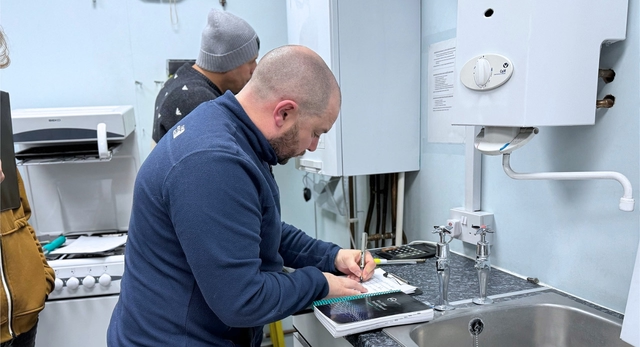

A Gas Managed Learning Programme (MLP) is a gas course that combines technical training, practical learning, and supervised gas work to build a portfolio and prepare you for initial ACS gas assessments. It is an alternative training route to an apprenticeship but leads to a core gas qualification that is needed in the UK to apply to the Gas Safe Register. This article explains who it suits, what you learn, how the portfolio works and what happens next.
Once the MLP and relevant ACS assessments are complete, the next step is applying for Gas Safe registration in the categories of work you are qualified to carry out.
TL;DR
- A Gas MLP is a recognised training route for people entering a particular area of domestic gas work.
- It combines centre-based practical and theoretical learning with supervised on-site experience and assessment.
- Your portfolio must cover the gas work required by your programme, not simply record time spent alongside an engineer.
- Completing an MLP prepares you to apply for the relevant initial ACS assessments. It does not replace them.
- After completing your MLP, portfolio and ACS assessments, you’ll need to apply to the Gas Safe Register to legally work with gas.
- There are also commercial heating, catering, and metering MLPs with different scopes.
What does MLP mean in gas training?
MLP stands for Managed Learning Programme. It is a training route that develops the knowledge and practical skills needed before a learner applies for initial gas ACS assessments.
As a recognised programme, it sets out what you must learn, how your progress is checked and what supervised work evidence you need. It is more than attending lessons or informally helping a gas engineer.
The LCL Awards Managed Learning Programme specification describes routes into domestic natural gas, LPG, non-domestic gas, metering and other activities. These routes prepare learners for the ACS assessments within their programme’s scope.
Training standards also matter. IGEM’s recognition of training guidance explains IGEM/IG/1’s role in setting an agreed training structure for people entering the gas utilisation industry.
Who is a Gas MLP for?
A Gas MLP can suit someone entering the gas industry for the first time, including an experienced tradesperson moving across from a related occupation. Your starting point determines how much foundational training you need.
A plumber may already understand pipework and heating systems, but still needs gas-specific knowledge and supervised experience. A complete beginner may need a broader domestic gas heating installer route alongside the Gas MLP. Neither should assume that previous work experience automatically proves gas competence.
At Logic4training, we distinguish between the new entrant route into gas engineering and gas training for experienced tradespeople. That distinction helps learners choose training that fits their existing skills rather than simply choosing the shortest advertised course.
If you already hold the relevant ACS certificates and need to renew them, an MLP is not normally your starting point. Instead, explore the appropriate ACS training and assessment options. If your certificates have expired, ask the centre to check which assessment route applies.
MLP vs ACS vs Gas Safe Registration
Within the gas industry, it can get a tad confusing with all the different terms. We find it easier to think of them as three different stages. The MLP provides training and supervised experience. ACS assesses competence in specified areas. Gas Safe registration concerns the business and the qualified engineers listed against it.
In practical terms, an MLP gets a new entrant ready to take initial ACS. ACS provides recognised evidence of competence. Gas Safe registration is then the legal registration step for a business carrying out gas work. The Gas Safe Register says businesses carrying out gas work must be registered, and engineers must be listed with valid competence for each work category they perform. Read the path to Gas Safe registration.
How a gas MLP works
Exact content and timings differ by programme and gas sector. However, the route usually follows the same broad sequence. A reputable provider should explain what is included, what evidence you must collect, and what you need to arrange before enrolling.
1. Your starting point is assessed
The provider reviews your relevant experience and intended work. Be clear about the tasks you have actually undertaken, not just your job title. Ask what foundation training you need and whether your proposed placement is suitable.
2. You complete centre-based learning
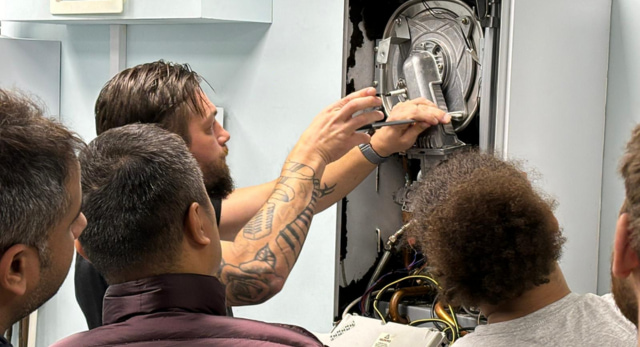
The programme combines technical teaching and practical training. You learn the principles behind safe gas work, practise tasks in a controlled environment and complete the checks required by your programme.
3. You build supervised site evidence
You gain relevant experience with a suitable Gas Safe registered business. The supervising engineer must be competent in the work involved. You record evidence in the format your centre requires, with appropriate confirmation of the activities completed.
4. Your programme and portfolio are assessed
LCL Awards explains that a Training Completion Certificate is issued after the centre confirms successful completion of the programme and sufficient on-site evidence. The certificate allows the learner to apply for the ACS assessments covered by that MLP.
5. You take ACS and progress to registration
You complete the relevant initial ACS assessments, then follow the registration process for the work you intend to undertake. Whether you join an employer or set up your own business affects the practical registration arrangements. The MLP does not make you independently qualified to carry out customer gas work.
What will you learn on a domestic gas MLP?
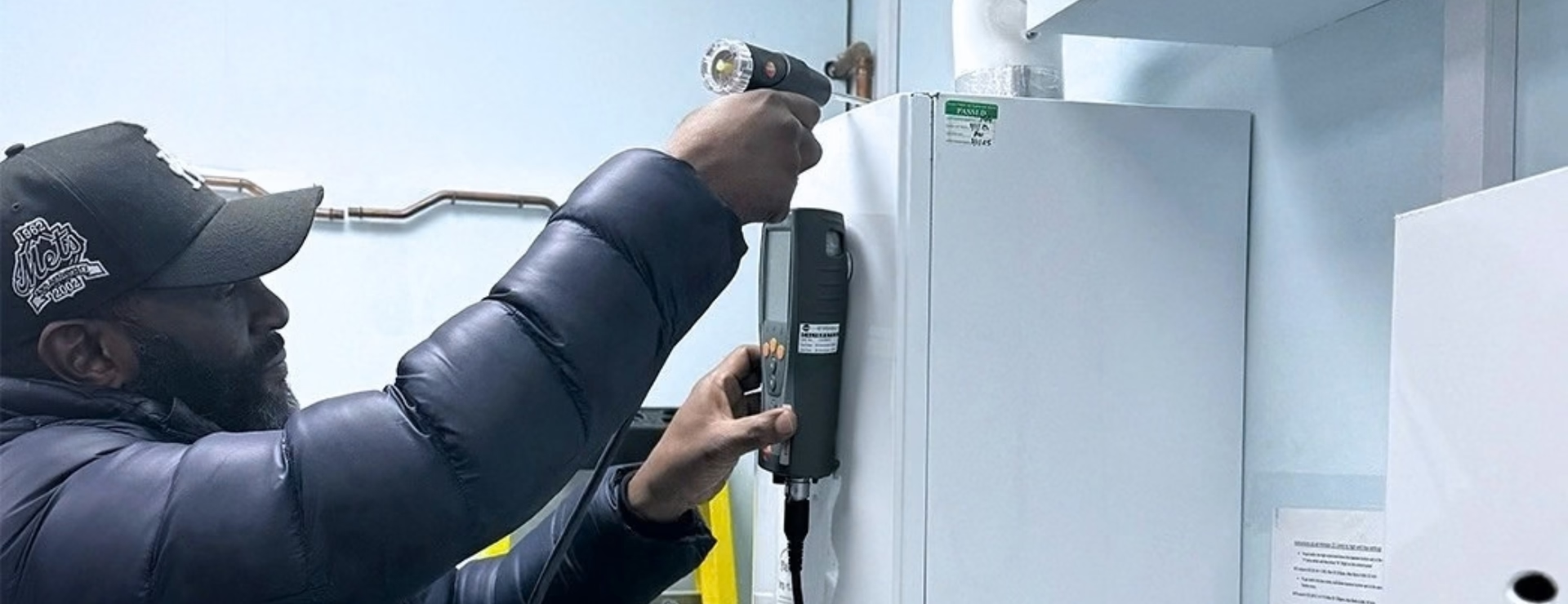
A domestic gas MLP develops the knowledge needed to understand installations, work safely and recognise problems. The exact syllabus depends on the programme, but relevant subjects include:
- Gas legislation, health and safety, and safe working procedures.
- Combustion, combustion analysis and the control of combustion.
- Ventilation, flues and chimneys.
- Gas pressure, gas rates, tightness testing and purging.
- Domestic gas pipework installation.
- Electrical controls and components used in heating systems.
- Heating design, heat loss and comfort conditions.
- Installation, commissioning, servicing and fault diagnosis for the appliances within the programme scope.
- Responding to gas emergencies and identifying unsafe situations.
The LCL Awards MLP specification also covers routes for domestic natural gas, LPG, non-domestic work, metering and emergency service provision. Do not assume that one MLP covers every kind of gas work. The ACS core and appliance or activity modules you take must match the work you plan to carry out.
Does every Domestic Gas MLP cover the same appliances?
No. A domestic gas MLP can have a narrower appliance scope than its name suggests. LCL Awards identifies different domestic natural gas routes, including:
- DNGA1: central heating boilers and instantaneous water heaters, space heaters and cookers.
- DNGA2: central heating boilers and instantaneous water heaters, plus cookers.
- DNGA3: central heating boilers and instantaneous water heaters.
These are the 3 main Gas MLPs that are carried out in the UK. At Logic4training, whilst we offer all 3, most of our candidates complete the DNGA3. This is because the cookers and fires categories (CKR1 & HTR1) can only be completed 12 months after being Gas Safe Registered. ACS and IGEM (Institution of Gas Engineers and Managers) set out this 12-month period, and it applies to adding all other domestic appliance categories.
After registration, check the work categories on your Gas Safe ID card. An MLP title does not override the categories for which you hold current competence and registration.
What is the on-site portfolio?
Within the Gas MLP, candidates will have to provide evidence that they can compitently carry out gas work
The portfolio records supervised work and demonstrates how you have applied your learning. Its value comes from the range and quality of the evidence, not simply the number of weeks you have spent on a placement.
Logic4training’s published experienced-trades route provides a concrete example. Its portfolio activities include:
- In-centre direct observations covering a boiler installation, a service and a breakdown task.
- Four on-site boiler installation jobs.
- Four on-site boiler service jobs.
- Four on-site boiler breakdown jobs.
- Mid-point and final assessor reviews.
These are the published requirements for that Logic4training route, not a universal checklist for all gas MLPs. Confirm the current requirements with the centre before arranging work. Commercial, catering and metering routes require evidence relevant to their own scope.
Why the mix of work matters
Installation, servicing and breakdown work involve different tasks. A business that mainly installs boilers might offer plenty of installation experience but fewer opportunities to service appliances or investigate faults. That can leave gaps in your evidence even if you attend regularly.
For example, imagine that your mentor has a full diary of boiler replacements. Before accepting the placement, ask how you will also access the required servicing and breakdown work. Agreeing this early is more useful than discovering the gap when your portfolio is reviewed.
Ask your centre what each evidence record needs to contain and when it should be submitted. Keep records accurate, protect customer information and arrange reviews at the agreed points. Do not assume that every job you attend will automatically count.
How long does a Gas MLP take?
The centre-based timetable is not the same as the total time needed to finish the route. Your previous experience, programme scope, access to suitable site work and assessment arrangements all affect completion.
A course advertised in weeks usually describes a particular training element. It should not be read as a promise that you will finish your portfolio, pass ACS and become registered within the same period.
Ask for three separate timelines: centre attendance, supervised portfolio work and assessment availability. If you are fitting training around employment, also ask how attendance and reviews are scheduled. Our guide to how long it takes to become a gas engineer explains the wider training journey.
What do you need before starting?
The most important practical requirement is access to a suitable Gas Safe registered business that can provide supervised experience. This could be an employer, a placement provider or, in some cases, a business you already work with. The supervising engineer needs the relevant registration categories for the work you are observing and assisting with.
- Ask whether the course is approved and recognised for your intended gas sector.
- Confirm the entry criteria and whether your trade experience is suitable.
- Secure a realistic supervised work placement before committing, where possible.
- Check exactly which ACS core and appliance or activity assessments the MLP leads towards.
- Understand the total cost, including training, assessments, certification, portfolio support and any later registration fees.
- Plan for the time needed to complete your site portfolio properly.
Choosing the right gas training route
Logic4training delivers routes for people at different stages of their careers, from complete beginners to experienced tradespeople expanding their competence. The right choice depends on your starting point, previous experience and the type of gas work you want to undertake.
Use the table below as a simple guide to the training route that may suit your goals.
You can also read our guide to the qualifications needed to become Gas Safe registered for a wider view of the routes available. The key is to choose a programme that matches your existing experience and the gas work you genuinely intend to carry out.
Frequently Asked Questions
Is a gas MLP the same as ACS?
No. An MLP combines training, assessment and supervised experience to prepare you for the relevant initial ACS assessments. ACS assesses your gas safety competence in specific core, appliance or activity categories.
Can I become Gas Safe registered after an MLP?
Not from the MLP alone. You need recognised evidence of competence, normally through the relevant ACS assessments on this route, and must be listed with a Gas Safe registered business for the work you undertake.
Do I need a Gas Safe registered mentor?
You need suitable supervised experience through a Gas Safe registered business. The supervising operative must be competent in the relevant work, and your evidence must meet the programme’s requirements. Confirm the arrangement with your centre.
Can a plumber take a Gas Managed Learning Programme?
Yes, an MLP can be suitable for a plumber moving into gas work. Your provider should assess your experience first. Plumbing skills do not remove the need for gas-specific training, supervised evidence and the relevant competence assessments.
How long does a Gas Managed Learning Programme take?
There is no single completion time. Centre training is only part of the route. Your portfolio progress, available supervised work and assessment arrangements determine when you can finish the programme and move through ACS and registration.
For help choosing your starting point, explore Logic4training’s gas training courses and discuss your experience and intended work with the team before booking.



 Your latest offers & alerts