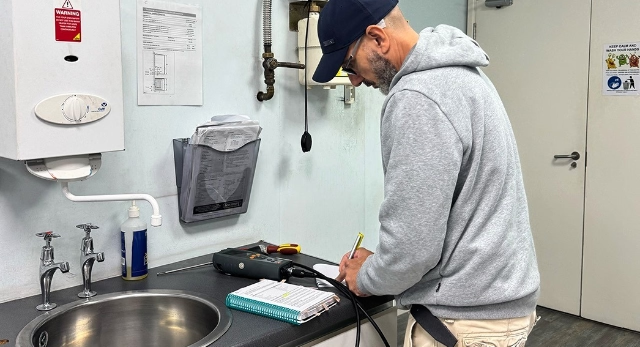

A landlord gas safety certificate records the results of the annual gas safety check at a rented property. Usually called a Landlord Gas Safety Record or CP12, it must be completed by a suitably qualified Gas Safe registered engineer.
This article explains what landlords must arrange, what the record should include and when tenants must receive it.

TL;DR
What you need to know:
- Arrange a gas safety check every year for the gas appliances and flues you own and provide for tenants.
- Use a Gas Safe registered engineer qualified for the relevant appliances and fuel.
- Give existing tenants a copy within 28 days of the check. Give new tenants their copy before they move in.
- Keep records for at least two years. If using early-check flexibility, retain the relevant record until two further checks have been completed.
- You can arrange the check up to two months before its due date and retain the original annual deadline, provided the conditions are met.
- A safety check does not replace servicing, maintenance or repairs. An unsafe appliance must not remain in use.
This article focuses on HSE guidance and landlord duties under the Gas Safety (Installation and Use) Regulations 1998. Separate requirements, including carbon monoxide alarm rules, can vary between the UK nations.
What is a landlord gas safety certificate?
A landlord gas safety certificate is the everyday name for the document recording a rental property’s gas safety checks. You may also see it described as:
- A Landlord Gas Safety Record, or LGSR.
- A landlord gas safety check record.
- A CP12 certificate.
These terms generally describe the same landlord record. HSE uses Landlord gas safety record and recognises the older certificate and CP12 terminology. There is no single compulsory branded form. What matters is that the record contains the required information and follows a completed check by an appropriately registered engineer.
Think of it as evidence of the checks carried out, not a promise that nothing can go wrong before the next inspection. Landlords still have ongoing maintenance and repair responsibilities.
It is also different from a Building Regulations Compliance Certificate, which relates to notifying the installation of a heat-producing gas appliance. A boiler installation certificate does not replace the landlord’s annual gas safety record.
Does every landlord need a gas safety certificate?
Landlords must arrange annual checks for gas appliances and associated flues that they own and provide for tenants. This includes more than the boiler. Gas fires, cookers, water heaters and relevant portable appliances can also fall within the duty.
A property with a gas boiler, gas hob and gas fire should not be treated as a boiler-only booking. Tell the engineer about every landlord-provided gas appliance so the visit covers the correct scope.
Ownership matters. Landlords are not normally responsible for checking an appliance that belongs to the tenant, or a flue serving only that appliance. However, they retain responsibilities for relevant installation pipework. HSE recommends including all flues connected to gas appliances in the check, even where the landlord did not provide the appliance.
Other situations need care:
- Communal boilers must be maintained and checked. This may require coordination with the building owner.
- An appliance left behind by a previous tenant should be removed or checked for safety. Clarify ownership before re-letting.
- Where there are no gas appliances but gas pipework passes through the property, HSE says an annual appliance safety check is not required. The pipework must still be maintained safely.
See HSE’s guidance on what needs a gas safety check if the arrangement is unusual.
Landlord gas safety deadlines at a glance
These deadlines follow HSE’s gas safety record guidance and its advice on annual checks and remedial work.
How long does a landlord gas safety certificate last?
The normal gas safety check cycle is 12 months. Landlords must arrange the next check within the required annual timescale.
However, the scheduling rules allow a check to take place up to two calendar months before its due date without bringing the following deadline forward. This flexibility helps landlords book earlier and resolve access problems before time runs out.
For example, where the annual deadline is 30 November, a check completed on 15 October can retain the 30 November anniversary under the permitted arrangements. Keep the records needed to demonstrate the timing.
This is not an extra two months after the deadline. Booking an appointment does not extend the existing deadline either. See HSE’s explanation of the gas safety regulations.
Is a new check needed whenever tenants change?
Not automatically. An existing record can be given to incoming tenants if it remains current. However, before re-letting, the landlord must ensure that the appliances and flues are safe and provide the new tenants with the current record before they move in.
A change of tenant is therefore a useful point to review the installation, rather than simply forward an old PDF. Reported faults, disconnected appliances, or an appliance left behind may need attention even when the annual deadline hasn’t arrived. See HSE’s guidance on changes of tenancy.
What does a landlord gas safety check include?
The engineer checks the relevant appliances and flues for safe operation. Gas Safe Register’s tenant guidance explains that checks can include:
- Whether combustion fumes are safely removed through the flue or chimney.
- Whether the appliance burns gas correctly.
- Whether there is an adequate supply of air.
- Whether safety devices operate correctly.
The exact work depends on the appliance and installation. It is not simply a visual inspection or a quick look at the boiler flame.
Does the check cover gas pipework?
Installation pipework is not covered by the statutory annual appliance and flue safety check in the same way. However, landlords must keep it in a safe condition.
Gas Safe Register and HSE recommend asking the engineer to test the whole gas system for tightness and visually examine accessible pipework, so far as reasonably practicable, when carrying out the safety check. Confirm what the booking includes.
For engineers, tightness testing also requires the correct installation procedure. Our guide to IGEM/UP/1B Edition 4 explains the scope and practical considerations for small gas installations.
Is a gas safety check the same as a boiler service?
No. A gas safety check and a boiler service have different purposes.
The annual check establishes and records whether the relevant appliances and flues meet the applicable safety requirements. Servicing maintains the appliance in accordance with the manufacturer’s instructions. HSE’s landlord guidance says that, where those instructions are unavailable, annual servicing is recommended unless a Gas Safe registered engineer advises otherwise.
You can arrange both during the same visit, but do not assume that booking one automatically includes the other.
Ask the engineer to confirm:
- Which appliances will be safety checked.
- Whether a boiler service is included.
- Whether installation pipework checks are included.
- What documentation you will receive.
A boiler service alone is not a substitute for a landlord gas safety check covering all relevant appliances and flues. Equally, receiving the annual record does not remove the duty to maintain the installation safely.
What must a Landlord Gas Safety Record contain?
According to HSE’s minimum record requirements, it must include:
- A description and location of each appliance or flue checked.
- The engineer’s name, registration number and signature.
- The date of the check.
- The property address.
- The landlord’s name and address, or the agent’s details where appropriate.
- Any safety-related defects and remedial action taken.
- Confirmation that the check included the matters specified in regulation 26(9)(a) to (d).
Those regulatory matters concern safe operation, including flueing, combustion air, operating pressure or heat input where necessary, and safe functioning. The record should make clear what was checked and what was found.
Check the property address, appliance list and landlord details when the record arrives. If anything appears missing or incorrect, ask the engineer to clarify.
The landlord does not have to sign the record. Their details, or the appropriate agent’s details, must still appear.

Who can issue a landlord gas safety certificate?
The check must be carried out by a suitably qualified Gas Safe registered engineer. Registration must cover the type of work involved, including the appliance and fuel. An engineer qualified for natural gas boilers is not automatically qualified for LPG appliances or gas fires.
Before work starts, check the engineer on the Gas Safe Register and ask to see their physical or digital ID card. It identifies the engineer and the categories they are qualified to work on.
For engineers, ACS certification and Gas Safe registration have separate roles. ACS provides evidence of competence in particular categories. Registration is the separate process required for the relevant gas work. Our guide to ACS gas assessments and appliance codes explains that distinction.
How much does a landlord gas safety certificate cost?
The price depends on the scope of the visit. Check whether the quote covers every relevant appliance, a boiler service, any additional testing and VAT.
For context, respondents to Logic4training’s 2026 gas engineer rates survey reported a landlord gas safety check bundled with a boiler service at around £130. That is a survey example, not a national fixed price or a standalone certificate price.
Compare like-for-like quotes. A boiler-only visit and a check covering a boiler, cooker and fire are different bookings.
Can gas safety records be emailed and stored digitally?
Yes. Landlords can keep electronic records if they are secure, can be reproduced as a hard copy and uniquely identify the engineer who carried out the check.
You can also email the tenant’s copy if they are happy to receive it electronically and can access it. A paper copy must be provided if requested.
A practical property file should contain:
- The current and previous gas safety records.
- Evidence of when copies were provided to tenants.
- Servicing and repair documents.
- Follow-up evidence showing how defects were resolved.
- Appointment correspondence and records of access attempts.
The legal minimum for safety-check records is at least two years. Where early-check flexibility is used, the relevant record must remain available until two further checks have been completed. HSE also recommends keeping correspondence about access difficulties.
What happens if an appliance is unsafe?
The engineer should explain the findings and the action needed. An unsafe appliance must not be used until the necessary defects have been remedied.
Importantly, the record should still be issued once all required checks are complete. It should not be withheld until repairs have been carried out. The record documents the findings, including defects.
Keep repair evidence alongside it. HSE describes the safety record as a “living document” that should be supplemented with follow-up information. A certificate showing a defect is not evidence that the defect has subsequently been fixed.
If heating is disconnected, HSE says the landlord must provide emergency heating while arranging appropriate remedial work. Never reconnect or use an appliance that has been switched off as unsafe.
What if a tenant refuses access?
A refused appointment does not remove the landlord’s duty. HSE expects landlords to take all reasonable steps to arrange the check and keep evidence of their efforts. Landlords must not force entry.
Follow HSE’s guidance on access for gas safety checks:
- Explain why the check is required and that it protects the tenant.
- Offer reasonable appointment options.
- Give the tenant an opportunity to suggest a suitable time.
- Record missed appointments and follow-up correspondence.
- Seek appropriate legal advice if access remains unresolved.
There is no automatic three-attempt exemption. HSE says inspectors look for repeated attempts appropriate to the circumstances. Ultimately, a court decides whether the steps taken were reasonable.
What should tenants do if they have no gas safety record?
Ask the landlord or letting agent for the current record. Existing tenants should receive it within 28 days of the check, while new tenants should receive it before moving in.
If the landlord cannot provide a current record, tenants can use HSE’s landlord gas safety reporting form. Gas Safe Register also explains tenants’ rights in its tenant gas safety guidance.
Tenants should cooperate with reasonable arrangements for checks, verify the engineer’s ID and report appliance faults promptly. A current record should never be used to ignore a new safety concern.
Gas safety training with Logic4training
Good landlord gas safety work depends on more than completing the form. Engineers need the relevant competence, correct registration categories and current knowledge of testing and unsafe-situation procedures. Our guide to gas safety standards, ACS and unsafe situations explains how these fit together.
At Logic4training, our domestic ACS gas safety courses support engineers taking initial assessments, renewing existing certification or adding appliance categories.
Engineers whose work includes investigating suspected carbon monoxide incidents can explore our CMDDA1 carbon monoxide testing training and assessment, subject to the relevant entry requirements.
For landlords, the priority is straightforward: appoint the right engineer, arrange checks on time, provide the record and act on the findings.
FAQs
Is a CP12 the same as a landlord gas safety certificate?
Yes. CP12 is a commonly used name for the Landlord Gas Safety Record. HSE recognises the terminology, but there is no compulsory CP12-branded form. The document must contain the required information and record the completed checks.
Does a new boiler remove the need for a landlord gas safety check?
No. HSE says a newly installed landlord-provided appliance or flue must receive its first annual safety check within 12 months of installation. Other appliances retain their own checking requirements. Keep the installation documents, and do not confuse a Building Regulations certificate with the landlord record.
Who is responsible for arranging the landlord gas safety check?
The landlord is responsible for ensuring the required checks take place. An agent may arrange them, but the duty cannot simply be transferred to a residential tenant through the tenancy agreement. See HSE’s advice on landlord responsibilities.
Can one gas safety record cover several appliances?
Yes. HSE says one record is usually issued covering all the items checked. It must identify each appliance or flue and its location. Check that it includes every relevant landlord-provided appliance, rather than only the boiler.
Can a landlord be prosecuted for not arranging gas safety checks?
Yes. Failure to meet landlord gas safety duties can lead to enforcement action and prosecution. Obtaining a record after a long gap does not erase the earlier failure. Checks, maintenance and reliable records all matter.


 Your latest offers & alerts