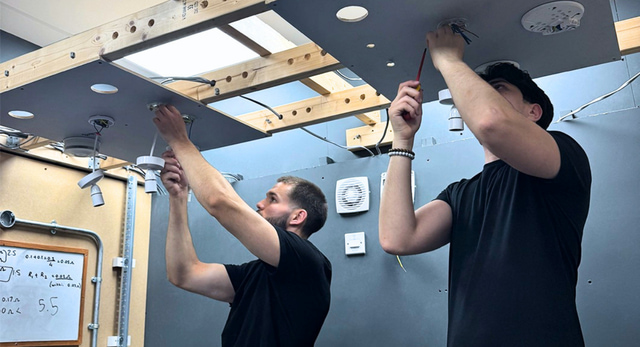

If you’re weighing up your next move, becoming an electrician is one of the most reliable, future-focused career choices you can make in the UK. Whether you are a school leaver or thinking about retraining, it offers strong demand, solid earnings and a clear route to qualification. At Logic4training, we train new and experienced electricians every day, so we see first-hand how people use electrical qualifications to change their lives. From leaving office jobs to starting their own business and working on renewables. This article breaks down 10 reasons to become an electrician in plain English, including job security, pay, training routes and what the work is really like. If, by the end, you’re ready to take the next step, we’ll show you exactly how to get started.
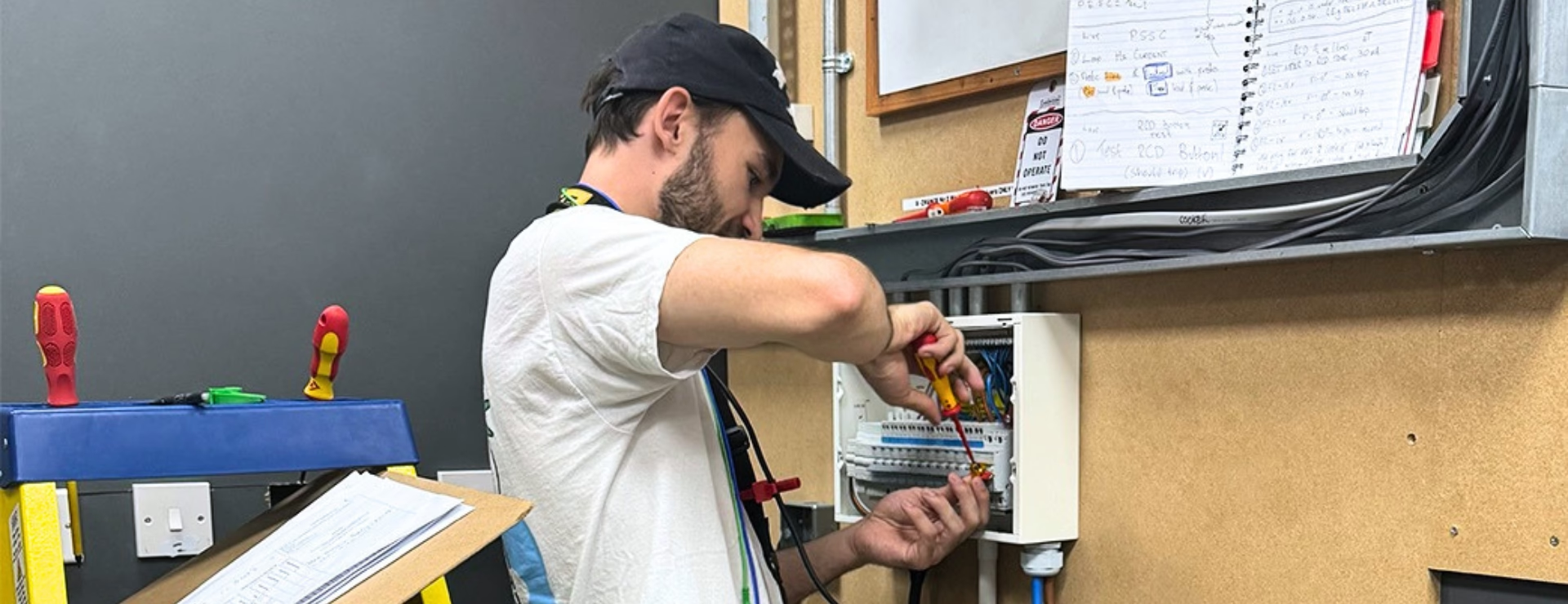
1. Strong Demand and Long-Term Job Security
One of the biggest reasons to become an electrician is simple. The UK does not have enough qualified electricians. A growing skills gap, combined with an ageing workforce, means there is more work than people to do it. Estimates suggest tens of thousands of additional electricians will be needed over the next decade to keep up with housing, infrastructure and net zero targets.
Why the demand for electricians so strong
You are not training for a niche role. You are training for a core trade the country depends on every day. The main drivers include:
- Housing upgrades and new builds: New homes, extensions, and improvements mean rewires, consumer unit upgrades and new circuits for kitchens, lighting and outdoor spaces.
- Maintenance and compliance: Landlords, letting agents and businesses need Electrical Installation Condition Reports (EICRs), ongoing maintenance and remedial works to stay compliant.
- Electrification and net zero: EV charge points, heat pumps, solar PV, battery storage and smart controls all rely on competent electricians to design, install and maintain systems safely.
In practice, this turns into a wide range of job types:
- Full and partial rewires
- Consumer unit changes
- Fault finding and repairs
- EICRs and periodic inspections
- New circuit installations for EV chargers, showers, kitchens and garden offices
- Commercial fit-outs and industrial installations
A career that is hard to automate
Another quiet reason electrical work is attractive in 2026: concern about AI and automation. Office-based roles that are repetitive or screen-heavy are far easier to automate than hands-on, site-based trades.
Electricians work in real environments, solving three-dimensional problems, applying regulations and speaking with clients. These are exactly the kinds of skills current AI tools support, but do not replace. As we’ve covered in our guide on why tradespeople are safe from AI, practical careers like electrical installation remain one of the more stable options in a changing job market.
If you’re asking “Is an electrician a good career in the UK?”, long-term job security is one of the strongest reasons to say yes.
2. Competitive Salaries and Earning Potential
Electricians earn well compared with many other trades and non-graduate careers, with clear scope to increase your income over time. The more experience and qualifications you gain, the more you can charge and the more specialised work you can take on.
How much do electricians earn?
Exact figures vary by region and role, but electricians typically sit above the UK median earnings once qualified and established. According to the Office for National Statistics’ Annual Survey of Hours and Earnings, industries linked to electricity, gas, steam and air conditioning supply saw earnings growth of 8.3% in 2025, one of the strongest increases across all sectors.
This matters if you are thinking long term. You want to work in a field where skills are rewarded and pay is moving in the right direction, not stagnating.
To dig deeper into day rates and typical earnings at different experience levels, see our article on electrician day rates in the UK.
How earnings grow over time
Your earning potential as an electrician usually follows a pattern: trainee, competent electrician, then potentially specialist or business owner. You might start on a modest wage while training, but with a few years of experience, extra qualifications and good customer reviews, your income can increase significantly.
[PLACEHOLDER_TABLE: Electrician salary progression]
You can also boost your earnings by:
- Gaining further qualifications (e.g. inspection & testing, EV charging, solar PV)
- Moving into commercial or industrial roles
- Taking on supervisory or management positions
- Becoming self-employed and setting your own rates
Because pay scales with competence, the benefits of being an electrician continue to build across your career.
3. A Clear Pathway Into the Industry
Another reason to become an electrician is that the pathway is structured and achievable. You don’t need previous electrical experience to start, just commitment, a willingness to learn and the right training.
Broadly, there are two routes into the trade:
- Apprenticeships: Work for an employer while you learn, typically over several years. This route suits school leavers who can secure an apprenticeship place and want to earn while they train.
- Trade courses: Structured training programmes designed for adults and career changers, often completed more quickly, then followed by on-site experience and NVQ-style assessment. Trades training courses can also be done at college and are generally designed for school leavers. Both types of training courses (training providers or colleges) come with their own pros and cons.
Typical qualification pathway
A common pathway for a new entrant looks like:
- Level 2 Diploma in Electrical Installation
- Level 3 Diploma in Electrical Installation
- 18th Edition Wiring Regulations
- Level 3 NVQ (or equivalent work-based assessment)
- The AM2 (final competence assessment for many electrician roles)
We cover this in detail in our article on what qualifications you need to be an electrician.
You’ll need to pass practical assessments, demonstrate safe working methods and understand the Wiring Regulations. But thousands of people, including many mid-career changers, complete this journey every year.
If you want a structured, supported path, our New Entrant Electrical packages are designed exactly for this. You can explore them here: Start your journey as an electrician via our New Entrant Electrical Courses.
4. You Can Train Without University Debt
University is right for some people, but it is not the only route to a well-paid, respected career. Training as an electrician gives you a more direct path into paid work, often at a lower overall cost and in less time.
With an apprenticeship, you earn while you learn. Even with a private training route, you are usually looking at months, not years, before you can start bringing in income from entry-level electrical work, while your peers may still be studying.
In our article on trades vs university, we explore how vocational training can offer a strong return on investment, especially if you value getting into the workplace quickly and avoiding long-term student debt.
If you are asking “why become an electrician in the UK?” this is a key benefit: you gain a professional skillset without needing a degree.
5. Hands-On Work That Keeps You Engaged
If you prefer doing rather than sitting in front of a screen all day, the practical nature of electrical work is a big attraction. Electricians use both their hands and their heads, combining physical tasks with technical problem-solving.
What do electricians actually do?
Day to day, typical tasks might include:
- Installing circuits for sockets, lighting, cookers, showers and EV charge points
- Running cables through walls, ceilings and floors
- Terminating accessories and consumer units
- Fault finding when something is not working as it should
- Testing systems with instruments to check they are safe and compliant
You’ll also work in a variety of environments such as homes, offices, commercial units and sometimes industrial sites. The job can involve tight spaces, working at height and a fair amount of physical activity, so it suits people who like staying active and using practical skills.
The benefit here is clear. You see tangible results from your work every day, whether it’s a safe new installation or a stubborn fault finally fixed.
6. No Two Days Are the Same
Another big benefit of being an electrician is variety. While you may specialise later, there is huge scope to mix domestic, commercial and industrial work across your career.
A week in the life example
A typical week for a domestic/commercial electrician might look like:
- Monday: EICR and remedial work on a rental property
- Tuesday: Installing downlights and additional sockets in a kitchen refurbishment
- Wednesday: First fix wiring on a small office fit-out
- Thursday: Fault-finding a tripping circuit in a shop, followed by replacing a consumer unit
- Friday: Installing and commissioning an EV charge point and carrying out final testing
Some days will be straightforward, where you may be replacing fittings or adding a simple circuit. Others will be more intense, such as carrying out complex fault finding, interpreting drawings, adapting to unexpected site conditions or coordinating with other trades.
This mix is one of the reasons many electricians stick with the career for decades. It is hard to get bored when your workplace, tasks and customers change regularly.
7. Opportunities to Be Your Own Boss
Once you are competent and confident, you have the option to become self‑employed. For many, this is one of the most appealing reasons to become an electrician.
As a self-employed electrician, you can:
- Choose the type of work you focus on (domestic, commercial, EV, solar, testing)
- Control your hours and the jobs you accept
- Set your own rates and grow your earnings by building a strong reputation
Of course, there is more to it than just doing the electrical work. You will also need to manage:
- Client communication and quoting
- Booking and scheduling jobs
- Ordering materials and managing stock
- Basic accounts, invoicing and tax
At Logic4training, we see many learners come back for further courses once they have set up on their own, often to add new services like inspection and testing or renewables.
If independence and control over your working life are important to you, the self‑employed electrician route is well worth considering.
8. A Future-Proof Career
We are moving towards a more electric, low‑carbon world. That is good news if you are thinking about a career as an electrician in the UK. Net-zero targets, low‑carbon heating, and smarter buildings all rely heavily on electrical expertise.
Key growth areas include:
- EV charging: Home, workplace and public charge points all require safe installation and ongoing maintenance by trained electricians.
- Solar PV and batteries: Designing and installing solar PV systems, inverters and battery storage is a growing specialism, especially as energy prices and decarbonisation remain high on the agenda.
- Smart tech: From lighting control to connected heating, security and audio, smart technologies need competent electricians behind the scenes.
The flip side of a future‑proof career is ongoing learning. Wiring Regulations are updated, new technologies arrive and best practices evolve. You will need to refresh your knowledge throughout your career. For many people, this constant learning is a positive: it keeps the job interesting and your skills current.
We will be exploring progression routes in more depth in a dedicated future blog on progression opportunities for electricians.
9. Transferable Skills and Career Progression
Once you have qualified and built experience, you are not limited to “just” being on the tools. Electricians develop a broad set of transferable skills that can lead into many directions:
- Technical specialisms: Inspection and testing, EV charging, solar PV, battery systems, building management systems and more.
- Supervisory roles: Site supervisor, project manager, QS (Qualified Supervisor) roles within contracting firms.
- Design and estimating: Moving into designing systems, producing quotes and specifications.
Training and assessment: Experienced electricians often move into training roles, teaching the next generation of electricians at providers like Logic4training.
Along the way you will also build soft skills: communication, customer service, time management and problem solving. These are valuable across the wider construction sector and even in completely different industries, should you decide to move again in the future.
An electrician’s career in the UK is therefore not a dead-end job. It is a foundation you can build many different paths on.
10. Real People Are Making the Switch
Becoming an electrician is not just a choice for school leavers. Many of our learners at Logic4training are in their 30s, 40s or beyond, retraining from office jobs, retail, logistics, the armed forces and more.
Learners tell us they want:
A practical role where they can see the results of their work
Better job security and earning potential
A clearer future in a growing, in-demand sector
If you’re thinking about retraining, our New Entrant Electrical route is designed as a genuine stepping stone into the industry, focusing on the core skills you need to work safely and confidently, and opening the door to further qualifications in areas like EV charging, solar PV and battery storage. We’ve built this pathway around hands‑on, workshop‑led training so new entrants gain real‑world competence, not just a certificate, and we strongly advise comparing providers carefully – our guide on fast‑track electrician courses: shortcut or setback? explains the risks of low‑quality, online‑heavy options.
For a deeper look at what retraining involves, including timescales and routes, see Retrain as an Electrician in 2026: Everything You Need to Know.
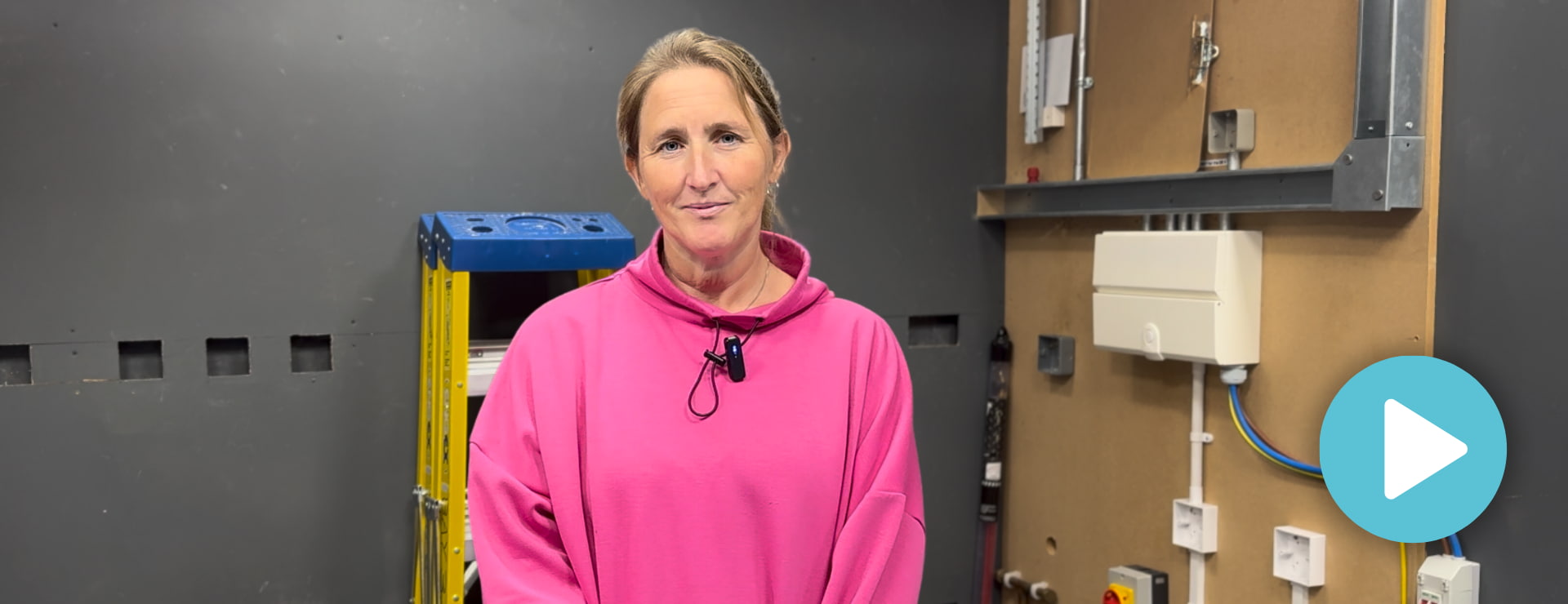
Christine’s story is a good example. She left a finance role to join her husband’s electrical business, choosing Logic4training’s New Entrant Electrical course to get practical skills and support as a beginner, and in her Electrical Course testimonial, she explains how the training is helping her move from the office into the electrical trade. If you are wondering “should I become an electrician later in life?”, her experience shows it is a realistic route if you’re prepared to commit and pick a quality training provider.
Is Becoming an Electrician Right for You?
So, is electrician a good career, and is it right for you personally? The people who tend to thrive in this trade usually share some common traits. They are practical learners, happy to get hands-on. They like problem solving and do not mind taking responsibility for safety‑critical work.
You may be a good fit if:
- You enjoy practical tasks and working with tools
- You are comfortable with basic maths and logical thinking
- You are willing to learn regulations and follow them carefully
- You can communicate clearly with customers and other trades
- You want independence, but you can also work as part of a team
- There are also realities to be aware of:
- The work can be physically demanding, with some lifting, bending and working at height
- You will sometimes work in tight or dirty spaces
- You carry responsibility for making installations safe and compliant
- Your first job or first customers may take effort to secure
We will be digging into what employers look for in a future blog on the qualities that make a good electrician, but if the points above feel like you, that is a strong sign this path could suit you.
How to Get Started
If you’ve read this far and are thinking “how do I become an electrician?”, the next steps are straightforward.
A simple pathway might look like this:
- Research the role: Read up on what electricians do, the different sectors and qualification routes. Our ultimate guide to electrician careers
is a good starting point. - Choose your route: Decide whether an apprenticeship or a new entrant training package suits your situation best.
- Book your training: If you are a career changer or adult learner, explore our New Entrant Electrical Courses and choose the package that fits your goals.
- Gain on-site experience: Build practical hours under supervision, either with an employer or as an improver, while you work towards your NVQ and final assessments.
- Keep progressing: Add further qualifications (inspection and testing, EV, renewables) as your career develops.
Take the next step with Logic4training
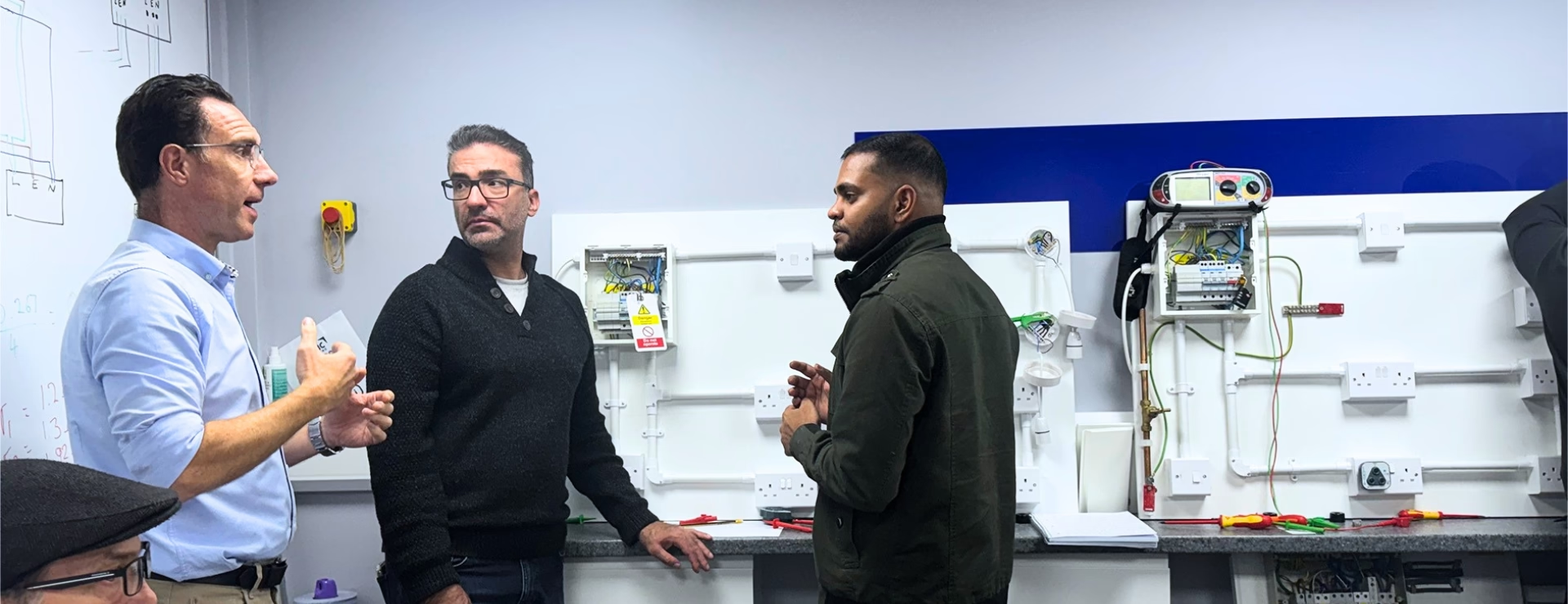
At Logic4training, we’ve been training people in the building services sector for more than two decades, with dedicated centres and experienced electrical instructors. Our courses combine theory with practical training in realistic environments, so you leave with skills you can actually use on site.
FAQs
What types of jobs do electricians actually do day-to-day?
Electricians install, maintain and repair electrical systems in homes, businesses and industrial sites. Typical day-to-day tasks include installing circuits, fitting accessories, fault finding, testing and issuing certification like EICRs.
Domestic work often involves consumer unit changes, additional sockets, lighting upgrades and EV charge point installations. Commercial and industrial roles add tasks like three‑phase work, distribution boards, data cabling and working with control systems.
How quickly can I start earning after training as an electrician?
If you follow a new entrant route, you can often start taking on assistant or junior roles once you’ve completed your initial training and gained some supervised on‑site experience. This can be within months, rather than years.
From there, your earnings will grow as you complete further qualifications, build your portfolio and prove your competence to employers or customers. You can see the typical progression on our How to become an electrician page.
What areas can I specialise in as an electrician?
There are plenty of specialisms once you have your core skills in place. Popular areas include:
- EV charging installation and maintenance
- Solar PV and battery storage
- Inspection, testing and reporting
- Commercial and industrial installation
- Smart homes and building management systems
Each specialism usually involves additional training and sometimes manufacturer courses. This is where you can really tailor your career to what interests you most.
What are the biggest challenges of becoming an electrician?
The early stages can feel challenging. There is a learning curve with electrical theory and regulations, and you’ll need to develop practical skills at the same time.
Physically, the work can be demanding, with long days on site, working in awkward spaces and occasionally in bad weather. Finding your first employer or building your first client base can also take effort, which is why we always encourage learners to network, collect reviews and keep investing in their skills.
Do I need to be good at maths or science to become an electrician?
You do not need to be a maths genius, but basic maths, ratios and a logical mindset help a lot. You will use calculations for cable sizing, load, resistance and other checks.
Physics knowledge is useful, but most of what you need is taught during your course and reinforced through practice. Many successful electricians describe themselves as practical people first, who picked up the technical side with good teaching and repetition.
Can I become an electrician later in life or as a career change?
Yes. Many of our learners are career changers who decide in their 30s, 40s or 50s that they want a more secure, practical and rewarding career.
Case studies like Christine’s journey show how people with no previous electrical experience can retrain, gain qualifications and start working in the industry. Transferable skills like communication, organisation and customer service are a big advantage.
How does becoming an electrician compare to other trades?
Compared with many other trades, electricians benefit from strong demand, good earning potential and clear progression routes into specialist and higher‑responsibility roles.
The work can also be more varied, especially if you move between domestic, commercial and industrial environments or add modern technologies like EV and solar to your services. Ultimately, the “best” trade depends on your interests, but electrical work is one of the most future‑focused options available.




 Your latest offers & alerts