
If you have recently qualified, or you are planning your route into the trade, this article walks through how electrician career progression really works in the UK and the main paths you can take as your skills grow.
TLDR
- Qualifying as an electrician is the start of your career, not the end, and in the UK, you typically move from trainee to qualified and experienced electrician before branching out.
- Main progression routes include renewables (solar, battery storage, EV charging, inspection and testing), commercial or industrial work, becoming a Qualified Supervisor, going self-employed, or moving into estimating, design, management or training.
- Your earning potential increases as you gain experience, add higher-level qualifications and take on more responsibility, with the highest incomes usually coming from self-employment, specialisms and running your own business rather than standard employed roles.
- Long term, UK electricians benefit from skills shortages and growth in renewables, smart systems and electrification, so ongoing upskilling is the best way to future‑proof your electrician career progression in the UK.
If you are still deciding how to become an electrician, see how to become an electrician with us.
What is the career progression of an electrician?
An electrician’s career progression in the UK is not a single ladder; it is a collection of routes that branch off once you have a solid technical foundation. Most people move through a similar early pattern, then specialise based on their interests, strengths and life goals.
The typical electrician career path (UK)
A realistic electrician trade career path for beginners in the UK usually looks like this.
- Trainee/improver: You are learning the basics, usually through an apprenticeship or adult training route, working under supervision while you build core skills and gain qualifications (Level 2 & Level 3 Electrical Diplomas, on-site experience).
- Qualified electrician: You have Level 3 Electrical NVQ, AM2 (or equivalent), 18th Edition and can work on your own, taking responsibility for safe installations and basic testing.
- Experienced electrician: After several years across different environments, your speed, fault-finding and judgement improve, and you start taking on more complex work or leading small teams.
- Specialist/senior roles: With extra qualifications and experience, you can move into specialisms like renewables, EV, inspection & testing, or step into roles such as Qualified Supervisor, estimator, project manager or trainer.
Progression is usually a mix of three things:
- Experience in real jobs
- Higher-level qualifications and cards
- Taking on more responsibility (technical, financial or people-focused)
As you build that foundation, your electrician career progression stops being about “getting qualified” and starts becoming a choice about where you want to take those skills next. For most UK electricians, that choice falls into three broad directions, and you can move between them as your interests, confidence and life outside work evolve.
The 3 main directions your career can take
Once you are a solid, competent electrician, your career progression paths normally fall into three broad directions.
Technical progression
Technical progression means deepening your expertise in specific areas such as solar PV, battery storage, EV charging, smart homes or inspection and testing. As low‑carbon and smart technologies become standard, recognised Level 3 qualifications in these fields are increasingly required, especially under the latest EAS changes and Competent Person Scheme expectations. By investing in specialist training and keeping up with new standards, you position yourself as the go‑to person for particular types of work and can usually command higher rates than a generalist installer.
Business progression
Business progression is about turning your skills into a brand and a balance sheet, rather than just a wage. Most electricians who go down this route start as sole traders, then move to a limited company as turnover grows, combining competent person scheme registration, insurance and structured pricing with local marketing. Your earnings are tied to how well you find work, build a reputation, price jobs, control costs and manage other tradespeople, not just how quickly you can wire a circuit. Over time, this can evolve into a multi‑trade business offering electrical, renewables, plumbing, heating and more, with you working increasingly on the business rather than only on the tools.
Leadership / off‑the‑tools progression
Leadership or off‑the‑tools progression uses your electrical background in roles where planning, coordination and decision‑making matter more than installation speed. With experience and further development, you can move into positions such as site supervisor, contracts manager, estimator, designer or tutor, where you’re leading teams, pricing projects, designing systems or training the next generation of electricians. These roles still rely heavily on your time on the tools, but they tend to involve less physical strain, more regular hours and a greater focus on communication, organisation and problem‑solving. Across all three directions, keeping your skills and qualifications up to date is essential if you want to stay employable, compliant and ready to move up as the industry changes.
Across all three, continuous skills development is essential if you want to stay employable and move up.
What to do after you qualify as an electrician
Once you are newly qualified, it is normal to feel a bit “what now?”. Your priority is to turn your training into real-world confidence and then start shaping your electrician career path in the UK around your goals.
Step 1: Build real‑world experience
Your first few years should focus on exposure and repetition across different types of work.
- Work across domestic, commercial, and (if possible) industrial environments to understand how each sector operates.
- Aim to improve fault-finding, speed and neatness. These are what employers, clients and supervisors notice most.
- Say yes to varied tasks (testing, small works, remedials, jobs on live sites), so you see different systems and ways of working.
This variety helps you discover what you enjoy and what you are naturally good at, which is key when deciding what to do after becoming an electrician.
Step 2: Gain industry credentials (ECS, certifications)
In addition to your core qualifications, you will need industry cards and certificates to secure better roles.
- The ECS Gold Card is widely recognised as proof that you are a fully qualified electrician; many sites and higher-level roles expect it as standard.
- Without the right ECS card, you may be limited to lower-paid or supervised work, even if your skills are strong.
Logic4training has a detailed guide on what an ECS card is and how to apply, including requirements and routes for different experience levels.
Step 3: Start choosing your direction
You do not have to lock in your electrician career path on day one.
- Use your first couple of years to notice what you enjoy. Is it consumer unit changes and testing, renewables work, large commercial jobs, or problem-solving on callouts?
- Talk to more experienced electricians and supervisors about how they progressed. Most will have taken different routes, which can give you ideas.
By year 3-5, you will usually have a sense of whether you are drawn more towards specialism, self-employment, or moving into supervisory/office-based roles.
Electrician career progression paths (your main options)
In the electrical industry, there is not one “next step” after qualification. There are multiple career paths for electricians, depending on your goals and lifestyle. Some electricians are drawn to hands‑on technical work and choose to specialise in areas like renewables, EV charging, smart systems or testing, while others are more motivated by running their own business, managing people or moving into design, estimating or teaching. The right path for you depends on the balance you want between earnings, stability, physical work, responsibility and work–life fit, and the good news is that you can change direction as your priorities shift over time.
1. Specialise in high-demand electrical fields
Specialism is one of the clearest ways to increase your value and future-proof your career.
Renewable energy (solar PV & battery storage)
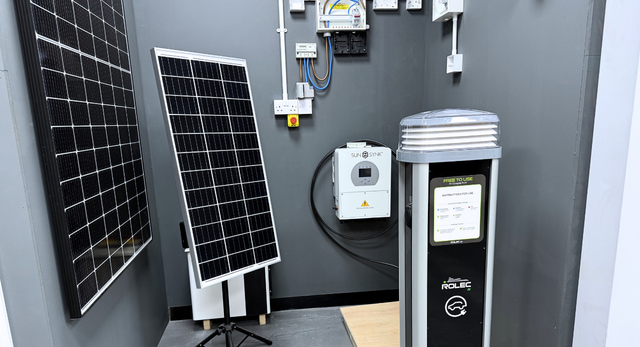
Renewables are one of the fastest-growing areas in the electrical industry, driven by UK net zero targets and rising energy costs. Homeowners, businesses and landlords are investing in solar PV systems and battery storage to cut bills and reduce carbon emissions, creating strong demand for skilled installers.
Most solar and battery roles expect:
- A solid electrical foundation (NVQ Level 3 or equivalent)
- 18th Edition knowledge of relevant regulations
- Level 3 specialist training in solar PV and, ideally, energy storage systems
We’ve covered the routes in our articles on qualifications to become a:
EV charging installation
Electric vehicle charging is another major growth area, with millions of plug-in vehicles already on UK roads and numbers increasing every year. Projections suggest the UK will need tens of thousands more certified EV installers by 2035 to keep pace with demand for home and workplace chargers.
To move into EV charging:
- You should be a competent electrician with experience in domestic or commercial installation.
- You will benefit from a recognised EV-specific qualification covering charger types, load management and safe installation.
We have an article that covers the route: What Qualifications Do You Need To Become An EV Charge Point Installer?
Inspection, testing & compliance
Inspection and testing is a natural progression for detail-focused electricians who like documentation and responsibility.
- Work centres on Electrical Installation Certificates (EICs), Electrical Installation Condition Reports (EICRs) and ongoing compliance checks.
- It carries significant responsibility, because your reports are used to judge whether an installation is safe and compliant.
Smart homes & building systems
Smart homes are becoming more mainstream, with customers expecting integrated lighting, heating, security and energy management.
As a smart systems specialist, you might:
Install and commission smart heating controls, lighting systems, and integrated AV or security.
- Work with building management systems (BMS) in commercial settings, integrating HVAC, lighting, and energy monitoring.
- This route suits electricians comfortable with IT, networking and apps, as well as traditional wiring.
2. Move into commercial or industrial work
Moving from domestic into commercial or industrial work is one of the most common electrician career progression paths in the UK. It suits people who enjoy bigger sites, more complex systems and working as part of a larger team rather than mainly on their own.
Commercial work usually covers places like offices, shops, schools, hospitals and data centres. You might be installing distribution boards, containment, emergency lighting, fire alarms and power for equipment, as well as reading drawings and dealing with site managers or facilities teams. Because you are often working around staff, patients or the public, planning, safety and keeping disruption low are a key part of the job.
Industrial work tends to be in factories, plants, warehouses, infrastructure and heavy industry. Here you could be working on motors, control panels, production lines, conveyor systems and high‑capacity distribution, often alongside engineers and maintenance teams. Fault‑finding is a big focus, because downtime is expensive, so you are expected to diagnose and fix issues quickly and safely.
Both commercial and industrial roles involve more complex systems than most domestic jobs, including three‑phase supplies, control circuits, larger distribution boards and structured containment. In return, they often offer higher earning potential, especially where there are shifts, nights, call‑outs or maintenance on 24/7 sites, with allowances on top of basic pay. To do well, you will need solid knowledge of the regs, confident safe isolation, good drawing‑reading skills and the ability to work smoothly within a bigger site team.
3. Become a Qualified Supervisor (QS)
Becoming a Qualified Supervisor is a key mid‑career milestone and central to many electrician career progression paths in the UK. It is the point where you move from simply doing the work to being formally responsible for the technical quality and compliance of that work on behalf of a business or sole‑trader operation.
As a QS, you are responsible for:
- Ensuring work meets BS 7671 and other relevant regulations, as well as the requirements of Building Regulations and the Electrotechnical Assessment Specification (EAS). This means you must have a strong grasp of the Wiring Regulations, know how to apply them in real‑world situations, and make sure everyone working under you follows current standards.
- Overseeing testing and inspection, including initial verification, periodic inspection and testing, and making sure the results are correctly recorded on certificates and reports. While you might not personally carry out every test, you are accountable for checking that those who do are competent and that documentation is complete and accurate.
- Signing off work for scheme providers and building control purposes, acting as the technical representative for your company with Competent Person Schemes such as NICEIC, NAPIT or similar bodies. You are the person auditors speak to, and you are answerable if work falls short of the scheme’s rules or minimum technical competence requirements.
Benefits include:
- Ability to self‑certify work (vital if you are self‑employed or running a small firm), so you can notify and sign off notifiable work like consumer unit changes and new circuits without going through local building control each time, saving time and fees and making your service more attractive to clients.
- Increased credibility with clients and employers, because QS status shows you have NVQ Level 3‑level competence, 18th Edition knowledge and usually a Level 3 inspection and testing qualification, as well as proven experience in supervising others and managing compliance.
- Often a requirement for registering an electrical business with a Competent Person Scheme, which means that if you want to run a registered domestic or commercial outfit, either you or someone in your company must hold the QS role and maintain the standards the scheme expects.
4. Become self-employed or start your own business
Self-employment is a major career path for electricians in the UK, especially if you value independence and control over your earnings.
Working for yourself as an electrician
Working for yourself usually means:
- Taking on your own domestic or small commercial jobs, from callouts and consumer unit changes to rewires and small projects.
- Setting your own rates and schedule, choosing the mix of planned work and emergency callouts that suits you.
- Building a client base over time through word of mouth, online reviews and local networking.
For many electricians, becoming a QS links closely with self-employment, as it allows you to sign off your own work and meet scheme requirements.
Expanding your skillset to grow your business
As you gain experience, one of the most effective ways to increase profit per job is to offer more services.
- Some electricians branch into plumbing so they can take on full bathroom or kitchen installations rather than just the electrical side. You can find out more about how to become a plumber here.
- Others expand into heating and gas so they can work on boilers, heating controls and full central heating systems. You can find out more about how to become a gas engineer here.
- Many also move into renewables such as solar, battery storage and EV charging, combining strong margins with long-term demand.
The key takeaway: the more of a job you can complete yourself (safely and legally), the more valuable and profitable your business can become.
From self-employed to business owner
Over time, some electricians move from “one-person band” to full business owner, with a small team or multiple crews out on the road. This usually starts with bringing in another electrician or apprentice to keep up with demand, then slowly adding more people as your pipeline of work grows and becomes more predictable.
As this happens, your role gradually shifts away from doing every installation yourself towards quoting, planning, managing people and ensuring quality. You will spend more time writing estimates, ordering materials, scheduling jobs, dealing with customers and checking that work meets your standards and scheme requirements. You might also invest in software for job management, invoicing and certification to keep everything organised as the number of jobs increases.
This path can also evolve into a full multi‑trade business covering electrical, plumbing, heating and renewables, especially if you or your team hold the right additional trade qualifications. At that point, you are competing for larger projects such as full refurbs, extensions, whole‑house energy upgrades, rather than only single‑trade callouts, and your income is driven more by the profitability of the business as a whole than your individual day rate.
5. Move into inspection, testing & compliance specialist roles
For some, the natural progression in an electrician’s career is to specialise almost entirely in inspection and testing.
- Work focuses on periodic inspections (EICRs), landlord reports, certification for new installations and testing in commercial or industrial settings.
- It is often less physically demanding than heavy installation work, which appeals as you get older.
- However, it carries high responsibility, as your judgement impacts safety, insurance and legal compliance.
This route typically requires advanced testing qualifications and a very strong understanding of regulations.
6. Move off the tools (estimator, design, management)
Some electricians use their experience as a springboard into office-based or client-facing roles.
Electrical estimator
Estimators work out how much projects will cost and whether they are viable.
- It is mainly office-based, with time spent reviewing drawings, specifications and site information.
- Responsibilities include pricing labour and materials, preparing tenders and working with project managers to win profitable work.
Most estimators start as electricians with at least 3–5 years’ experience, so they can spot potential issues and price realistically.
Electrical design/engineering
Design and engineering roles focus on planning systems rather than installing them.
- You might design lighting layouts, power distribution, emergency systems or control systems for commercial and industrial projects.
- These roles often require further study, such as HNC/HND or degree-level qualifications in electrical or building services engineering.
If you enjoy calculations, software and problem-solving, this can be a natural progression.
Contracts manager/project manager
Contracts and project managers oversee projects from quotation to handover.
- Typical responsibilities include managing budgets, schedules, materials, teams and client expectations.
- These roles need strong communication, organisation and leadership skills, as well as technical knowledge.
They are well-suited to experienced electricians who like coordinating people and solving practical problems.
7. Become an electrical tutor or trainer
Finally, many electricians move into education later in their careers, once they have built up years of on‑site experience and want to give something back to the trade. Teaching can be a good fit if you enjoy explaining things, mentoring apprentices and breaking complex topics down into simple, practical steps.
You can teach apprentices or adult learners in colleges or private training centres, delivering everything from entry‑level domestic courses to advanced inspection, testing and renewables training. Typical roles involve running classroom sessions, supervising practical work on training rigs, marking assessments and helping learners prepare for real‑world site conditions and assessments like AM2. At Logic4training, our tutors do exactly this across our electrical centres, combining classroom teaching with hands‑on bays that replicate real domestic and commercial installations.
You will draw heavily on your on‑site experience to bring lessons to life and prepare new entrants for real work. The best electrical trainers use real jobs, faults and “war stories” from domestic, commercial and industrial sites to show learners what actually happens outside the classroom, not just what is in the book. Logic4training’s tutors are all-time-served electricians or engineers with up‑to‑date industry experience, which is why our reviews so often mention knowledgeable trainers who make complex topics easy to understand and link theory back to real installations.
This route usually requires teaching qualifications in addition to your electrical background. Most providers expect at least a Level 3 Award in Education and Training (AET) as an entry point, with many tutors going on to teach or assess at Level 4, and some also holding internal quality assurance credentials. You will normally also need solid electrical qualifications at Level 3 or above (and often 18th Edition, 2391 or similar), so you can confidently teach to current standards and answer detailed questions from learners. Our long track record in delivering accredited electrical qualifications and the consistently high feedback from learners show that we not only understand the technical side of the trade, but also what good teaching and support look like in practice.

Example electrician career path (realistic timeline)
Every electrician’s journey is different, but a typical electrician trade career path for beginners might look like this.
Years 0-3
In years 0-3, your focus is on completing training and core qualifications such as Level 2 and Level 3 diplomas, NVQ, AM2, ECS card and 18th Edition, and starting to build site evidence. During this period, you will usually work as a trainee or improver under supervision, turning classroom knowledge into hands‑on skills and learning how real jobs are planned, installed, tested and certified.
Years 3-5
Once you have been in the industry for a while, you are typically working as a fully qualified electrician across domestic, commercial or industrial jobs, often with your ECS Gold Card in place. This stage is about getting faster and neater, sharpening your fault‑finding and exposing yourself to different environments so you can see what you enjoy and where you might want to specialise later.
Years 5-10
At this stage, most electricians start to choose a clearer direction: specialising in areas like EV, solar or testing, becoming a QS, going self‑employed, or moving into senior or office‑based roles such as supervisor, estimator or designer. To support that shift, you begin adding higher‑level qualifications such as inspection and testing, EV/solar training, design courses or management and leadership development, depending on the path you are aiming for.
10+ years
At 10+ years, many electricians have moved into roles such as business owner, contracts manager, estimator, consultant or tutor/trainer, or a mix of these over time. You may choose to move partly or fully off the tools or simply reduce the physical workload, using your experience to create value through planning, managing, teaching or advising rather than installing every circuit yourself.
Just remember: There is no fixed timeline. Some progress faster, others prefer to stay hands-on for longer.
Can electricians make 6 figures in the UK?
This is one of the most common questions about an electrician’s career progression in the UK, especially from people considering retraining.
Typical salaries
The ONS Annual Survey of Hours and Earnings shows median weekly earnings for full-time UK employees at around £766.60 in April 2025 across all occupations. Separate analysis of ONS data and trade surveys, alongside our own data on electrician day rates in the UK, indicates that typical employed electricians earn in the region of £35,000-£40,000 per year, depending on region and experience.
JIB pay frameworks and similar arrangements suggest that with regular overtime, many employed electricians can reach total gross pay in the mid‑£40,000s to low‑£50,000s. Our analysis of UK electrician day rates shows self-employed day rates ranging from around £125 to £600 per day, with an average of about £335 and higher figures for commercial and specialist work, which helps explain how overall earnings can rise once you move beyond basic PAYE roles. These figures are a solid living and generally sit above the UK average, but they are not six figures on their own.
These figures are a solid living, but not six figures.
How electricians increase earnings
To get close to or above £100,000 per year in the UK, electricians usually combine several factors:
- Self-employment: Setting your own rates, working long hours, taking on out-of-hours work and managing multiple jobs or contracts.
- Specialisation: Focusing on high-value areas like solar, battery storage, EV charging or complex commercial/industrial projects where clients pay a premium.
- Contracting: Working as a contractor on major projects, sometimes away from home, where day rates, overtime and shift allowances can be significant.
- Business ownership: Running a team of electricians and/or multi-trade operatives, where your income comes from the profit of the business rather than your personal day rate.
So can electricians make six figures in the UK? Yes, but it is not typical for someone in a standard employed role, as it usually involves business risk, longer hours, specialisms and strong commercial skills.
Future-proofing your electrical career
One of the biggest advantages of an electrical career is its resilience. Skilled trades are less exposed to automation and AI than many office‑based jobs, because they involve physical work, on‑site judgement and safety‑critical decisions that are hard to hand over fully to software or robots.
At the same time, electrification, renewables, EVs and smart systems are creating new types of work rather than replacing what already exists, from installing EV chargers and solar PV to upgrading consumer units, data cabling and smart controls.
Our article on retraining as an electrician in 2026 explains why the trade is seen as a future‑proof option for career changers, highlighting strong UK demand, a growing skills gap and the fact that AI is far more likely to assist electricians than replace them
To keep your own career future-proof, it helps to think about three main areas. Regularly update your knowledge of regulations and best practice, so you stay in line with BS 7671, EAS updates and what Competent Person Schemes expect from competent electricians. Invest in growth areas like renewables, EV and smart systems, where demand is increasing and specialist skills are in short supply. Consider complementary trades (plumbing, gas, heating) if you want to grow into a multi-trade offering and increase the value of each job.
It is also worth learning how to adapt to and use AI and digital tools rather than ignoring them. AI‑assisted estimating, design and job‑management software can already speed up quoting, help with take‑offs, reduce admin and improve accuracy, which gives you more time on the tools and makes your business more competitive. Electricians who are comfortable using these tools to handle paperwork, scheduling, pricing and basic design will be better placed than those who rely only on pen, paper and memory as AI and automation continue to reshape how work is organised.
Which electrician career path is right for you?
Here is a quick way to match your goals to typical electrician career progression paths.
Whichever route you choose, the pattern is the same. Build experience, add targeted qualifications, and be deliberate about the direction you are taking rather than just drifting.
If you are at the start of your journey, the best first step is to get the right foundation with a structured training route. Our electrician course covers the main options and what to expect.
If you are already qualified and looking to move into higher‑value specialist areas like solar, battery storage or EV charging, consider Logic4training’s range of renewable technologies training courses. Our Solar PV installation course, battery storage (EESS) course, and
EV charging point installer course are all Level 3 programmes designed for experienced electricians who want to upskill into renewables, and they can be a powerful next step in your electrician career progression in the UK if you are aiming to become a go‑to low‑carbon specialist.
FAQs
What is the career progression of an electrician in the UK?
In broad terms, the progression runs from trainee/improver to qualified electrician, then experienced electrician, before branching into specialist, supervisor or business owner roles. It is not a rigid ladder; you can move sideways into areas like renewables, design, estimating, management or training as your interests change.
What should I do after qualifying as an electrician?
After qualifying, focus on building real-world experience across different environments while you improve speed, quality and fault-finding. At the same time, secure key credentials such as your ECS Gold Card and 18th Edition, then start exploring specialisms, self-employment or higher-responsibility roles like QS.
What are the highest-paying electrician jobs in the UK?
The highest-paying roles are usually self-employed or business-owner positions, especially those specialising in renewables, EV charging, testing and complex commercial/industrial work. Management and contracting roles can also be very well rewarded, particularly on large projects or long-term frameworks.
What is a Qualified Supervisor (QS), and should I become one?
A Qualified Supervisor is responsible for ensuring electrical work complies with regulations, carrying out or overseeing inspection and testing, and signing off work for certification and scheme purposes. If you want to run or be central to a registered electrical business, becoming a QS is often essential and provides a strong platform for career progression.
What qualifications do I need to progress as an electrician?
Core progression usually requires NVQ Level 3, AM2 (or equivalent end-point assessment) and 18th Edition. Beyond that, inspection & testing qualifications, specialist courses (solar PV, battery storage, EV charging, smart homes) and management or design training can open up higher-paying and more senior roles.
Can electricians move into other trades like plumbing or gas?
Yes, it is a common progression, especially for self-employed electricians wanting to offer full bathroom, kitchen or heating installations. Adding plumbing or gas qualifications can increase your earning potential and make you more attractive to clients who prefer a single contractor to handle an entire job.
What are the best specialisms for electricians in 2026?
In 2026, some of the most attractive specialisms include becoming a Qualified Supervisor, solar PV installation, battery storage systems and EV charging. These align closely with government net-zero targets and long-term trends in energy, making them strong bets for future demand.


 Your latest offers & alerts