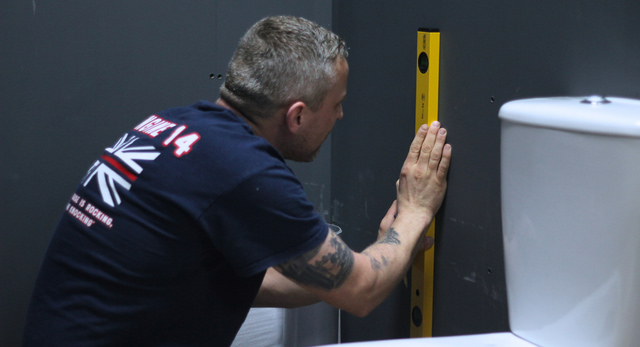

Plumbers do far more than fix leaks; they design, install, repair and maintain the hot water, cold water, heating, drainage and renewable systems that keep homes and businesses safe, comfortable and efficient, often moving between several jobs and sites in a single day.
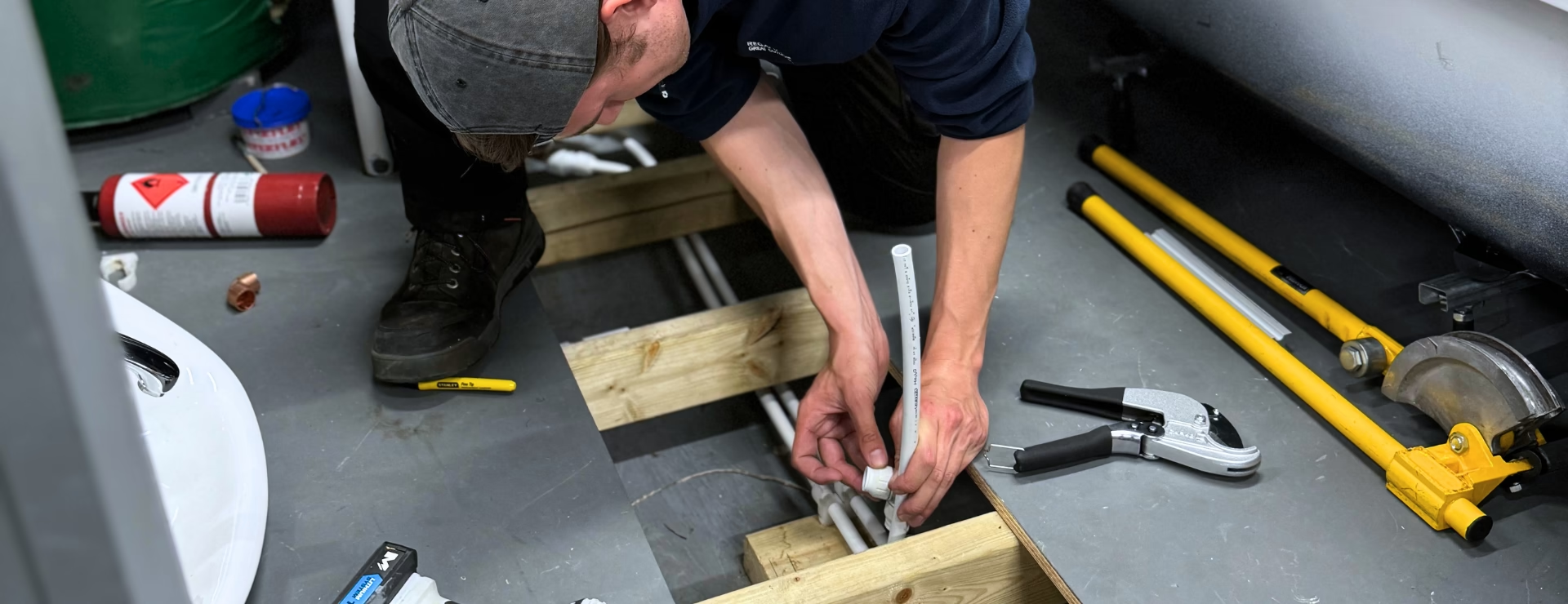
TL;DR
- Installs, repairs and maintains hot and cold water, heating and drainage systems in homes, businesses and construction projects.
- Works on bathrooms, kitchens, cylinders, radiators, boilers and increasingly on renewable heating systems such as heat pumps.
- Spends each day diagnosing faults, fitting new systems, repairing leaks, testing installations and speaking with customers.
- Can work in domestic, commercial, industrial or construction environments, either employed or self‑employed.
- Follows regulations, reads technical drawings and uses a wide range of tools and materials to deliver safe, compliant work.
- Benefits from strong demand, skills shortages and a growing need for low‑carbon heating specialists across the UK.
- Training typically starts with a Level 2 Plumbing Diploma and Level 2 Plumbing NVQ, then progresses into specialisms such as heating, gas or renewables.
- Earnings rise with experience, location and specialism, with self‑employed and renewable‑focused plumbers often at the higher end.
If you enjoy practical work, problem‑solving and talking to customers, plumbing can offer a varied, secure and future‑proof career path in the UK.
What Does a Plumbe Do?
Many people picture a plumber turning up only when something goes wrong, like a burst pipe or blocked toilet. In reality, plumbing is a broad building services trade that mixes installation, fault‑finding, maintenance and customer care across a wide range of systems. Plumbers play a key role in public health and energy efficiency, ensuring water and heating systems are safe, reliable and fit for the future.
At its core, a plumber installs, repairs, maintains and tests systems that carry hot water, cold water, waste water and heating around a property. This includes both the visible parts, like taps, toilets and radiators, and the hidden pipework, valves, pumps and controls that sit behind walls, under floors or in plant rooms.
Typical core responsibilities include:
- Installing pipework in new and existing buildings
- Fitting bathrooms, kitchens and sanitaryware
- Installing cylinders and hot water systems
- Connecting and commissioning heating systems alongside heating engineers
- Diagnosing faults such as leaks, poor flow or temperature problems
- Repairing or replacing components like valves, pumps and pipe sections
- Testing systems for leaks, flow, pressure and temperature
- Reading plans and technical drawings to understand layouts
- Ensuring work complies with water regulations and other relevant standards
From our point of view, one of the most useful mindset shifts for learners is to see plumbing as a system‑based job rather than a list of small tasks. The best plumbers learn how whole systems work together and use that understanding to make better decisions on site, whether they are planning a new installation or chasing a fault.
As a training provider, Logic4training works with new entrants, upskilling plumbers and experienced engineers, so we see first‑hand how wide the opportunities are across the sector. If you already know you’d like to explore training, take a look at our guide on how to become a plumber.
What Does a Plumber Do on a Daily Basis?
No two days are identical, but there are common patterns in how a plumber’s working day runs. The exact mix of tasks depends on whether they are working in domestic properties, commercial buildings, new builds or specialist roles such as renewable heating.
From our experience training new and experienced plumbers, the people who enjoy the job most are those who are comfortable switching between planning, hands‑on work and talking to customers in one day. Thinking of the day in stages can help you decide whether this fits your working style.
Reviewing Jobs and Preparing for the Day
Most plumbers start by reviewing their job sheets, emails or scheduling app to understand what work needs completing that day. They will plan routes between jobs, check what materials they need and load their van with suitable tools, fittings and safety equipment. Good preparation helps avoid wasted trips and ensures jobs can be completed safely and on time.
Once organised, the plumber will travel to the first site, sign in if it is a larger building or construction project, and talk to the customer or site manager about the work required. This planning element is as important as the hands‑on tasks, especially for self‑employed plumbers who manage their own workload and schedule.
From our point of view, this is one of the biggest shocks for new entrants. A lot of stress on site can be avoided with simple habits like checking job details the night before, keeping common fittings in stock and allowing realistic travel time. If you are considering plumbing, it is worth asking yourself how organised you like to be and whether you are happy to take responsibility for planning your day.
Diagnosing Plumbing Problems
A big part of everyday plumbing work involves diagnosing problems. These can range from obvious issues, like water pouring from a ceiling, to more subtle ones, such as poor hot water performance or noisy pipework. Plumbers use their knowledge of system design, along with tools like pressure gauges and thermometers, to trace faults to their source.
Common problems include leaks, pressure issues, faulty components, airlocks and flow restrictions. Problem‑solving is one of the most valuable plumbing skills and is often what separates an experienced tradesperson from a novice. Customers rely on plumbers not just to fix problems, but to identify the most efficient, long‑lasting solution.
Based on what we see in training and assessment, you’ll find fault‑finding easier if you enjoy working methodically by ruling out one possible cause at a time, taking measurements and keeping calm when the answer is not obvious straight away. If you prefer clear, repetitive tasks, this aspect of plumbing may feel more demanding, so it’s worth being honest with yourself about how much you enjoy investigative work.
Installing New Plumbing Systems
Plumbers also spend a significant portion of their time installing new systems. That might be a complete bathroom or kitchen refit, pipework for an extension, or new hot and cold supplies to a loft conversion. On construction sites, plumbers are involved in first fix (running pipes and setting out) and second fix (connecting fixtures and fittings) stages.
Installation work can include:
- Running copper, plastic or multi‑layer pipework
- Installing basins, toilets, baths, showers and kitchen sinks
- Fitting hot water cylinders and storage tanks
- Connecting central heating pipework and radiators (often with heating engineers)
- Setting up controls, isolation valves and safety devices
If you’re interested in hot water systems and safety specifically, it’s important to understand that there are extra legal and safety requirements around unvented cylinders and high‑risk installations. Many plumbers choose to build a solid general plumbing foundation before moving into these more specialised areas.
For more detail on how hot water storage and heating systems should be designed and installed, the UK government’s Approved Document G: Sanitation, hot water safety and water efficiency and Approved Document L: Conservation of fuel and power provide the key building regulation guidance for England.
Carrying Out Repairs and Maintenance
Repairs and maintenance make up another key part of the daily routine. This includes replacing worn parts like washers, cartridges, valves and traps, repairing damaged pipe sections, and cleaning components to keep systems running efficiently. Many commercial and maintenance plumbers work on planned maintenance contracts, attending sites regularly to check systems, carry out minor repairs and prevent future breakdowns.
Routine maintenance can involve tasks such as checking for leaks, testing safety valves, inspecting expansion vessels, flushing systems and verifying that drainage is clear and properly ventilated. This preventative work is essential in hospitals, schools, offices and other buildings where plumbing failures can have serious consequences.
From what we see in practice, good maintenance work relies on consistency and record‑keeping. Logging what you’ve checked, what you’ve replaced and any issues you’ve spotted helps the next person understand the system’s history and can protect you if problems arise later. If you like working in a structured way and following checklists, you may find planned maintenance a good fit within the wider plumbing trade.
Speaking with Customers
Whatever area they work in, plumbers spend a lot of time talking to customers and other stakeholders. They need to explain faults in clear, simple terms, outline options and costs, provide written quotations and give maintenance advice. Good communication helps build trust and repeat business, especially for self‑employed plumbers and small firms.
Customer interaction might also include discussing project timelines with builders, coordinating with other trades on site, and ensuring tenants or occupants know what will happen during the job. Professionalism and clear communication are just as important as technical skill in the modern plumbing trade.
In our experience, technically strong plumbers can still struggle if they find it difficult to manage expectations or say “no” to unrealistic requests. If you are thinking about this career, it’s worth considering how comfortable you are with difficult conversations, such as telling someone a job will take longer or cost more than they hoped. These conversations are part of everyday life in the trade, and developing that confidence is just as important as learning to solder or fit a basin.
What Systems Do Plumbers Work On?
Plumbers work on more than one type of system, and many roles involve a mix.
Hot and Cold Water Systems
Plumbers install and maintain hot and cold water systems that supply taps, showers and appliances. This includes the incoming mains, storage tanks or cylinders, distribution pipework and final outlets. They must ensure adequate pressure and flow, prevent contamination and comply with water regulations to keep drinking water safe.
From our experience, understanding the basics of water regulations and good practice early on makes later work much easier. Plumbers who take time to learn why certain rules exist (for example, backflow prevention or pipe sizing) tend to make better design decisions, not just follow instructions.
Central Heating Systems
Many plumbers support or progress into heating work, installing pipework, radiators, underfloor circuits and associated controls. They may work alongside gas engineers or become heating specialists themselves after gaining further gas qualifications.
We often see learners underestimate the importance of design and balancing in heating systems. Simple steps like sizing pipework correctly and ensuring radiators are balanced can have a big impact on comfort and efficiency, so it’s worth paying attention to the “why”, not just the “how”, during training.
Drainage Systems
Above‑ground drainage and wastewater systems are another key area. Plumbers install wastes, soil stacks, traps and ventilation arrangements that safely remove wastewater from a property. Correctly designed and installed drainage helps avoid blockages, smells and potential hygiene issues.
Drainage is sometimes seen as less glamorous than other parts of plumbing, but a lot of call‑backs come from poorly designed or installed waste systems. Taking care over gradients, venting and trap selection can significantly reduce problems later on.
Renewable Heating Systems
An increasing number of plumbers are involved in renewable heating systems, such as air source and ground source heat pumps, low‑temperature heating and high‑efficiency hot water solutions. These systems often require a solid plumbing foundation combined with an understanding of controls, system design and energy efficiency.
This growth is being driven in part by government policy and schemes like the Boiler Upgrade Scheme, which provide grants for low‑carbon heating in England and Wales.
From our standpoint, this area suits plumbers who enjoy learning and are comfortable with change. Standards, incentives and technologies move quickly, so a willingness to keep up‑to‑date is more important here than in some traditional areas of plumbing.
Where Do Plumbers Work?
Plumbers can work in a range of settings, which helps keep the job varied.
Domestic Plumbing
Domestic plumbers work in houses and flats, dealing with repairs, small installations and upgrades for homeowners and landlords. This can be a good fit if you prefer working directly with household customers and like seeing jobs through from start to finish.
Based on candidate feedback, domestic work often appeals to those who value independence and variety, but it also requires patience and good people skills, as you are entering people’s homes and fitting around their routines.
If you’re thinking about working mainly in homes and small businesses, our overview of plumbing courses & qualifications explains which routes are most suitable for domestic work.
Commercial Plumbing
Commercial plumbers focus on larger buildings such as offices, schools, hospitals and retail spaces. Systems here are usually larger and more complex, and there is often more formal documentation and planned maintenance.
From our experience, this environment suits people who like structure, procedures and working as part of a bigger team. You may be working shifts or on call, but you are also more likely to deal with planned work rather than constant emergencies.
Construction Sites
On construction sites, plumbers are involved in new‑build projects, installing systems from the ground up. They take part in the first and second fix stages and work closely with other trades. NVQs and site cards are typically needed for this type of work.
We find that site work often suits those who enjoy seeing a project grow over time and are comfortable working within a team under tight deadlines. Site environments can be physically demanding and weather‑dependent, so it is worth thinking about how you feel about working outdoors or in partially finished buildings.
Industrial Facilities
Some plumbers work in industrial environments and specialist facilities. These roles can involve process water systems, larger‑diameter pipework and more complex safety requirements.
In our view, industrial work tends to suit detail‑oriented people who are comfortable following strict procedures and working closely with engineers and maintenance teams.
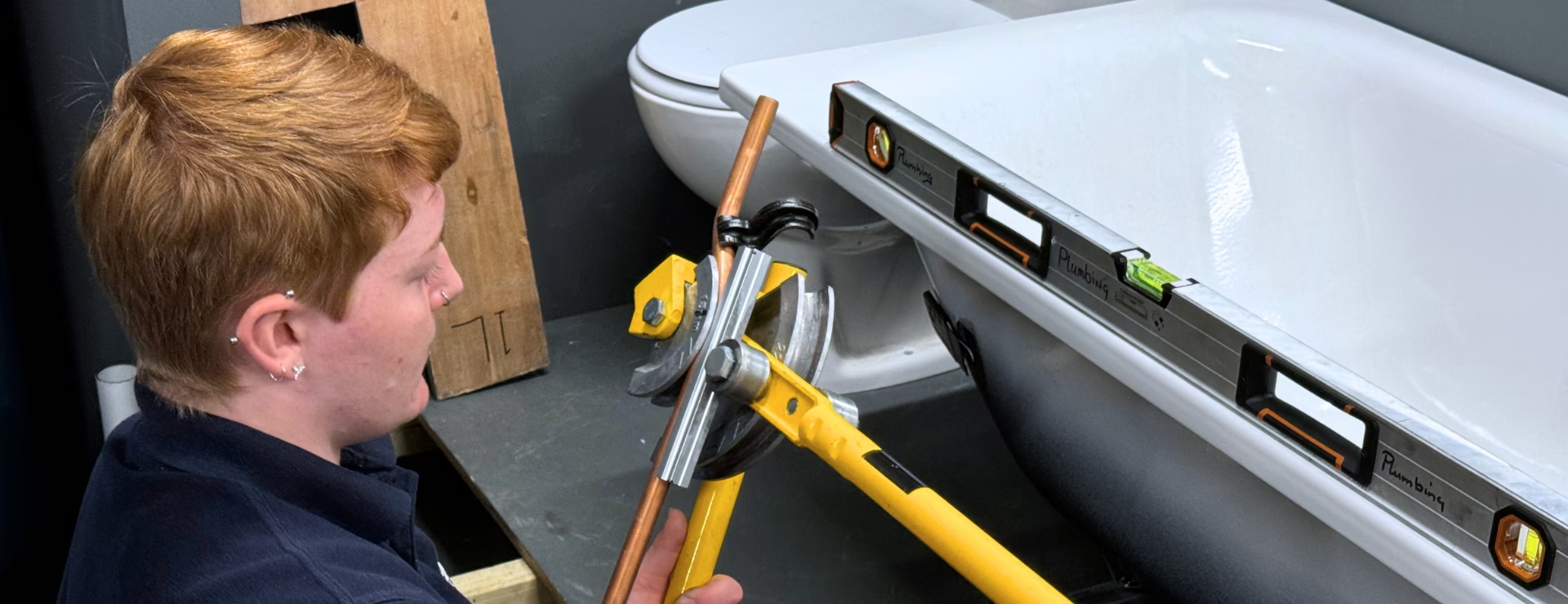
Skills Every Successful Plumber Needs
Technical Skills
Plumbers need a strong foundation in pipe installation, system testing and fault‑finding. They must be able to read drawings, follow specifications and use tools safely. Training and qualifications provide the framework, but skills are refined over time on real jobs.
From our experience, learners who practise the basics until they feel routine often progress faster later on. Good fundamentals make complex tasks less stressful.
Problem‑Solving Skills
Plumbing frequently involves working out why something isn’t performing as it should. This means interpreting symptoms, using test equipment and thinking logically about cause and effect.
We regularly see that problem‑solving confidence builds with exposure. If you’re starting out, it helps to view mistakes as learning opportunities, provided you work safely and know when to ask for help. Curiosity and patience count for as much as existing knowledge.
Customer Service Skills
Plumbers deal with a wide range of people:
- Homeowners
- Tenants
- Landlords
- Site managers
- And other tradespeople.
Clear communication, reliability and respect go a long way towards building a good reputation.
In our experience, simple habits such as turning up when you say you will, keeping people updated, and leaving work areas tidy are often what customers remember most. Technical competence is assumed; how you conduct yourself is what sets you apart.
Physical Skills
Plumbing can be physically demanding. Plumbers work in confined spaces, at height and in awkward positions, and they move equipment and materials throughout the day.
We advise anyone considering plumbing to be realistic about the physical side. Building fitness gradually, using safe lifting techniques and looking after your back and joints are all important if you want a long career in the trade. The Health and Safety Executive (HSE) has practical advice on managing musculoskeletal risks and safe manual handling for construction and maintenance workers.
Types of Plumbers
Choosing a plumbing role isn’t just about what you can do, but how you like to work day to day. From our experience, it helps to understand the main job types before you commit, so you can match your strengths and preferences to the right path.
Domestic Plumber
Domestic plumbers focus on residential work: repairs, installations and maintenance in homes. This path offers variety and direct contact with customers.
From what we see, it suits people who are comfortable working alone, adapting to different homes and dealing with a mix of small jobs and bigger projects.
Maintenance Plumber
Maintenance plumbers carry out planned and reactive work across portfolios of properties, often for housing providers, facilities management companies or large organisations.
This type of role can suit those who like routine and steady employment, with a focus on keeping systems running rather than major installations.
Commercial Plumber
Commercial plumbers work on larger systems and building services, often within teams or for larger contractors. There’s usually more emphasis on documentation and formal processes.
People who enjoy structure, working with others and managing more complex systems often gravitate towards this area.
Heating Engineer
Some plumbers progress into gas heating, working on boilers, heating controls and central heating systems after gaining additional gas qualifications such as the CCN1 and CENWAT.
From our perspective, this route suits those who enjoy the technical side of system design and control, and who are comfortable taking on extra responsibility for gas or other fuels.
Renewable Heating Installer
Renewable heating installers specialise in systems such as air source or ground source heat pumps and low‑temperature heating.
We find this area appeals to plumbers who like working at the leading edge of building services and are willing to keep updating their knowledge as regulations and technologies evolve.
Self‑Employed Plumber
Many experienced plumbers work for themselves, running their own business. This offers flexibility and control but also requires handling admin, marketing and finances.
From our experience, self‑employment suits people who are disciplined, organised and comfortable with uncertainty in workload and income, especially in the early years.
The “right” plumbing job is rarely fixed for life. Many people move between domestic, commercial, maintenance, heating and renewables as their interests and circumstances change. When you’re starting out, think about where you’d like to begin rather than where you’ll end up, and be open to adjusting your route as you gain experience.
Is Plumbing a Good Career in the UK?
Whether plumbing is a good career depends on what you’re looking for: stability, variety, earnings or progression. From our work with school leavers, career changers and experienced tradespeople, plumbing often scores well on all four, provided you’re prepared to learn and take responsibility for your work.
Strong Demand
There is consistent evidence of skills shortages across plumbing and heating, with industry bodies calling for more new entrants to meet current and future demand.
Reports from organisations such as the Chartered Institute of Plumbing and Heating Engineering (CIPHE) highlight ongoing skills gaps and the need for more qualified installers across the UK.
For anyone considering a long‑term career, this demand means a steady flow of opportunities in different regions and sectors.
Job Security
Water, heating and sanitation are essential services, so the need for competent plumbers does not disappear when the economy slows. Jobs may change in nature, but the core skills remain relevant.
From our perspective, learners who commit to doing things properly by following standards, keeping up with changes, and building a reputation often enjoy a high level of job security over time.
Variety
Plumbing offers variety across both tasks and environments. You can move between domestic and commercial work, specialise in maintenance, new build, heating or renewables, or change focus as your interests develop.
We often see people using plumbing as a platform: starting in one area, then moving into more specialised or senior roles as they gain experience.
Future‑Proof Career
Hands‑on, site‑based roles are among the least likely to be replaced outright by AI and automation, particularly where they combine technical judgement and human interaction. At the same time, digital tools and smarter systems are becoming more common, so plumbers who are comfortable with technology may be at an advantage.
Our broader insights on AI‑proof careers and what jobs AI might replace echo this. The building services roles, including plumbing, are well‑placed for the future, provided you keep your skills current.
If you want a career that combines practical work, long‑term demand and room to grow, plumbing is worth serious consideration. The key is to go in with a clear view of the effort involved, especially in training and early experience, and to treat it as a long‑term investment rather than a quick fix.
Plumbing Career Path & Where Can Plumbing Take You?
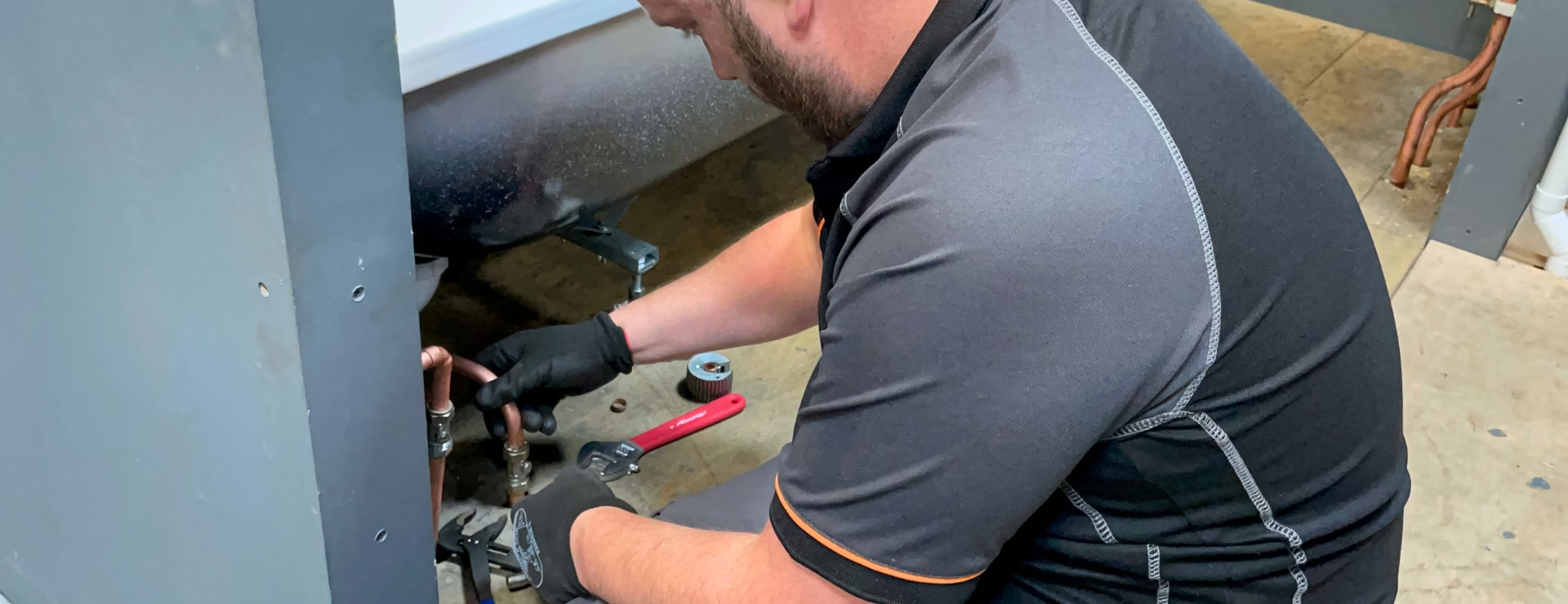
A plumbing career is more like a network than a single ladder. There are several paths and you can change direction as you gain experience. From our work with learners at different stages, the most successful careers tend to follow a pattern of building a strong core first, then gradually specialising or stepping into broader roles.
Trainee Plumber
Most people begin as trainees through college, private training routes or apprenticeships, combining study with practical work. Early stages focus on core skills and safe working practices.
In our experience, those who make the most progress at this stage are the ones who ask questions, practise regularly and treat every practical exercise as if it were a job for a paying customer.
Qualified Plumber
Once qualified at an initial level, plumbers can work more independently, gain experience and expand their responsibilities. The first few years often shape the type of work they gravitate towards.
We encourage new plumbers to treat these early jobs as a chance to see different environments and decide what suits them, rather than feeling locked into one niche straight away.
NVQ Qualified Plumber
Achieving an NVQ Level 2 or Level 3 shows that your skills have been assessed in a real work setting and is often a requirement for site work and some schemes.
These competence‑based qualifications align with the occupational standards recognised by bodies such as the Joint Industry Board for Plumbing Mechanical Engineering Services (JIB PMES) and can support applications for the Blue Plumbing CSCS card and approved installer schemes.
From what we see, completing an NVQ can be a turning point: it formalises experience and can open up better roles and pay, particularly in commercial and construction work.
Heating & Renewables Specialist
Others focus on heating and renewable technologies, working with heat pumps and low‑carbon systems alongside controls and system design.
This route suits those who enjoy more technical detail and are comfortable staying on top of changing standards and technologies.
Business Owner
Experienced plumbers often move into running their own business, employing others and managing larger projects. This adds management and leadership responsibilities on top of technical work.
From our perspective, it’s important to build business skills gradually, rather than trying to do everything at once. Good systems and realistic planning help prevent burnout.
Trainer or Assessor
Some seasoned plumbers become trainers or assessors, sharing their knowledge with new entrants or upskilling experienced operatives.
We find that those who enjoy mentoring on site often thrive in these roles, especially if they are patient and genuinely interested in helping others progress.
Thinking of plumbing as a long‑term pathway rather than a single job helps set realistic expectations. If you focus on building strong fundamentals, you’ll have more options later, whether that’s specialising, managing projects, running a business or moving into training and assessment.
How Much Do Plumbers Earn?
Earnings are often a key concern for anyone considering plumbing. From our experience and industry data, there is a wide range in incomes, but most plumbers see their earnings increase steadily as they gain experience, qualifications and responsibility.
- Entry‑Level Earnings
Entry‑level plumbers and trainees tend to earn less as they build their skills and experience, whether as apprentices, mates or junior operatives. This stage is about learning and proving reliability. - Qualified Plumber Earnings
With experience and recognised qualifications, many plumbers earn at or above typical skilled‑trade income levels, particularly in high‑demand areas. Reputation and reliability often play as big a role as formal titles. - Specialist Plumber Earnings
Those working in higher‑risk or more complex areas, such as heating, hot water systems or renewables, often command higher rates. Additional training and certification can support these higher earnings. - Self‑Employed Income Potential
Self‑employed plumbers have greater potential to increase earnings but also shoulder more risk. Income can fluctuate, especially early on, so it’s important to budget carefully and allow for quieter periods.
From our experience, the most successful self‑employed plumbers balance realistic pricing with quality work and good communication, building long‑term relationships rather than focusing on quick wins. If you want a clearer idea of typical rates, our insight on how much plumbers charge per hour breaks down example hourly, daily and call-out rates and the factors that affect them.
It can be helpful to view plumbing earnings over a 5-10 year horizon rather than focusing only on starting wages. If you are prepared to invest in training, gain experience and keep developing your skills, plumbing can provide a solid and flexible income over the long term.
How to Become a Plumber
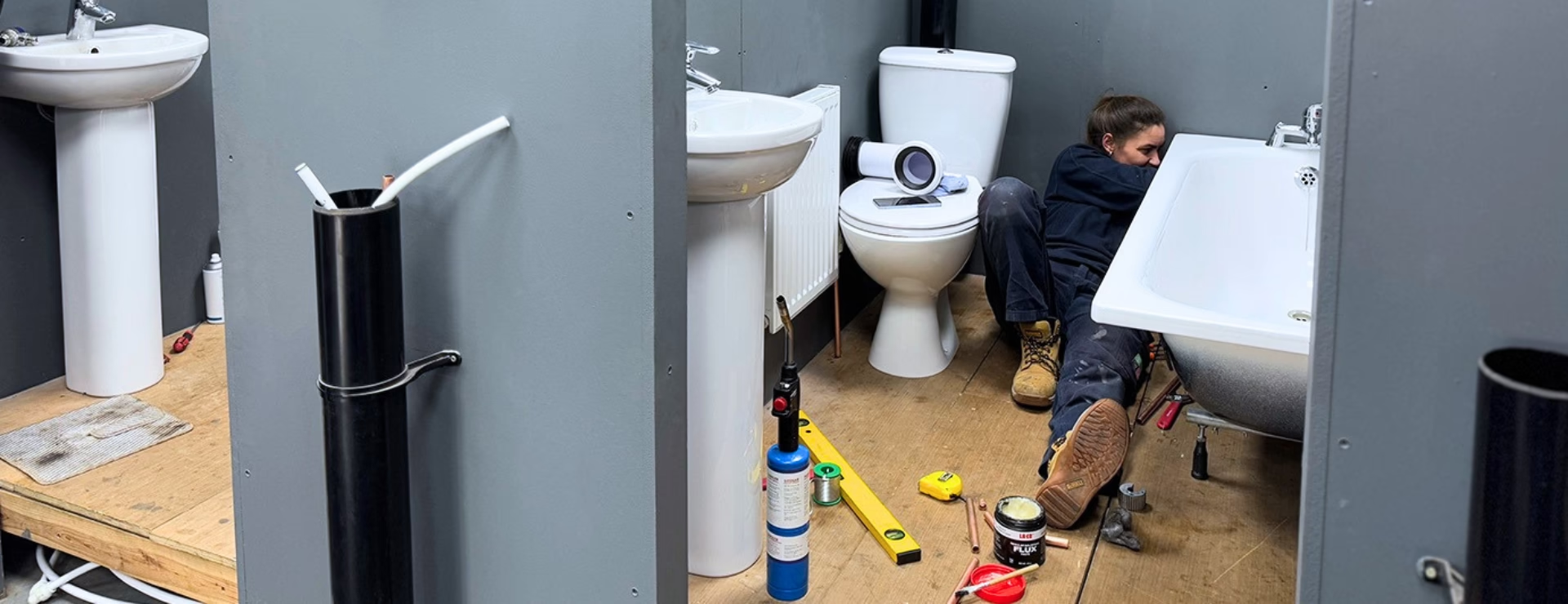
There is no single “right” way to become a plumber, but most routes share common steps: training, qualifications, experience and ongoing development. Our guides, such as the Ultimate Guide to Plumbing Careers, walk through these in more detail for different starting points and ages.
- Complete Plumbing Training
Most routes start with structured training that covers core theory and practical skills. This provides a base for safe working and progression. - Gain Industry Qualifications
Qualifications such as a Level 2 Plumbing Diploma and NVQ prove your knowledge and competence to employers and clients. Combining study with real‑world experience tends to give the strongest results. - Gain Workplace Experience
Hands‑on experience, whether through apprenticeships, trainee roles or working as a plumber’s mate, is essential. It allows you to apply what you’ve learned and build confidence. - Continue Upskilling
Plumbing and heating are evolving, especially with new technologies and regulations. Ongoing training in areas like water regulations, unvented hot water, heat pumps and legionella helps you stay current and competitive.
If you’re serious about becoming a plumber, the most important step is often the first one: committing to a plumbing training route that fits your situation. From there, focus on building good habits, seeking constructive feedback and treating every job as part of your long‑term development, not just a way to get through the week.
Is Plumbing Right for You?
From our experience, people who thrive in plumbing are those who like seeing tangible results from their work, are prepared to keep learning and are comfortable taking responsibility for safety and quality.
If that sounds like you, the next step is to explore your options and get a clear picture of the training, qualifications and experience you’ll need. Start by reading our step‑by‑step guide on how to become a plumber, then take a look at the plumbing courses and qualifications available so you can choose a route that fits your circumstances and long‑term goals.
FAQs
What does a plumber do on a daily basis?
A plumber’s day varies depending on the type of work they take on, but it usually includes a mix of planned jobs and reactive call‑outs. Typical tasks involve diagnosing plumbing faults, installing pipework and fixtures, repairing leaks and damaged systems, carrying out maintenance work, testing plumbing systems and speaking with customers to explain issues and provide advice.
From our experience, no two days are exactly the same, which is part of the appeal for many plumbers. If you like practical work with variety, rather than doing the same task on repeat, this day‑to‑day mix can be a good fit.
What are the duties and responsibilities of a plumber?
Plumbers are responsible for installing, maintaining and repairing water, heating and drainage systems in homes, businesses and on construction sites. Core duties include identifying and resolving faults, reading plans and technical drawings, and testing systems to make sure they perform correctly.
They must also ensure their work complies with water and building regulations, as well as relevant safety standards, which is a key part of protecting public health. In practical terms, plumbers play an essential role in keeping buildings functioning safely and efficiently, from basic hot water supply to more complex heating and renewable systems.
Is plumbing a good career in the UK?
Plumbing is generally regarded as a good career choice in the UK, provided you are prepared to develop your skills over time. There is strong demand for skilled plumbers across the country, with industry reports highlighting ongoing skills shortages in plumbing and heating.
The trade offers good long‑term job security, opportunities for progression and specialisation, and the potential to move into self‑employment or business ownership once you have enough experience. As renewable heating technologies such as heat pumps continue to grow, plumbers with the right training are also well‑placed to work in one of the fastest‑developing areas of building services.
What qualifications do I need to become a plumber?
There is more than one route into plumbing, but most start with a core technical qualification and build from there. Common first steps include a Level 2 Plumbing Diploma or equivalent training, which covers the fundamental theory and practical skills needed for entry‑level work.
From there, many aspiring plumbers gain practical experience and then work towards NVQ Level 2 or Level 3 qualifications, which demonstrate competence in real work environments and are often required for site work and some schemes. In practice, people enter the trade through a mix of training providers, apprenticeships and intensive training programmes before building on‑site experience.
How much do plumbers earn?
Plumber earnings vary depending on experience, location, qualifications, specialisms and whether you are employed or self‑employed. Entry‑level plumbers typically earn less while they build experience and complete qualifications, but earnings usually increase as skills and responsibilities grow.
Data from the ONS Annual Survey of Hours and Earnings suggests that mid‑career plumbers often sit comfortably in the skilled‑trades bracket, with higher earnings possible in regions like London and the South East, or in roles involving specialist skills. Self‑employed plumbers and those working in heating, hot water systems and renewables may command higher rates, although their income can be more variable and depends heavily on reputation and workload.
What types of plumbing jobs are available?
Plumbing offers a range of job types rather than a single fixed role. Common options include domestic plumber, commercial plumber, maintenance plumber, new‑build plumber, heating engineer, renewable heating installer and self‑employed plumber.
In our experience, many plumbers start with general domestic or maintenance work and then specialise as they gain confidence and qualifications. This flexibility means you can move towards the type of work and environment that suits you best over time, whether that’s homes, large commercial systems or renewables.
Can plumbers specialise in renewable heating systems?
Yes, many plumbers choose to specialise in renewable heating as demand for low‑carbon technologies grows. Common systems include air source heat pumps, ground source heat pumps, low‑carbon heating systems and energy‑efficient hot water solutions.
From what we see in the sector, renewable heating is one of the fastest‑growing areas within plumbing and heating, but it does require additional specialist training on top of core plumbing skills. Plumbers who are comfortable with ongoing learning and system design often find this a good route for long‑term career development.
Can plumbers become self‑employed?
Yes, self‑employment is a very common progression route for experienced plumbers. Many start by working for employers to build skills and confidence, then move into self‑employment or set up their own company once they have a solid base of experience and contacts.
The benefits include setting your own rates, choosing your working hours and building your own customer base, but there are also responsibilities around admin, marketing and finances. From our experience, plumbers who plan ahead, price realistically and focus on building long‑term customer relationships tend to find self‑employment both sustainable and rewarding over time.


 Your latest offers & alerts