

Last updated: 26th June 2026 | Originally published: 7th December 2023
So, you’ve hit the big 4-0. Maybe you’re feeling a little restless, a tad burned out, or just itching for something new. The good news? You’re not alone or too late. In fact, changing careers at 40 is rapidly becoming the norm in fast-moving Britain, and with the right approach, it could be the best decision you ever make.
This guide will walk you through everything you need to know about switching careers at 40, from the “why” and “how” to the best new career options, real-life success stories (including Toby, one of Logic4training’s own), and expert tips to make your transition smooth, strategic, and-dare we say-exciting.

Why Change Careers at 40?
Let’s start with the elephant in the room: why would anyone want to shake things up at 40? Isn’t it safer to just stick with what you know? Not necessarily.
The Case for a Midlife Career Switch
Peak Professional Wisdom: By your 40s, you’ve built up a treasure trove of experience, skills, and (let’s be honest) a pretty solid BS detector. Employers love this.
- Financial Stability: You’re likely in a better place financially than you were in your 20s, giving you more flexibility to take calculated risks.
- Self-Awareness: You know what you want as well as what you really don’t.
- Work-Life Balance: Priorities shift. Maybe you want more time with family, or a job that doesn’t eat up your weekends.
- Passion & Purpose: It’s common to crave work that aligns with your values or finally pursue that “dream job” you’ve been thinking about since your twenties.
- The growth of AI: AI has come onto the scene and is ever-growing, becoming more integrated into the working world and displacing human workers.
The Upsides
- Transferable Skills: Leadership, communication, and problem-solving are gold in any industry.
- Plenty of Time: With retirement ages creeping up, you’ve got decades left to build a new career.
- Mental Health Boost: Doing something you actually enjoy can work wonders for your wellbeing.
- Satisfaction & Fulfilment: This is your chance to design a life and career you actually want.
The Realities: Challenges to Consider
Switching careers at 40 isn’t all rainbows and unicorns. Here’s what you need to prepare for:
- More Responsibilities: Mortgage, kids, and ageing parents can make big changes feel riskier.
- Financial Pressures: You might need to take a pay cut or start at the bottom again. Budgeting is key.
- Skill Gaps: New fields may require new qualifications or training. But don’t worry, there are ways to upskill quickly (more on that later).
- Self-Doubt: Imposter syndrome is real. But remember, your experience is a massive asset.
- The Impact of AI: What industries are the most and least resistant to jobs being replaced by AI?
How to Plan a Successful Career Change at 40
Ready to make the leap? Here’s your blueprint for a smooth transition.
1. Identify Your “Why”
Before you update your CV or start browsing job boards, get clear on your motivation. Are you after more money, a better work-life balance, or a job that actually excites you? Knowing your “why” will keep you focused.
2. Assess Your Skills
You’re not starting from scratch. List out your transferable skills, such as leadership, teamwork, communication, problem-solving and see how they map to your new career.
3. Research, Research, Research
- Shadow Professionals: Get a feel for your target industry.
- Attend Industry Events: Network and learn.
- Take Introductory Courses: Dip your toe in before committing fully.
4. Fill the Gaps
Upskill: Take relevant courses, workshops, or certifications. For example, Logic4training’s New Entrant Gas Route is designed for those with little or no experience in the gas industry.
Freelance or Volunteer: Try out your new field part-time to build experience and confidence.
5. Financial Planning
- Safety Net: Save at least 3-6 months’ worth of expenses.
- Budget for Training: Factor in course fees and possible income dips.
- Check for Grants: Some industries offer scholarships or employer-sponsored training.
6. Leverage Your Network
- Update Your LinkedIn: Signal your new direction.
- Tap into Professional Groups: Get advice and job leads from people already in your target field.
- Build a Career Change Story: Practice explaining why you’re making the switch and what you bring to the table.
7. Start Small, Think Big
- Side Hustle: Test the waters before diving in.
- Set Realistic Timelines: Break the transition into manageable steps.
- Stay Flexible: Be open to unexpected opportunities.
How to switch careers at 40 in the UK
Switching careers at 40 can feel huge, but in today’s job market, it’s far more common than you might think. Many of our learners are in their late 30s, 40s, and 50s, proving that midlife is a perfectly normal time to change direction.
If you’re wondering how to switch careers at 40 in the UK, focus on three pillars:
- Clarity: Be honest about why you want to change and what “good” looks like for you now. Is it a good income, work flexibility, hands‑on work, or long‑term security?
- Transferable skills: List what you already do well (communication, problem‑solving, customer service, management) and look for roles where those strengths are valued.
- Practical steps: Choose a clear route into your new field, with defined training, recognised qualifications and a realistic timeline.
Trades like gas, plumbing and electrics are popular choices for career changers at 40 because they tick all three boxes: clear pathways, strong demand and obvious progression into self‑employment or specialist work.
How to switch careers and retrain at 40 in the UK
Switching careers at 40 can feel daunting, but in today’s UK job market it’s far more common than you might think, especially for people moving into the trades. Many of Logic4training’s learners are in their late 30s, 40s and 50s, proving that mid‑life is a perfectly normal time to change direction.
To switch careers at 40, start with three foundations. Get clear on why you want to change (better work‑life balance, higher earnings, more hands‑on work), identify your transferable skills, and choose a route with defined training and qualifications rather than vague “entry-level” promises. Retraining at 40 in the UK is less about starting again and more about redirecting existing strengths like communication, problem‑solving and customer service into a role with clearer prospects.
Practically, retraining usually involves picking a new set of skills, fitting training around work and family via flexible or block release options, and planning for course fees plus a short‑term income dip while you transition.
When you retrain at 40, you’re not competing with younger learners on qualifications alone. You’re combining training with maturity, reliability and real‑world experience that employers and customers genuinely value. Whether you move into gas, electrics or another skilled trade, that mix is exactly why mid‑life career changers are thriving in the UK right now.
The Best New Careers for 40-Year-Olds in 2026
Let’s get down to brass tacks. What are the hottest, most reliable, and most rewarding careers for midlife switchers? Here are three of the most popular options that are tried, tested, and highly recommended by those who’ve made the leap.
1. Plumbing
Why it’s a great choice:
- Always in Demand: The UK has a well-documented shortage of skilled plumbers, with work driven by an ageing housing stock and the government’s target to build 1.5 million new homes by 2029.
- Strong Earnings: The average UK plumbing salary sits at around £33,258, but our own survey of Logic4training-trained plumbers found they charge an average of £45 per hour or £331 per day, with self-employed specialists earning more.
- Clear Progression: Start with a Level 2 Diploma, add an NVQ for site and commercial work, then branch into gas, heat pumps or running your own business as you grow.
- Future-Proof: Plumbing is hands-on, on-site work that’s very difficult to automate, and it’s the natural gateway into fast-growing low-carbon heating such as heat pumps.
How to get started:
- New Entrant Plumbing Route: Logic4training’s plumbing packages take you from complete beginner to working plumber, starting with the Level 2 Plumbing Diploma and building up through NVQ, gas and renewables options.
- Level 2 Plumbing Diploma: The recognised entry-level qualification for the trade. A six-week course designed specifically for beginners and career changers.
- Plumbing NVQ routes: Add a Level 2 NVQ to qualify for a JIB Plumbing CSCS card and WRAS/WIAPS Approved Plumber Status, opening up on-site and commercial work.
Plumbing is one of the most accessible trades to enter as a career changer, but the quality of your training matters. Some providers over-promise on “fast-track” qualifications without the practical, in-centre experience employers and customers actually value, so it pays to choose carefully. For an honest look at the routes, costs and timescales, see our Retrain as a Plumber in 2026 guide.
Can you become a plumber with no experience?
Yes. You can retrain as a plumber at 40+ with no previous trade experience. The Level 2 Plumbing Diploma was designed as the industry’s entry point for complete beginners and career changers, with no upper age limit — the only baseline is a working level of maths and English and a willingness to learn practical, hands-on work.
Many of Logic4training’s plumbing learners arrive from office roles, retail, driving and other non-technical backgrounds. What matters most is commitment and being comfortable working with your hands in real customer environments.
Step-by-step: From no experience to working as a plumber
Here is a simple overview of the typical journey from beginner to working plumber.
- Entry: Choose your route and enrol. Decide which plumbing package suits your goals. Diploma only, or a package adding NVQ, water regulations, gas or heat pumps. Logic4training’s team will help you pick based on your background.
- Training: Centre-based learning and workshops. You complete the six-week Level 2 Plumbing Diploma (at the Northolt or Sittingbourne centres), covering plumbing science, pipework, hot and cold water systems, central heating, drainage and electrical safety, both the theory and the practical skills you’ll use from day one.
- Qualification: Build your NVQ portfolio. To work on commercial sites, you progress to the Level 2 NVQ, which assesses your real installation work on live sites. This is what employers and approved-plumber schemes require.
- Registration: Cards and approved status. With the NVQ you can apply for a JIB Plumbing CSCS card for site access and join the WRAS/WIAPS Water Industry Approved Plumber Scheme, proving your competence to clients and contractors.
- Employment: First job or self-employment. Many career changers start with an established firm to build confidence, then move into self-employment or specialise further into gas or renewables.
How long does it take to become a plumber?
The core Level 2 Plumbing Diploma can be completed in as little as six weeks of full-time, in-centre training, which is why it’s often described as a fast-track route compared with a traditional apprenticeship. Adding the Level 2 NVQ typically takes a further one to two months, depending on your access to suitable on-site jobs for assessment.
By contrast, a plumbing apprenticeship usually runs three to four years. If you want to combine plumbing with gas, you’re looking at a minimum of around ten months once the mandatory wait before final gas assessments is factored in. For a full breakdown, see How long does it take to become a plumber?.
Plumbing safety and industry standards
Plumbing work is built around recognised standards that protect you and your customers. Water fittings and systems must comply with the Water Supply (Water Fittings) Regulations, which is why WRAS / WIAPS Approved Plumber Status carries real weight with clients. For site and commercial work, the Level 2 NVQ and a JIB Plumbing CSCS card are the industry benchmarks.
If you later upskill into gas, you’ll work to the ACS scheme and Gas Safe registration; move into heat pumps and you’ll work towards MCS-aligned standards. Either way, you’re stepping into a clearly defined framework with recognised qualifications behind you — see what qualifications you need to be a plumber for the full picture.
Why becoming a plumber is accessible at 40+
Plumbing is a realistic choice at 40+ because the training is built around adult learners and career changers, not just school leavers. Courses are modular and flexible, with weekday and weekend options, and focused on the practical skills and qualifications you need rather than years on a low apprenticeship wage.
Your life experience is an asset: customers value reliability, communication and professionalism, which mid-life career changers tend to have in abundance. With strong demand for plumbers and clear routes into gas and low-carbon heating such as heat pumps, it’s a career that offers security and variety well into your 50s and beyond.
Real Stories: Meet Andy
Andy is one of Logic4training’s plumbing career changers. He retrained for a hands-on trade and built real confidence in his new skills along the way. In his own words, he talks through what the training was like and how he found switching paths into plumbing. You can watch Andy’s career change story by clicking the link or image below.

What Our Other Students Say
Andy is far from alone. Plumbing learners from all walks of life have retrained with us and gone on to employed and self-employed careers.
“Such an amazing place to learn the trade. I thoroughly enjoyed the course, would 100% recommend to anyone wanting to get into plumbing.”
“Having just finished my Level 2 Plumbing Diploma, I’ve really enjoyed it. The facilities are great and the instructors have all been brilliant.”
Curious about more real-life experiences? Check out our Plumbing Courses Reviews and Testimonials.
2. Gas Engineer
Why it’s a great choice:
- In-Demand: The UK always needs qualified gas engineers, especially as we move towards greener, more efficient heating solutions.
- Great Pay: Experienced engineers can earn a tidy sum, with opportunities for overtime and self-employment. Learn more about gas engineers’ rates, common jobs and workload.
- Flexible Pathways: Whether you’re a total novice or have related experience (like plumbing), there’s a route for you.
- Future-Proof: As the energy sector evolves, upskilling into renewables or heat pumps is a natural next step
How to get started
- New Entrant Gas Route: Perfect for complete beginners. This usually involves fundamental plumbing training and a Gas Managed Learning Programme (MLP) to cover the gas theory, practical skills and supervised on‑site experience, leading to ACS assessment.
- Experienced Trades Route: If you already have relevant experience (for example, in plumbing or heating), a Gas MLP tailored to existing trades can shorten training time and focus more directly on gas competencies.
- CCN1 Reassessment: For those returning to gas after a break, a CCN1 reassessment course gets you back up to speed and legal. If your qualification has lapsed for more than 12 months, you will need to take a CCN1 initial course.
Can you become a gas engineer with no experience?
Yes, you can retrain as a gas engineer at 40+ with no previous industry experience. Managed Learning Programmes are specifically designed to take complete beginners through the fundamentals of heating and gas safety, building knowledge step by step until you are ready for the ACS assessment.
Many of Logic4training’s gas learners come from office roles, retail, driving, the forces and other non‑technical backgrounds. What matters most is your commitment, basic maths and English, and being comfortable with practical, hands‑on work in customers’ homes.
Step‑by‑step: From no experience to working as a gas engineer
To make it clearer, here is a simple overview of the typical journey from beginner to working gas engineer.
- Entry: Choose your route and enrol
Decide whether you are coming in as a complete new entrant or from a related trade, then pick the appropriate gas MLP package. Training providers like Logic4training will help you select the right option based on your background and goals. - Training: Centre‑based learning and workshops
You complete a mix of classroom theory and practical training in the centre, covering topics like pipework skills, combustion, flueing, ventilation, controls and gas safety. This prepares you for working safely on real heating systems and appliances. - Portfolio: Building on‑site evidence
Under supervision, you gain experience on real jobs and log this in a portfolio, as required by the Accredited Certification Scheme (ACS). This proves that you can apply what you have learnt in genuine customer environments. - Assessment: ACS and Gas Safe registration
Once your portfolio is complete, you sit your ACS assessments (for example CCN1 plus appliance modules such as CENWAT), which test your competence across core safety and appliance work. Passing ACS allows you to apply for Gas Safe registration, which is a legal requirement to work on gas in the UK. - Employment: First job or self‑employment
After registration, you can work for a heating company, a larger contractor, or start to build and manage your own customer base. Many career changers begin by working for an established firm to gain confidence and experience before moving into self‑employment.
How long does it take to become a gas engineer?
The time it takes to qualify as a gas engineer varies, but most new‑entrant Managed Learning Programmes can be completed within several months, followed by the time needed to finish your on‑site portfolio and ACS assessments.
Full‑time learners may complete their centre‑based training and portfolio in around 8-12 months, while part‑time routes will take longer but offer more flexibility around existing work or family commitments. If you’re thinking of doing a gas apprenticeship, you’ll be looking at 18 months to 2 years. However, some can be even longer.
If you are coming from a related trade, your experience can often reduce the overall duration because you already have some of the basic plumbing and system knowledge. For a deeper look at the different gas routes and timescales, see our article How long does it take to become a gas engineer?.
Gas safety and industry standards
Gas work is tightly regulated, which is a positive thing for you and your future customers. Training is built around meeting the requirements of the ACS scheme and achieving Gas Safe registration, which is the legal benchmark for working on gas appliances in the UK.
Throughout your course, you will learn to work in line with key safety standards and best practice, covering areas such as flueing, ventilation, tightness testing, combustion analysis and appliance commissioning.
Why becoming a gas engineer is accessible at 40+
Becoming a gas engineer is a realistic option at 40+ because the training routes are specifically designed for adult learners and career changers, not just school leavers. Courses are modular, often flexible, and focused on the practical skills and qualifications you need to enter the trade, without requiring you to spend years on a traditional apprenticeship wage.
Your life experience can be a real asset. Customers value communication skills, reliability and professionalism, which many mid‑life career changers already have in abundance. With strong demand for qualified gas engineers, and clear progression routes into renewables and low‑carbon heating such as heat pumps, it’s a career that can offer security and variety well into your 50s and beyond.
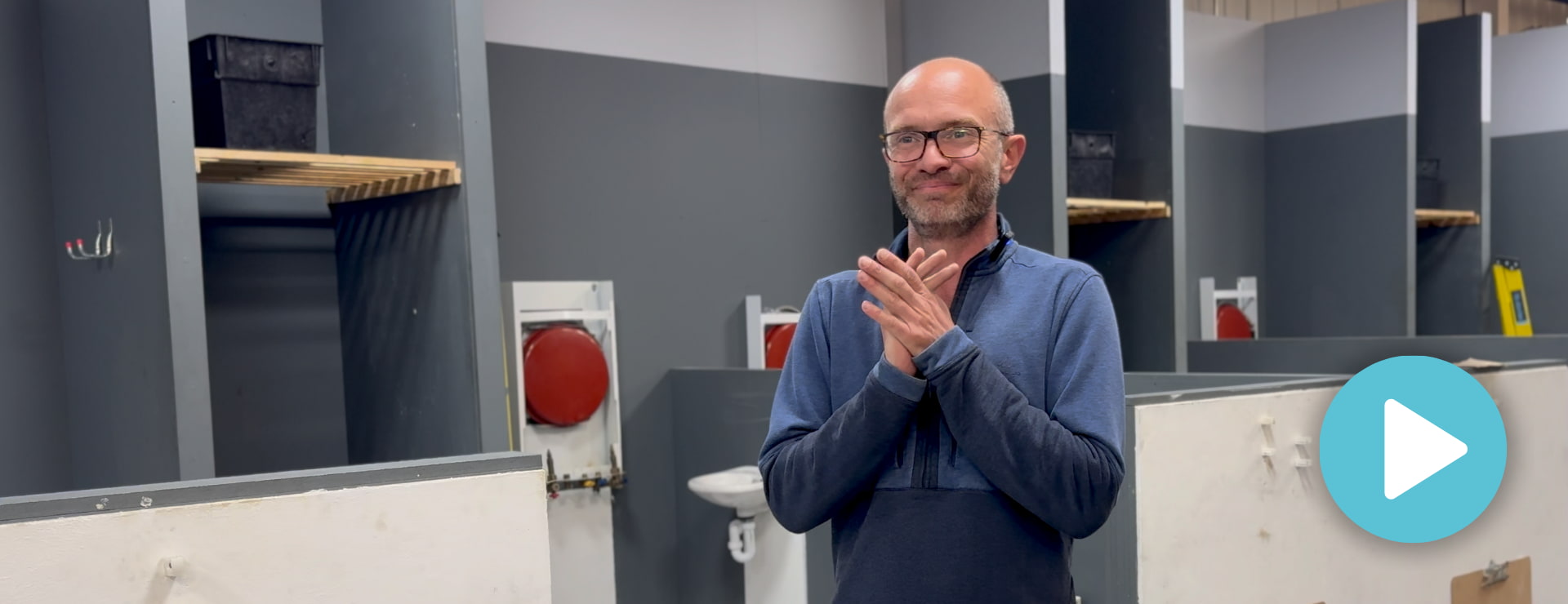
Real Stories: Meet Toby
Toby is one of Logic4training’s standout success stories. After his original training provider went bust, he came to Logic4training feeling frustrated and unsure. Before starting, he shared his concerns and hopes in this video. After completing the course, Toby’s confidence soared! Hear his thoughts after training. His journey proves that, with the right support, a career change at 40 isn’t just possible, but it can be life-changing.
What Our Other Students Say
Maria de la Serna-Lopez also decided to change careers to become a gas engineer at the age of 40. She left her job in finance to work in the trades as a gas engineer. You can read her story and see why she left her managerial role for a more hands-on profession.
Other candidate have also had their say:
“Had a good experience in this course would definitely recommend to anyone who’s looking for a career in this gas industry… made me enjoy this course to the fullest.”
“Training is excellent. Mat, our instructor, is incredibly patient, knowledgeable and I would highly recommend this centre.”
Curious about more real-life experiences? Check out our Gas Courses Reviews and Testimonials.
2. Electrician
Why it’s a great choice:
- Versatile Work: From rewiring homes to installing smart tech, the work is varied and always in demand.
- Registration Options: Qualifies you for several Competent Person Schemes (NICEIC, NAPIT, etc.).
- Great for Practical People: If you’re soemone that likes to work with their hands and tools, this is a logical career step.
- Future-Proof: Skilled trade work, such as becoming an electrician, is widely seen as one of the least exposed careers to AI and automation, thanks to its hands‑on, on‑site nature.
How to get started:
- Logic4training’s Electrician Course: Focused on the key competencies needed to enter the electrical industry.
- Progression Opportunities: Opens the door to further qualifications and specialisations, including renewables such as electric vehicle (EV) charging, solar pv or battery storage.
This is a new entrants’ course and acts as a stepping stone into the electrical industry. We have carefully developed a route for individuals to become qualified within the electrical industry. Other training providers may not have taken as much care in designing their fast-track electrician courses, so we urge people to be cautious about which training provider they choose. You can learn more about fast-track electrician courses and the potential risks involved here.
Can you become an electrician with no experience?
In short, yes. You can become an electrician with no prior experience, even if you’re starting again at 40 or later. Modern training routes are designed specifically for adult learners and career changers, with no upper age limit and clear pathways from complete beginner to qualified electrician.
At Logic4training, many learners arrive from completely different backgrounds, such as office work, retail, healthcare, logistics and more, with no technical skills to begin with. What matters most is your commitment, basic numeracy and literacy, and a willingness to learn in a practical, hands-on environment.
Step-by-step: From no experience to working as an electrician
To make it easier, here’s a simple overview of the typical journey a complete beginner will follow.
- Entry: Decide your route and enrol
You start by choosing the type of electrician you want to become. For example, a domestic installer or working towards a fully qualified electrician status with an ECS Gold Card. New entrant electrical packages are structured so you can begin with zero knowledge and build from there, with advice from training providers to help you pick the right route for your goals. - Training: Classroom and practical learning
Once enrolled, you’ll complete a mix of theory and hands-on workshop training at a Logic4training centre, covering electrical science, installation techniques, safety, and wiring regulations. This stage usually includes core qualifications like a Level 2 Electrical Diploma (for fundamentals), progressing to a Level 3 Electrical Diploma, plus key regs such as the 18th Edition Wiring Regulations. - Qualification: Building your portfolio and passing assessments
As you progress, you work towards higher-level qualifications and, for those aiming to become fully qualified electricians, a Level 3 Electrical NVQ portfolio and the AM2 assessment. These prove your competence in real‑world situations and are recognised across the industry, giving employers and clients confidence in your skills. - Registration: Joining schemes and getting your card
With the right mix of qualifications and on‑site experience, you can apply for your ECS Gold Card or join a competent person scheme, depending on your route. This is a key step if you want to sign off on your own work, work independently, or demonstrate that you meet industry standards. - Employment: Getting your first role or going self‑employed
After qualification and registration, you can move into employment with electrical contractors, facilities companies, housing providers, or start building your own customer base. Many career changers begin by gaining experience with an employer, then transition into running their own small business once they’re confident and established.
How long does it take to become an electrician?
If your goal is to become a fully qualified “Gold Card” electrician able to work across domestic, commercial and industrial environments, you’re typically looking at a mix of in‑centre training and on‑site experience spread over 1.5-3 years. Traditional apprenticeships can take 2-4 years, but structured adult‑learning packages, like Logic4training’s new entrant electrician routes, are designed to move career changers through the process more efficiently than a standard college‑only path.
The key thing to remember is that you don’t have to wait until you’re “fully qualified” to start earning. Many learners begin working in assistant or junior roles once they’ve completed their initial training and core qualifications. You can then keep adding experience, qualifications and registrations (such as PAT Testing and Part P) while you’re already in the industry.
For a detailed breakdown of different routes and timelines, take a look at our dedicated article: How long does it take to become an electrician?
Electrical safety and industry standards
When you retrain as an electrician, you’re working to formal industry standards that keep you and your customers safe. In the UK, electrical installation work is governed by BS 7671, often referred to as the Wiring Regulations, which set out how electrical systems must be designed, installed and tested.
As you progress through your training, you’ll work towards qualifications that cover BS 7671, such as the 18th Edition Wiring Regulations, so you can prove you understand and apply these rules in real‑world situations. Once qualified, many electricians choose to register with a competent person scheme provider such as NICEIC or NAPIT, which allows them to self‑certify certain types of work and gives homeowners extra confidence in their skills.
This means that when you change career into electrics, you’re not starting from scratch with no structure. You’re stepping into a clearly defined framework with recognised standards, qualifications and registration bodies behind you.
If you want to learn more about retraining as an electrician, we go into the topic in depth in our Retrain as an Electrician in 2026: Everything You Need to Know article.
Why becoming an electrician is accessible at 40+
An electrician is a realistic and accessible choice at 40+ because you don’t need to have started as a teenager, and training is specifically designed around adult learners. Courses are modular, often flexible, and focused on giving you the practical skills and qualifications you need rather than years of low‑paid apprenticeship wages.
At Logic4training, our new entrant packages are built as a clear, structured pathway from “no idea where to start” to “qualified and employable,” which is exactly what most mid‑life career changers are looking for. With strong demand for electricians across domestic, commercial and renewable sectors, it’s a career where your age can be an asset, bringing maturity, reliability and people skills that customers value.
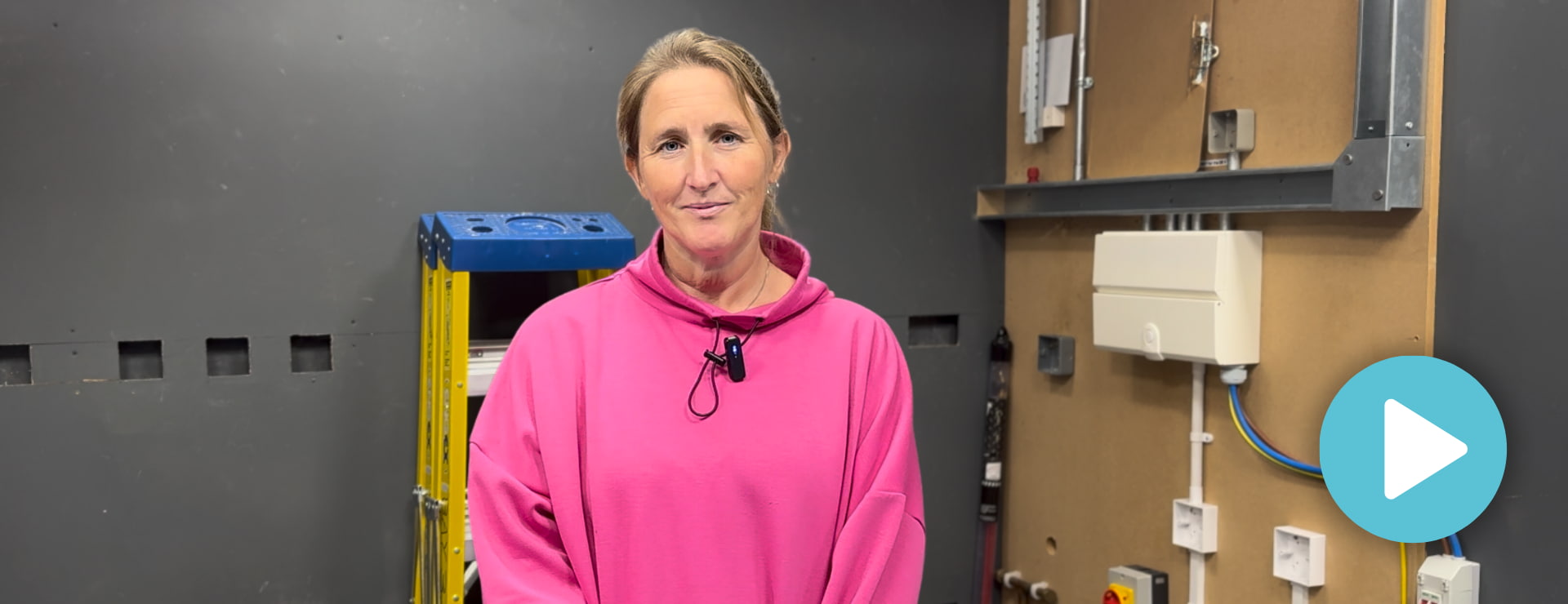
Real Stories: Meet Christine
Christine was working in finance and decided to make a career change after wanting a hands-on career. Additionally, her husband is an electrician, so she wanted to get to understand his job better as well as help him out. Hear how Christine got on during her Electrical Course.
What Our Other Students Say
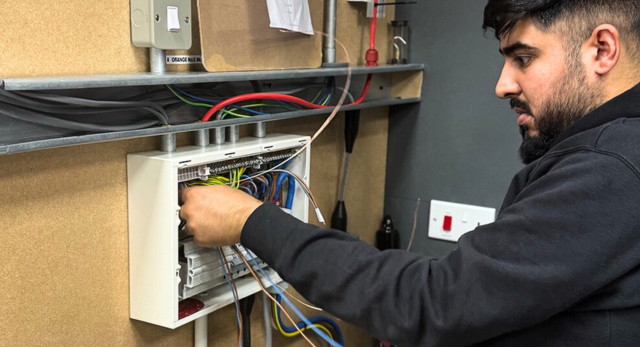
Ohla is another electrical student who has trained with us after deciding to change her career. After seeing one of Logic4training’s trainers, she decided to make the jump and change her career from being a barista to an electrician.
Other candidate have also had their say:
“The course was fast-paced but thorough. I felt supported every step of the way and now have the confidence to take on domestic electrical jobs.”
“Just completed 6 weeks of training at the Sittingbourne branch, the training was excellent! The warm greeting each morning from Maggie and Kim was a great start. A massive thank you to Nigel for sharing his extensive wisdom! Each day was a pleasure and the course as a whole was well managed and presented.”
Not sure which trade fits you? Our team can talk you through gas, electrical and plumbing routes and help you pick the right one for your goals.
Other Popular Career Change Ideas at 40
While gas and electrical trades are two of the most robust options, plenty of other fields are welcoming career changers with open arms:
- Renewable Energy Installer: The green revolution is here. Think heat pumps, solar, and EV charging.
- Project Management: Transfer your organisational skills into construction, tech, or healthcare.
- Health & Social Care: For those seeking a more people-focused role.
- IT & Cybersecurity: Tech skills are in high demand, and many roles offer flexible or remote work.
Retraining & Upskilling: Your Way to a New Career
You don’t need to spend years in university to make a successful switch. Here’s how Logic4training can help:
- Tailored Programmes: Whether you’re a complete beginner or an old hand, we’ll help you find the right route with no wasted time or money.
- Free Introductory Sessions: Not sure where to start? Speak to our team for expert advice on the best path for you.
- Technical Meetings for Returners: If you’ve let your qualifications lapse, we’ll help you prove your skills and get back on track.
- Business Support: Thinking of going self-employed? We offer modules on business setup, marketing, and more.
Whether you choose to become an electrician (with options like NICEIC or NAPIT registration and BS 7671 qualifications) or aim for Gas Safe registration as a gas engineer, Logic4training can help you pick the path that best matches your skills, goals and preferred way of working at 40+.
Explore our full range of courses for new entrants and upskilling options.
Real-Life Inspiration: Logic4training’s Community
We’re proud to have helped thousands of people change careers at 40 and beyond. From school leavers to parents returning to work, and tradespeople looking to upskill, our community is proof that it’s never too late for a fresh start.
“Never leave reviews but this training centre is brilliant. Couldn’t speak highly enough of the guys at Basildon… Their knowledge is second to none, the delivery of course content really helps to understand the information, alleviates nerves and settles you for exams. I couldn’t recommend them highly enough.”
“I just completed my MLP at Logic4training Northolt… I learned so much with him I will definitely recommend Logic4training-best trainers, good environment, even the tea ladies are very friendly!”
Want to hear from more of our past candidates? Check out our Reviews Page.
Ready to Make the Leap?
If you’re considering a new career at 40, remember: it’s never too late to rewrite your story. With the right planning, support, and a little bit of cheeky confidence, you can build a future that excites you, just like Toby and thousands of others have done with Logic4training.
Want to chat about your options or book a free introductory session? Get in touch and let’s make your next chapter your best one yet.
FAQs
Is 40 too old to change careers?
Absolutely not. In fact, your experience, maturity, and transferable skills make you a highly attractive candidate in many industries.
How long does it take to retrain as a gas engineer or domestic electrical installer?
Logic4training’s Domestic Electrical Installer course can be completed in four weeks. The New Entrant Gas Route varies depending on your availability and prior experience.
Can I become an electrician at 40 with no experience?
Yes. An electrician is a realistic option at 40+, even if you’re starting from scratch. New‑entrant courses are designed for beginners and career changers, with no upper age limit.
A typical route is: Level 2 and Level 3 Electrical Installation, then BS 7671 Wiring Regulations, then (for many) NVQ Level 3 and AM2. After successfully completing the AM2, registration with schemes like NICEIC or NAPIT / ECS Gold Card.
This gives you a clear, step‑by‑step path from no experience to fully qualified.
What is the fastest way to retrain as an electrician in the UK?
The quickest way is a structured new‑entrant or fast‑track electrician course with a specialist provider. These programmes bundle the key theory, hands‑on training and core certificates you need so you can start working sooner, then build further qualifications while you’re on the tools.
Is it better to retrain as an electrician or gas engineer at 40?
It depends on what you enjoy and your long‑term goals. Both trades are in demand, offer good earning potential and clear routes into self‑employment.
If you’re drawn to tech, smart homes and renewables, an electrician may suit you best. If you prefer heating systems and fixing boiler problems, gas engineering could be a better fit.
Can I become a plumber at 40 with no experience?
Yes. The Level 2 Plumbing Diploma is designed for complete beginners and career changers, with no upper age limit. From there, you can add a Level 2 NVQ for site work and upskill into gas or heat pumps. A clear path from no experience to being qualified.
How long does it take to retrain as a plumber?
The Level 2 Plumbing Diploma takes as little as six weeks. Adding the Level 2 NVQ usually takes an additional 2 to 5 months, while a traditional apprenticeship runs for 3 to 4 years.
Will I have to start at the bottom?
Not necessarily. Many skills from your previous career are transferable, and some training routes are tailored for experienced tradespeople, allowing you to skip what you already know.
Can I fit retraining around my current job and family commitments?
Yes. Logic4training offers flexible course timings, including weekend options, to help you balance your studies with other responsibilities.
What support will I get during and after my training?
From small class sizes and expert trainers to business support and ongoing career advice, Logic4training is with you every step of the way. Plus, you’ll join a supportive community of fellow career changers.


 Your latest offers & alerts