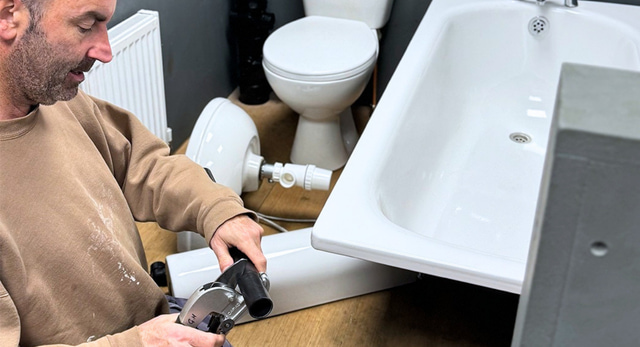

If you want to become a plumber in London, start with a recognised beginner qualification that teaches practical domestic plumbing skills, not just theory. This article explains the training route, what you will learn, how long it takes, what to look for in a provider and how a Level 2 Plumbing Diploma can lead to site work, water regulations and specialist heating work.
TL;DR
- A recognised Level 2 Plumbing & Heating Diploma is the usual starting point for complete beginners.
- At Logic4training, the Level 2 Diploma is six weeks of full-time, in-centre training and is available at Northolt in West London and Sittingbourne.
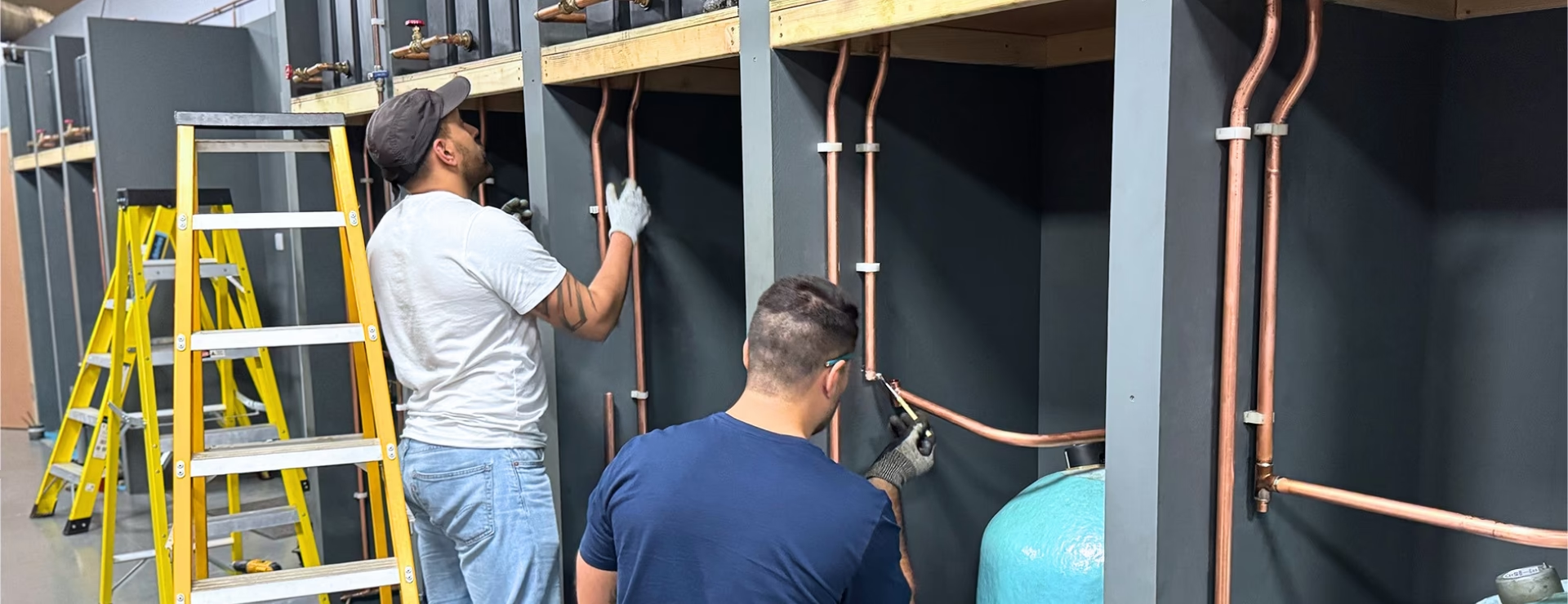
- Good beginner training should include supervised, hands-on work on water, heating, drainage and sanitary systems, alongside safe working practices and theory.
- A Diploma helps you enter the trade, but an on-site NVQ is normally needed to prove workplace competence for the JIB-PMES Plumber Blue CSCS card.
- Water Regulations, unvented hot-water, gas and renewable-heating qualifications are progression options, not substitutes for solid plumbing foundations.
- Before booking, check the exact qualification, practical workshop time, assessment arrangements, progression route and what the price includes.
Is a plumbing course in London right for beginners?
Yes. Plumbing is a practical trade, so a well-structured beginner course can be a credible route for career changers, new entrants and people who want skills they can build into employment or self-employment. You do not need previous plumbing experience to start a suitable entry-level programme. You do need to be ready to learn technical information, work safely, measure accurately and practise until the basics become second nature.
London has a large and varied property market. That means plumbers may work on older homes, flats, extensions, refurbishments and new-build projects. The day-to-day work can include cold and hot-water pipework, taps, toilets, baths, showers, leaks, drainage connections and central-heating pipework. As Logic4training explains in what a plumber does day to day, the job combines installation, maintenance, repair, testing and a responsibility to protect water quality.
It is physical work, but it is also detail-focused. A poorly supported pipe, badly made joint or incorrect connection can cause serious damage later. That is why career changers should choose training that gives them time to practise the fundamentals, rather than looking for a one-day shortcut.
The sensible first step is to choose a course that gives you recognised training, regular practical work and a clear view of what comes next. Logic4training’s plumbing courses and qualifications page sets out beginner, NVQ and specialist routes in one place. If you are still comparing the wider career options, the guide to plumbing, heating and gas career routes can help you identify the route that fits your interests.
What is the best first qualification?
For someone starting from scratch, the LCL Awards Level 2 Diploma in the Installation & Maintenance of Plumbing & Heating Systems is a recognised entry-level qualification. The qualification number is 603/7341/6. It is designed to build the core knowledge and workshop skills needed for domestic plumbing and heating work.
This matters because course titles can be vague. A course labelled “plumbing training” may be a basic DIY introduction, a short skill workshop or a formal qualification. Those are not the same thing. Always ask what certificate you will gain, who awards it and how it supports your intended job. Logic4training’s article, is plumbing training worth it?, explains why recognised learning, safe practice and an honest progression route matter more than fast-track marketing claims.
LCL Awards states that learners need reading, writing and maths skills broadly equivalent to Level 2, as well as the dexterity needed to meet practical assessment criteria. That does not mean you need to be an academic. It means you must be able to read instructions, calculate and measure accurately, follow safe systems of work and communicate clearly. Read the awarding-body qualification details.
What will you learn on a beginner plumbing course?
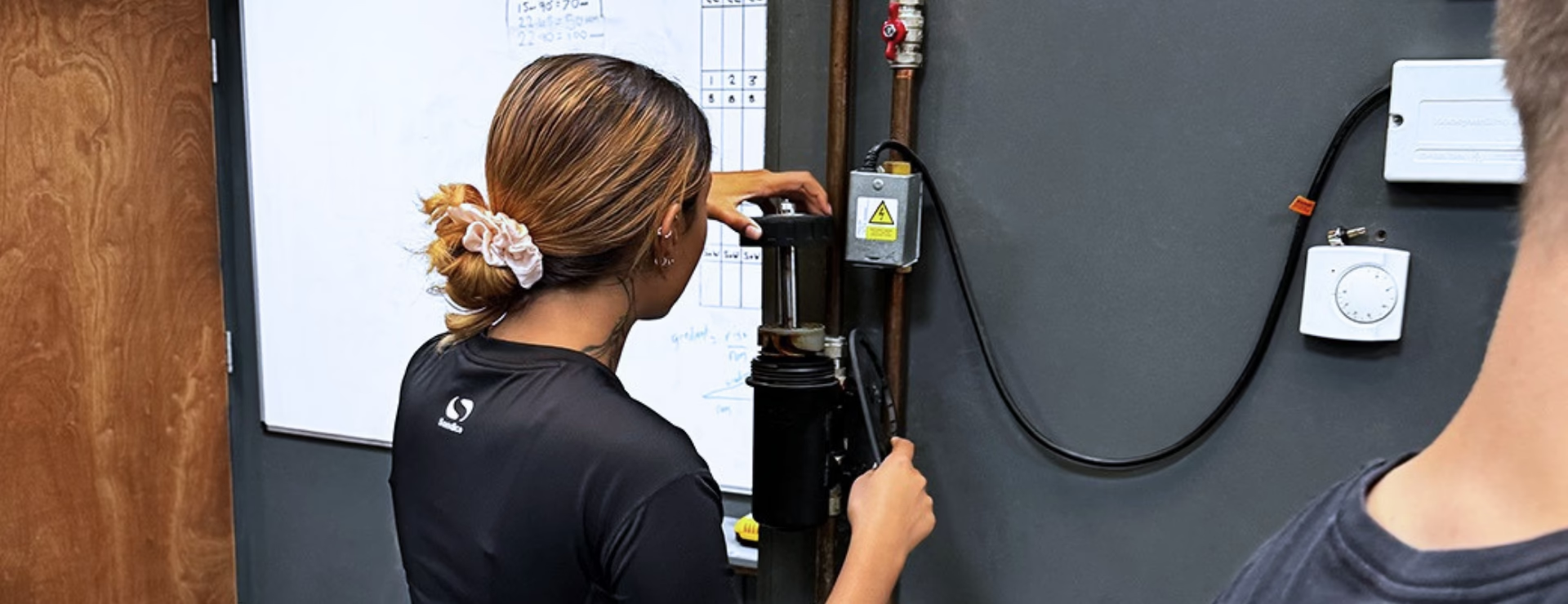
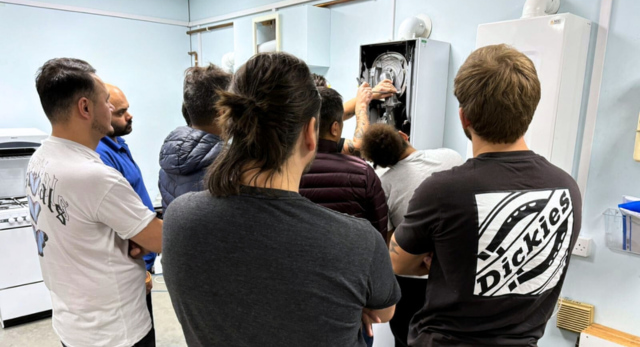
A proper beginner programme should combine classroom learning with workshop practice. Theory gives you the reason behind the work. Practical training gives you the chance to use tools, handle materials, make connections and correct mistakes under supervision before you are working in a customer’s home.
On Logic4training’s Level 2 Plumbing & Heating Diploma, the subject matter includes domestic hot and cold-water systems, central-heating systems, drainage and sanitation, safe working practices and environmental technologies related to plumbing. Learners work towards the diploma through practical tasks and assessments rather than simply watching demonstrations.
Expect to build confidence with areas such as:
- Measuring, marking out, cutting and joining pipework accurately.
- Working with common plumbing materials and fittings.
- Installing and maintaining domestic water services.
- Understanding basic heating-system pipework and components.
- Connecting sanitaryware and understanding drainage principles.
- Finding faults methodically and checking work before it is signed off.
- Using tools safely and maintaining a tidy, safe work area.
For a useful sense of the equipment new entrants encounter, read Logic4training’s guide to basic plumbing tools for students. Tools matter, but technique matters more. A professional plumber learns how to select the correct material, follow the manufacturer’s instructions and work within the limits of their competence. The wider scope of a plumber’s work, from water services to drainage and heating, is covered in Logic4training’s detailed day-to-day plumber guide.
How long does plumbing training take?
The timescale depends on your starting point and end goal. At Logic4training, the full-time Level 2 Plumbing & Heating Diploma takes six weeks in centre. It is an intensive foundation, not a claim that every learner becomes fully experienced in six weeks. Real competence develops through continued practice and supervised experience in the industry.
After the diploma, many people look for an entry-level role, labouring or improver work with a plumbing and heating firm, or opportunities to build evidence on real jobs. The Level 2 NVQ in Plumbing & Heating is work-based. Its length depends on access to suitable work and how quickly you can produce valid evidence of competence. Logic4training’s guide to CSCS and JIB cards for plumbers explains why this workplace evidence is important for people aiming to work on construction sites.
If you are changing career, plan the route as a sequence: training, industry experience, workplace assessment and then the specialist qualifications that match the work you want to do. That is more realistic than treating a single course as the finish line. Our article on How long does it take to become a plumber? provides further context on how long plumbing training takes and a long-term route into plumbing, heating and renewables.
Where can you train near London?
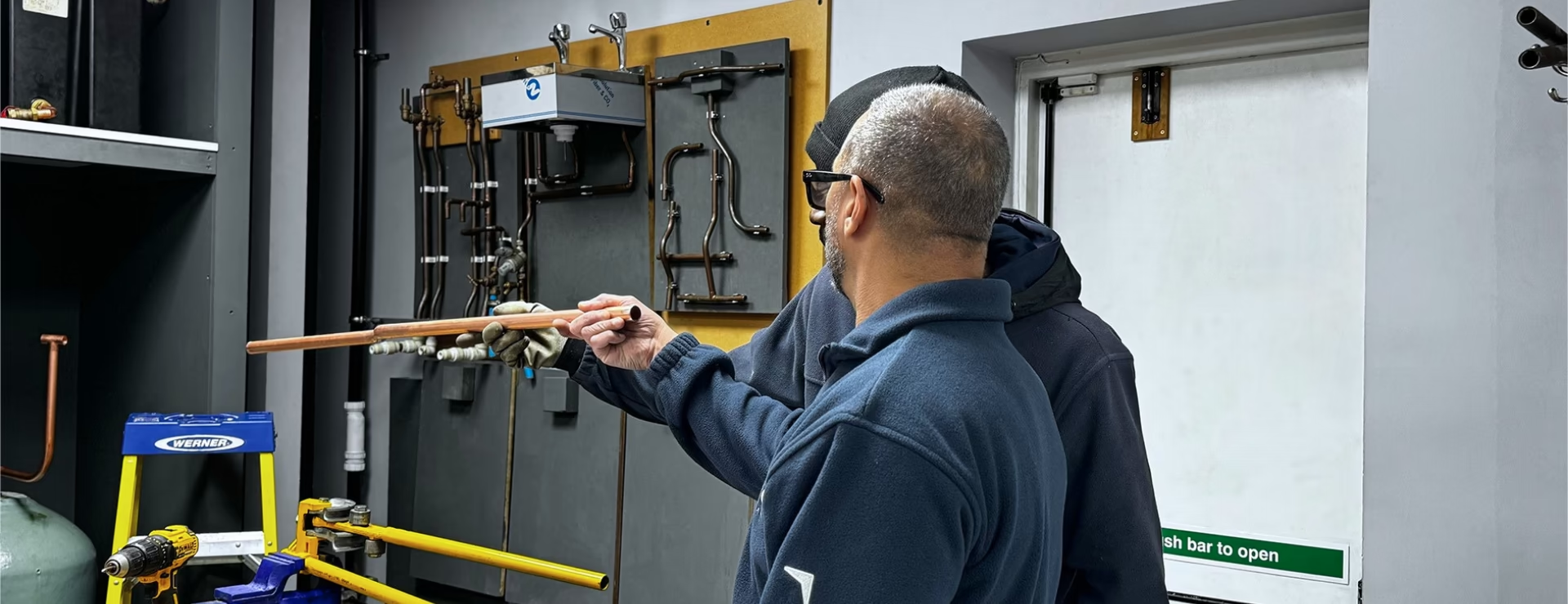
Logic4training delivers beginner plumbing training at its Northolt training centre in West London, at Unit 2, 1 Rowdell Road, Northolt, Middlesex, UB5 5QR. The centre is designed for practical trades training and serves learners from across London and the surrounding area. Plumbing courses are also delivered at the Sittingbourne centre for learners travelling from Kent and south-east London.
When you compare training centres, visiting in person is worthwhile. Look beyond the brochure. Ask to see the practical bays and materials, find out how much supervised workshop time is included, and ask how many learners share an instructor. You should also check whether assessments, certificates, tools, revision support and first-aid training are included in the stated price.
Logic4training’s Level 2 Diploma is offered as part of its beginner plumbing diploma packages. The listed package price starts from £2,995 plus VAT and includes a toolkit, ClubLogic revision access, Emergency First Aid at Work, assessments, certification and employment guidance. Prices and availability can change, so check the live course page before making a decision.
Diploma, NVQ and CSCS: what is the difference?
This is one of the most important distinctions for new plumbers. A Level 2 Diploma is a training qualification. It proves you have completed the required learning and assessments in a training environment. An NVQ is different: it assesses whether you can perform work competently in the workplace and evidence it through real tasks.
If your goal is commercial or construction-site work, understand the card route early. The JIB-PMES Plumber Blue card requires a Level 2 NVQ/SVQ or Level 2 NVQ Diploma in Plumbing, or an accepted equivalent, plus the relevant Health, Safety and Environment test evidence. The JIB specifically notes that Level 2 vocationally related qualifications alone are not accepted for that card.
That does not make the Diploma less valuable. It is the foundation from which beginners develop the skills, knowledge and confidence to find work and progress to the work-based NVQ. Logic4training explains the distinction and card requirements in its guide to CSCS and JIB cards for plumbers.
What can you do after the course?
A beginner plumbing qualification can support entry-level employment with a plumbing, heating, maintenance or building company. The exact role will depend on the employer, your experience and the work available. You may begin by assisting experienced engineers, carrying out straightforward work under direction and building up a portfolio of real installations and repairs.
As your work develops, the most useful next qualification depends on your direction:
- Water Regulations: valuable for plumbers working on water fittings and supply work. Logic4training’s guide to WRAS and WIAPS approved plumber schemes explains how formal Water Regulations knowledge supports compliance and approved-plumber applications. WaterSafe says its approved plumbers hold a recognised Water Fittings Regulations qualification and a relevant plumbing qualification; membership also depends on the relevant approved-contractor scheme and other requirements.
- Unvented hot water: relevant when your role involves specified unvented hot-water systems. Training should be taken only when it matches your work and prerequisites. It is one of the common building blocks for installers progressing into modern heating work.
- Gas: a separate, tightly controlled route. You must not work on gas appliances unless you have the correct competence and are registered with Gas Safe Register for the work you undertake. For the training pathway, see Logic4training’s comparison of plumbing and heating engineer career options.
- Heat pumps and renewables: a growing area for plumbing and heating professionals. Build strong heating and water-system knowledge first, then add relevant renewable-heating training. Logic4training’s article on how plumbing can lead to heat pump and renewable careers sets out the supporting knowledge commonly needed before specialising.
For the wider picture, see Logic4training’s practical overview of how to become a plumber in the UK. It is also worth reading the free beginner’s guide to plumbing careers if you are still comparing routes.
How to choose a plumbing course
There is no single “best” plumbing course for everyone. The right one fits your starting point, budget, availability and career target. But there are a few non-negotiables.
- Check the qualification: ask for the exact title, awarding organisation and qualification number.
- Prioritise practical learning: plumbing cannot be learnt properly through videos alone. You need structured, hands-on practice with feedback.
- Ask about progression: a good provider should explain what the course does and does not qualify you to do, including the route to an NVQ.
- Compare what is included: course fees can differ because of assessment costs, tools, materials, certificates, revision resources and support.
- Visit if you can: see the workshops and speak to the training team before you commit.
- Be wary of overblown claims: no reputable provider should suggest that a short course alone makes a beginner ready for every type of plumbing, gas or site work.
Logic4training has trained people entering and progressing across the plumbing, heating, gas and renewables sectors for many years. Its beginner programmes are built around in-centre practical learning, recognised qualifications and a route that reflects how competence is developed in the trade. You can explore all available new-entrant training courses or speak to the team about which plumbing package suits your goal.
FAQs
Can I do a plumbing course in London with no experience?
Yes. The Level 2 Plumbing & Heating Diploma at Logic4training is designed for people with little or no plumbing experience. You need to be at least 18, have a good standard of maths and English, and be prepared for intensive practical and theory-based learning.
How long is a beginner plumbing course at Logic4training?
The full-time Level 2 Plumbing & Heating Diploma takes six weeks of in-centre training. This provides a foundation for entering the trade; gaining workplace experience and an NVQ takes additional time.
Does a Level 2 Plumbing Diploma make me a fully qualified plumber?
It is a recognised entry-level qualification and an important first step. However, it is not the same as a workplace NVQ. For site-based competence and the JIB-PMES Plumber Blue card, you normally need a qualifying Level 2 NVQ or accepted equivalent, plus the relevant health-and-safety evidence.
Do I need a Water Regulations qualification?
It is not the same as your initial Level 2 Diploma, but it is a useful progression qualification for plumbers who carry out water-supply work. It can also form part of the eligibility requirements for approved-contractor schemes and WaterSafe registration, alongside other criteria.
Where is Logic4training’s London plumbing training centre?
Logic4training’s West London centre is in Northolt, Middlesex, UB5 5QR. The company also runs plumbing training at its Sittingbourne centre. Check the relevant course page for current dates, locations, costs and availability.



 Your latest offers & alerts